Ravensdown Elects Montgomery, Acland to Board
Ravensdown shareholders have elected Jane Montgomery and Kate Acland to the Ravensdown Board for three-year terms, following a closely contested director election.




 increase font size
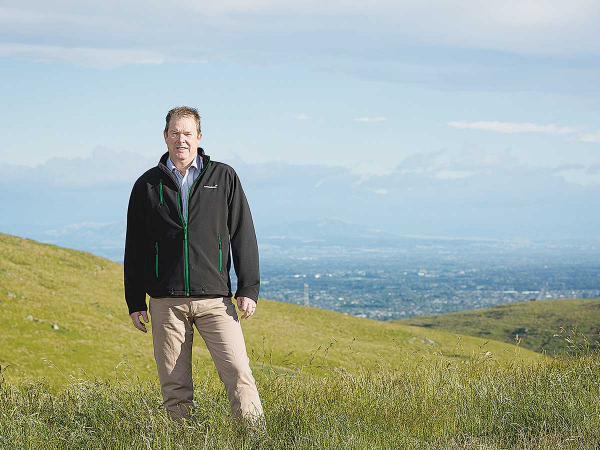 Outgoing Ravensdown chief executive Greg Campbell is worried that state-imposed regulations will limit on farm innovation.
Outgoing Ravensdown chief executive Greg Campbell is worried that state-imposed regulations will limit on farm innovation.
He says this could bring the best performers to “mediocracy” and the sector will be left without pioneers.
“I think the biggest issue farmers face is that the Government will decree certain rules and regulations or limits on the way they can farm,” he told Rural News.
“By doing that, it actually limits the innovation that Kiwi farmers are really good at…I do worry about that.”
Campbell leaves Ravensdown in June after eight years at the helm. The conversation around climate change and mitigating emissions has changed since he joined the co-operative.
Even if companies don’t believe in climate change, they accept that better sustainability makes good business sense anyway.
“It has the opportunity of lowering my costs and positioning my company, whether attracting new staff or marketing of products. People are happy with that,” he says.
However, Campbell points out that there is a level of unease among farmers about what this will do to their production.
“If my production falls away and my revenue drops, how do I maintain a sustainable economic business unit? That is the challenge,” he says.
Campbell notes that technologies to help farmers reduce emissions haven’t yet landed.
He backs greater dialogue between the Government and farmers on how to reduce carbon emissions, but they must “make sure they’re not talking past each other.”
Campbell says it’s a tough gig living on farm and a little bit more empathy would be helpful.
He says while Covid-19 has helped New Zealanders recognise how important farmers are, many are under immense stress.
“I worry about the wellbeing and mental health of some farmers,” Campbell adds.
“They are under a lot of pressure to deliver on all of this, and I think some farmers will be struggling on what’s their priority and how they deliver.
“I’d like to see more support for farmers and more positive comments about the role they play.”
He believes a vast majority of people appreciate what farmers do for NZ and recognise that we built our economy around farming, and that’s never been more important given Covid-19.
On the agriculture sector’s response to Covid-19, Campbell praised the Government and Ministry of Primary Industries for giving it the license to continue to operate during the lockdowns.
“I think the agriculture sector did a particularly good job at keeping people safe and keeping the wheels of industry turning, ensuring customers overseas continued to enjoy products they like to buy from us.”
For Ravensdown, the lockdowns helped build resilience. Co-op staff fielded a record number of calls from farmers and provided continuous service.
“We empowered our staff to get on with the job and provided as much guidance and security as we could. They took it on the chin rolled up their sleeves, as they do in the agriculture sector and got on with the job.”
Straight Shooters
Greg Campbell says he has absolute confidence in New Zealand farmers.
"They are straight shooters, they are smart and can see through shiny gold," he told Rural News.
"You've got to be upfront and honest. If you can do that, they will give you the time of the day," he says.
Campbell says he has come to know many of the co-op's 20,000 shareholders over the past nine years.
"I've got a huge amount of respect for the food producers of New Zealand; the way they go about it.
"They are stewards of the environment, the land and for our business and quality of life we enjoy in NZ - contrary to what others may say."
Ravensdown shareholders have elected Jane Montgomery and Kate Acland to the Ravensdown Board for three-year terms, following a closely contested director election.
OPINION: It appears to be difficult for people who haven’t tried to run a business to understand the difference between assets and cash.
OPINION: In the 1980s, concern was expressed in West Germany about the falling birth rate. Some simple analysis was performed by Professor Helmut Sies, physician and biochemist at Dusseldorf University. His letter ‘A new parameter for sex education’ was published in Nature in 1988:
When it comes to annual rebates, it's been a long time between drinks for Ravensdown shareholders.
Ravensdown has reported a net profit before tax and rebate of $50.1 million for the year ended 31 May 2026.


South of the central Hawke’s Bay town of Waipukurau is Taniwha Station – a highly successful 550ha bull beef farming operation.
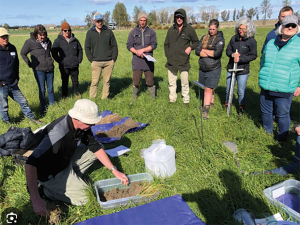
Beef + Lamb NZ funded research has shown that some simple changes to pasture management could help farmers make better use of rainfall and build resilience before dry conditions hit.
OPINION: There could hardly be a more appropriate theme for a conference than the one chosen by the red meat sector - Navigating Volatility.
When Northland leather worker Vernon Suckling started making horse saddles 50 years ago, quad bikes and side-by-side vehicles were unheard of.
Alliance Group has confirmed that eligible farmer-shareholders who supply and continue to back the business will receive up to $20 million later this year, following the strategic investment partnership with Dawn Meats.
With a general election under five weeks away, Rural News is asking major political parties about their policies and positions on key issues facing the primary sector. We will run their responses to each question over the next four weeks. The ACT Party and the Greens didn't respond in time.





OPINION: The same mainstream media muppets that brought you Jacindamania in 2017 have been flat out pimping for the Opportunities…
OPINION: Your old mate reckons the atrocious way farmers in the UK are treated by their lords and masters in…