
Editorial: Stay the Course
OPINION: The United States wine market has changed forever, and companies cannot use same old playbook, said Erin Kirschenmann at the New Zealand Wine 2026 Wine Business Forum in August.




 increase font size
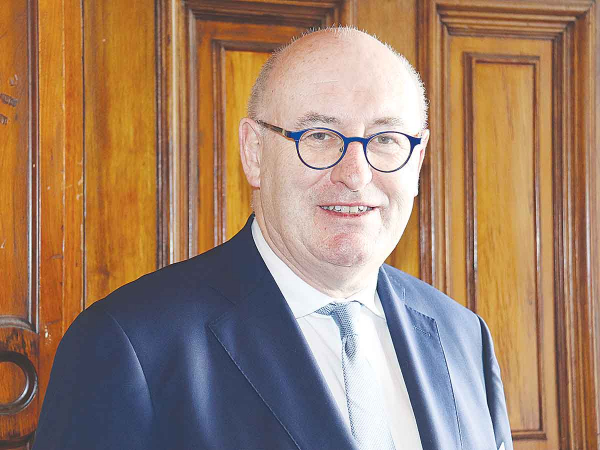 EU Trade Commissioner Phil Hogan.
A pathetic trade offer by the European Union has raised the ire of New Zealand politicians and farmer groups, which have strongly condemned the EU’s actions.
Early last week, Trade Minister David Parker revealed that the EU had leaked details of the offer to other parties before passing the information to NZ negotiators. He described both the leak and the quality of the offer as “unacceptable” and that it reflected agricultural protectionism in the EU.
Parker noted that presently the EU exports to NZ the equivalent of one kilogram of cheese for every New Zealander, but in return the EU is offering to take a mere three grams of NZ cheese per EU citizen.
Phil Hogan is the EU Trade Commissioner and is ultimately responsible for putting together the deal with NZ. When he was in NZ nearly 18 months ago he told Rural News that he was optimistic that a “quality” free trade agreement (FTA) between the EU and NZ could be negotiated before the end of 2019.
Federated Farmers president Katie Milne described the offer as “so insulting low” that she thought they had made a mistake.
“Thanks to this ‘leak’, we are now aware the EU intends to continue to prevent Kiwi farmers from fairly competing in the EU market, while at the same time seeking to impose absurd obligations, such as not allowing NZ farmers to call feta cheese by its generic name ‘feta’,” she says.
Milne says it’s disappointing to see the EU’s trade negotiators ignore the long-shared relationship between the EU and NZ.
Beef+LambNZ (B+LNZ) and the Meat Industry Association have also hit out the offer and the poor diplomacy of leaking the offer. B+LNZ’s Sam McIvor says the leaked details suggests that the EU intends to continue to promote agricultural protectionism.
MIA’s Sirma Karapeeva says the small quota and high out-of-quota tariff makes it difficult, if not impossible, for NZ meat companies to form commercially meaningful relationships and build a stable trade in beef to the EU. She says it’s not credible for a trading partner like the EU, which purports to be a champion of free trade, to maintain small quotas and high tariffs.
Chairman of the Dairy Companies Association Malcolm Bailey launched a withering attack on the EU Commission for the ‘offer’ saying NZ has actually got better access now so why would it want an FTA that makes us worse off.
“What they are offering is taking us backwards,” he says.
Bailey says the EU was all talk about an ambitious, high quality FTA, but says the offer is anything but, calling it a slap in the face.
“It’s very hard not to see it that way,” he says.
OPINION: The United States wine market has changed forever, and companies cannot use same old playbook, said Erin Kirschenmann at the New Zealand Wine 2026 Wine Business Forum in August.

Chinese beef trade quotas and a looming suspension of Brazilian beef imports into the European Union are expected to reshape global beef trade flows over the remainder of 2026, with implications for New Zealand exporters, according to Rabobank's Q3 Global Beef Quarterly report.
China remains New Zealand’s biggest market, taking $23 billion of our exports, but it’s no longer a commodity story, says Prime Minister Christopher Luxon.
The European Union ramped up its presence at this year's Fieldays.
According to new research, industry leaders have ranked world-class biodiversity as the number one priority for the 16th year in a row.


Federated Farmers has welcomed new rural policies released by ACT, saying they align closely with its own election priorities.
Rural Contractors NZ says proposed changes to land transport rules for agricultural vehicles are a welcome response by the Government to out of date regulations which have seen members hit with huge fines.
Alliance is calling for final applications for its 2027 Graduate Programme, with applications closing on Sunday 25 October.
Decades piloting planes has ensured vet and farmer David Hayes is focused on safety. So, after a serious accident while welding on farm, he is sharing his experience so others can learn from it.
Canterbury milk processor, Synlait Milk has confirmed Leon Fung as its chief executive officer.
OPINION: Making it easier to collect rainwater and use it to grow crops and livestock is a no brainer.

OPINION: The same mainstream media muppets that brought you Jacindamania in 2017 have been flat out pimping for the Opportunities…
OPINION: Your old mate reckons the atrocious way farmers in the UK are treated by their lords and masters in…




