NZ Food Safety Boss on Balancing Speed and Risk in Approvals
Striking a balance between meeting the needs of industry to speed up approval time for products but on the other hand ensuring that risks are properly assessed.




 increase font size

FARMERS COULD face longer term compliance and liability issues in the wake of last week's storm in Canterbury, according to environmental law specialist Ewan Chapman, of Duncan Cotterill.
Irrigator pivots being out of action for some months, pending repair, will not only affect production but has implications for wastewater disposal.
"Farmers need to have strategies in place to deal with both the financial consequences of lost production and compliance consequences of unusable effluent spreading equipment. Particularly the latter will be critical, given that suppliers have signalled that some irrigation systems may take months to repair."
Chapman says farmers will need to work closely with insurers, the regional council and technical advisers to find pragmatic and effective interim and long-term solutions.
"The insurers will be involved through the cover most farmers should hold for damage to essential equipment such as irrigators, loss of production income and statutory liability for non-compliance with environmental requirements," Chapman says.
"The regional council will need to be satisfied that any interim effluent disposal methods are appropriate, while technical advisers have the ability to identify the best way to deal with effluent while awaiting repairs.
"The key will be to ensure all parties work together so that repairs are prioritised and the most critical equipment for production and environmental requirements is repaired first. Farmers will have to take initiative, as not only do the insurers require policy holders to take all reasonable steps to minimise economic loss, but the regional council will expect all reasonable steps to avoid environmental harm."
Chapman says in terms of loss minimisation, a good rule of thumb is for farmers to ask what they would do to minimise the loss if they were paying for it themselves and then do that (provided it is reasonable).
To keep on the right side of the law in terms of the regional council's environmental requirements, farmers should keep a good paper trail to show that:
• The effluent discharge is necessary to avoid damage or injury;
• It could not have been foreseen or provided against;
• The method you have chosen was reasonable in the circumstances; and
• All practicable steps were taken to fix or lessen environmental harm as soon as possible.
"Being able to show that all reasonable steps have been taken to minimise both the financial and environmental harm will be crucial when filling out insurance claim forms or dealing with Council monitoring officers."
Chapman urges farmers to review their risk management strategy to ensure they have the right cover and contingency measures.
Striking a balance between meeting the needs of industry to speed up approval time for products but on the other hand ensuring that risks are properly assessed.
Mid Canterbury Federated Farmers arable chair, Bevan Lill, said Beef + Lamb NZ data indicated that for the last six years, the average arable return on investment was about 0.8% while inflation ran about 4% - so the average arable farm was going backwards at about 3% a year.
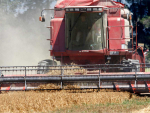
A warning for New Zealand seed and grain companies – be prepared for an exodus of farmers from the arable sector.
Gareth Hale is the current custodian of a 160-year legacy that saw his great grandfather dairying in Taranaki since the mid-1850s and grandfather dairying in the Waikato from the early 1900s.
A spat within the ranks of the New Zealand Deer Farmers Association has resulted in the suspension of outspoken North Canterbury farmer Barry Cuttance.


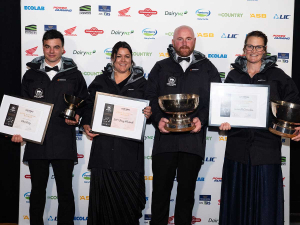
Entries opened on Monday, 5 October 2026 for the 2027 New Zealand Dairy Industry Awards (NZDIA), which organisers describe as the nation's biggest celebration of excellence in the dairy sector.
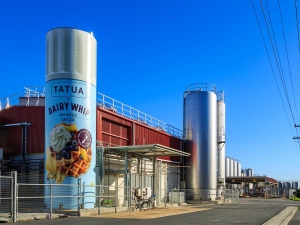
Waikato milk processor Tatua has again declared a record milk payout to farmer shareholders, leaving other processors in the dust.
A Labour-led Government won’t be bringing back the controversial freshwater rules of 2020.
National’s much-touted free trade deal with India featured in the Rural Issues Debate at Mystery Creek, Hamilton on Wednesday night.
New Zealand's 2026-27 freshwater fishing season has opened, with anglers encouraged to head to rivers and lakes over the coming days as conditions look favourable across much of the country.
Central Otago District Council (CODC) has voted against a plan to spread treated sewage sludge from Cromwell and Alexandra on farmland near Lauder, a decision Federated Farmers says reflects strong opposition from rural residents.





OPINION: The same mainstream media muppets that brought you Jacindamania in 2017 have been flat out pimping for the Opportunities…
OPINION: Your old mate reckons the atrocious way farmers in the UK are treated by their lords and masters in…