
NZYF launches employer supporter membership for rural businesses
New Zealand Young Farmers (NZYF) has launched a new initiative designed to make it easier for employers to support their young team members by covering their NZYF membership.




 increase font size
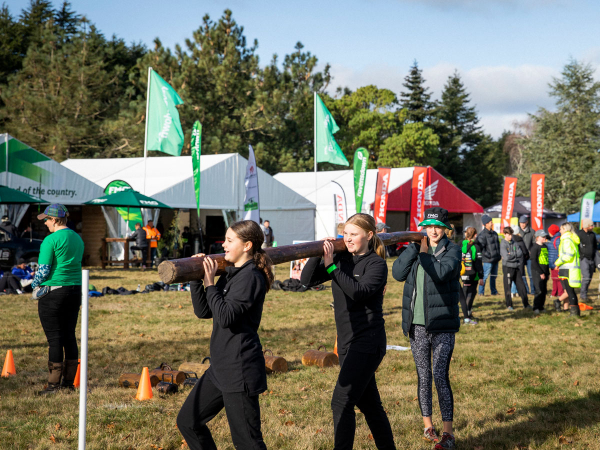 Competitors at the 2021 AgriKidsNZ Grand Final.
The AgriKidsNZ Grand Final is expected to be a hot competition, with 63 competitors all battling it out for the national title in Whangarei from the 7th to 8th July.
Every year over 400 primary school aged students compete in their local Regional Finals in teams of three, with the hope to make the top three teams to qualify for the Grand Final.
AgriKidsNZ contestants are challenged to a range of practical modules and challenges based on the food and fibre sector, hosted by sponsors.
Kamo Intermediate food technology teacher Jo Grant is supervising the top two Northern AgriKidsNZ teams – the KIS Cows and the Udder Disappointments ranging from ages 11 to 13.
Grant has a farming background and says they’ve been working together and preparing hard for the Grand Final.
"We've been doing regular once a week meetings and have had a few visits out to places around town to hone our skills a bit more," she says.
"The kids are getting really excited now actually, it's hitting home a bit more now that it's real. They're excited that lots of people are going to be able to come and watch and it'll be so good to have people from out of town here as well and show what Northland has to offer."
Grant has been involved with three Grand Finals previously and Kamo Intermediate has a long history with AgriKids NZ.
She says it’s one of the highlights of the year for the kids involved.
"A win would be great, we're aiming for it."
Shannon Watson from Whangarei Intermediate is the team supervisor for the Whangarei Waiotira Wombles.
She says they put a lot of preparation in for the Regional Finals, bringing in an environmental educator, stock agents and fertiliser representatives to chat with the kids.
"This is the third time we've entered but the first time we've made it a Grand Final," she says.
Whangarei Intermediate has a 47% Māori school roll and uses a Te Ao Māori perspective through all its teaching, Watson says.
A dairy farm herself, Watson says it’s great to be able to expose the kids to different opportunities that lie in the agricultural sector, something they would not traditionally be introduced to.
"Just being able to show them that you could be a farmer or sell fertiliser or go dairy farming is really meaningful,” she says.
One of the girls in her team had never been on a farm in her life and since competing in the AgriKidsNZ regional final, is now basing her science fair project on cows.
New Zealand Young Farmers chief executive Lynda Coppersmith says it goes to show how the competition is for children from all backgrounds.
"You don't have to be from a farm to enter, kids of all ages enjoy the competition. It’s a way for them to get outside, have fun with their friends and learn the importance of teamwork while also being exposed to where their food comes from."
New Zealand Young Farmers (NZYF) has launched a new initiative designed to make it easier for employers to support their young team members by covering their NZYF membership.

Former chief executive of New Zealand Young Farmers, Lynda Coppersmith is now CRV’s new sales and marketing manager.
This morning, NZ Young Farmers (NZYF) has announced that Cheyne Gillooly will take over as its chief executive in June.
The first FMG Young Farmer of the Year Regional Final will kick off at the Helensville Showgrounds this Saturday.
Danielle Hovmand has been announced as the 2024 recipient of the New Zealand Young Farmers (NZYF) Contiki Local Legend Award.


Federated Farmers has welcomed new rural policies released by ACT, saying they align closely with its own election priorities.

Rural Contractors NZ says proposed changes to land transport rules for agricultural vehicles are a welcome response by the Government to out of date regulations which have seen members hit with huge fines.
Alliance is calling for final applications for its 2027 Graduate Programme, with applications closing on Sunday 25 October.
Decades piloting planes has ensured vet and farmer David Hayes is focused on safety. So, after a serious accident while welding on farm, he is sharing his experience so others can learn from it.
Canterbury milk processor, Synlait Milk has confirmed Leon Fung as its chief executive officer.
OPINION: Making it easier to collect rainwater and use it to grow crops and livestock is a no brainer.

OPINION: The same mainstream media muppets that brought you Jacindamania in 2017 have been flat out pimping for the Opportunities…
OPINION: Your old mate reckons the atrocious way farmers in the UK are treated by their lords and masters in…




