
Tony Egan: NZ Meat Processing More Collegial Than Before
The meat processing industry is much more collegial than it was in the past and is now more focused on common goals.




 increase font size
 Peter Conley.
Meat company ANZCO Foods recorded its best-ever revenue of $1.7b and a net profit before tax of $30.6m for the year ended 31 December 2019.
“In 2019 we made record payments to farmers for the second year in a row ensuring the benefits of higher market prices have been shared across the value chain,” says chief executive Peter Conley.
“We regularly measure payments to farmers for sheep and beef, and we have consistently paid premium prices when benchmarked with the wider industry.” Conley says market diversification was an important strategy for the company in 2019, with the business focusing on expanding its beef, lamb and healthcare products in a range of markets including New Zealand, Japan, the UK, Europe, North America, and China.
“As the year progressed, global demand for New Zealand beef and lamb products continued to improve which provided a sustained period of higher market returns.
“Despite the risks of volatility and the emergence of trade-related conflicts in global markets, red meat pricing increased steadily during the year, with China standing out as a significant market for both beef and lamb products.”
Conley added that the company continued to offer a diversified portfolio of meat, value-add and healthcare products, with Japan, the UK, Europe and North America all remaining integral to balancing market options.
The company says its $11m investment in automation in 2018 at its Rangitikei lamb processing operation had delivered significant gains in 2019.
Chairman Sam Misonou says Anzco continues to contribute to the communities in which it operates through wages, salaries, supplier payments and sponsorships.
“ANZCO Foods’ shareholder, Itoham Yonekyu Holdings (IYH), and board remain very supportive of the business and its overall direction and performance.”
IYH is the nineth largest global meat company.
“We will continue to work closely to expand ANZCO Foods’ expertise in food products, as well as capitalising on benefits from IYH’s experience and global networks,” Misonou says.
The meat processing industry is much more collegial than it was in the past and is now more focused on common goals.

The New Zealand Food Network's (NZFN) fifth birthday celebrations have been boosted by a whopping five tonne meat donation from meat processor ANZCO.
Meat processor ANZCO Foods’ net profit has plunged on the back of lower market returns which squeezed margins and impacted business performance.
The depopulation and repopulation of ANZCO Food’s Five Star Beef feedlot, as part of the M. bovis eradication programme, was a long and complex project, says ANZCO CEO Peter Conley.
Meat processor ANZCO Foods says despite a challenging business environment, it has posted a net profit before tax of $61 million for 2023.


During the nesting season, from September to December, industrious starlings can quickly build nests in the darker areas behind tractor and vehicle, usually close to hot engines, typically resulting in localised damage or in some cases complete write-offs.
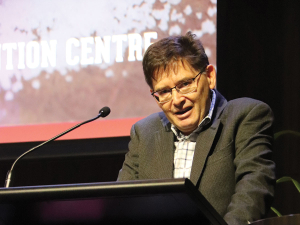
The meat processing industry is much more collegial than it was in the past and is now more focused on common goals.
With the last couple of months having seen some potential tractor purchases put on hold with the impending election and continued input cost rises, year-to-date figures, ending September, has seen deliveries up around 5% over the same period in 2025, with a total of 2026 units.
Beef+Lamb New Zealand is calling for nominations for director roles in the Northern South Island and Northern North Island electoral districts.
Fonterra chief executive, Richard Allen says being resilient has helped the dairy industry overcome extreme volatility in recent years.
The head of the Ministry for Primary Industries (MPI) trade and international relations group says New Zealand is well-positioned to secure trade access and compete internationally as the world becomes more complicated, demanding and uncertain.




OPINION: The same mainstream media muppets that brought you Jacindamania in 2017 have been flat out pimping for the Opportunities…
OPINION: Your old mate reckons the atrocious way farmers in the UK are treated by their lords and masters in…




