Milk Powder Prices Prop Up Farmgate Milk Price
Milk powder prices are keeping farmgate prices up, helping processors offset the dip in milk fat prices.




 increase font size
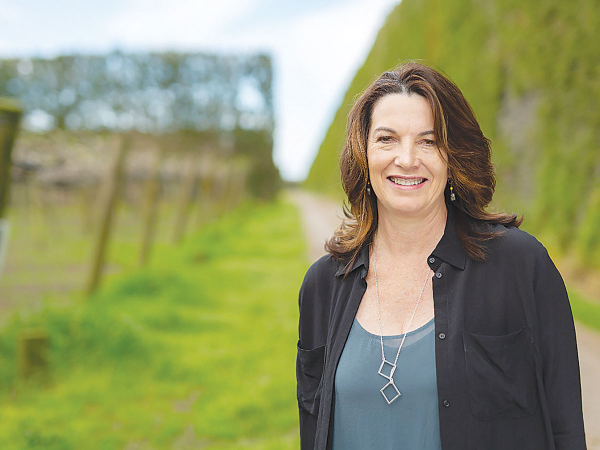 ANZ New Zealand business banking managing director Lorraine Mapu says the new loans are about supporting New Zealand businesses and their sustainability ambitions.
ANZ is the latest bank to announce a new ‘Green Loan’ for its business and agribusiness customers.
Its Business Green Loan will be offered to eligible customers at a floating rate of 3.85% per annum, a 1.5% discount on the current floating base rate. The loan can be used to fund initiatives that support sustainable land and water use, energy efficiency, and renewable energy, with customers able to borrow up to $3 million.
For agribusiness customers, those initiatives could include planting projects, reforestation, preserving natural landscapes and the installation of products that improve water quality. It also includes effluent ponds, the installation of solar panels and biomass boilers.
However, there is a condition: Planting projects cannot change the property’s land use by more than 15%.
ANZ New Zealand business banking managing director Lorraine Mapu says it’s important to remove the cost barrier that has prevented some New Zealand businesses from investing in their sustainability.
“It’s about supporting New Zealand businesses and their sustainability ambitions… the key for us is that it goes right across our business customer base, so no matter how big or small they are,” Mapu told Rural News.
“We’re now at a point in time where there’s a lot more governance over sustainability, both in New Zealand but also globally,” Mapu says.
“As the borders have reopened and the need to actually have products that support our customers to work to compete in a global market, the timing felt right for us at the moment.”
She says sustainability will be integral to how businesses operate in the future.
The loan is built on the Loan Market Association’s Green Loan Principles.
The principles set out what the loan can be used for, the process for project evaluation, the management of the loan, and the reporting required by the bank, she says.
“So, what it does is it supports our customer base, especially as they compete globally and import products across the globe. It’s a recognised standard worldwide that will help our customers to support our customers to grow their businesses.”
The loan became available to customers on 2 September 2022.
The announcement comes a month after Westpac announced it would pilot a sustainable agribusiness loan, and three months after Bank of New Zealand announced an agribusiness sustainability-linked loan.
Milk powder prices are keeping farmgate prices up, helping processors offset the dip in milk fat prices.

Case IH has unveiled its redesigned next generation Puma Series tractors, said to offer improvements in connectivity, operator comfort, fuel efficiency and drivability.
Cameron Reed lives between two worlds.
A milk glut around the world shows no sign of easing, putting downward pressure on farmgate milk prices for the next few months.
The new dairy season is kicking off with plenty of risks to the forecast farmgate price, both upside and downside, says ANZ agricultural economist Matt Dilly.



Federated Farmers has welcomed new rural policies released by ACT, saying they align closely with its own election priorities.

Rural Contractors NZ says proposed changes to land transport rules for agricultural vehicles are a welcome response by the Government to out of date regulations which have seen members hit with huge fines.
Alliance is calling for final applications for its 2027 Graduate Programme, with applications closing on Sunday 25 October.
Decades piloting planes has ensured vet and farmer David Hayes is focused on safety. So, after a serious accident while welding on farm, he is sharing his experience so others can learn from it.
Canterbury milk processor, Synlait Milk has confirmed Leon Fung as its chief executive officer.
OPINION: Making it easier to collect rainwater and use it to grow crops and livestock is a no brainer.





OPINION: The same mainstream media muppets that brought you Jacindamania in 2017 have been flat out pimping for the Opportunities…
OPINION: Your old mate reckons the atrocious way farmers in the UK are treated by their lords and masters in…




