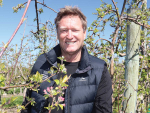
Cyclone Gabrielle: Hawke's Bay Orchardists Still Recovering
Three and a half years on from when Cyclone Gabrielle hit Hawke's Bay, some orchardists in the region are still receiving counselling to help them deal with the trauma they suffered.




 increase font size
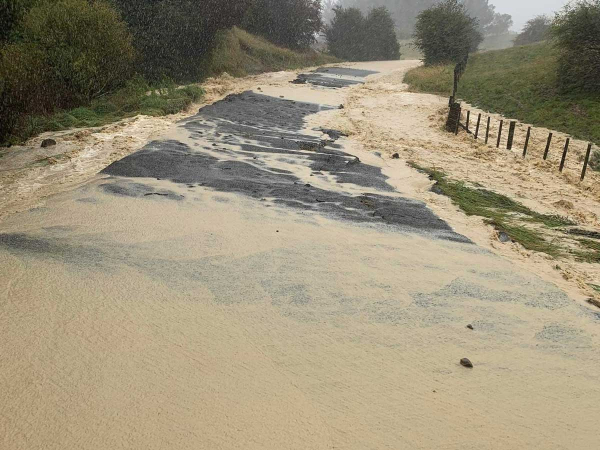 The Government has announced $4 million in funding for farmers and growers impacted by Cyclone Gabrielle. Photo Credit: Bryan Lorenz.
The Government has announced an initial $4 million in funding to help farmers, growers, whenua Māori owners and rural communities to co-ordinate recovery efforts from Cyclone Gabrielle.
Agriculture Minister Damien O’Connor says the breadth of the storm’s impact has been unprecedented, with milk collection disrupted, orchards inundated and livestock losses across much of the North Island.
“This is a dynamic situation and we are responding accordingly to help the rural sector to respond with this initial funding of $4 million,” he says.
Yesterday, the Government declared a National State of Emergency and announced an $11.5 million community support package to assist in the response to assist in the response to Cyclone Gabrielle.
It marks only the third occasion in New Zealand’s history in which a National State of Emergency has been declared. The other two occasions were the 2011 Christchurch Earthquake and the Covid-19 pandemic.
“This is a difficult time for many, with thousands of people’s homes and businesses affected by this large-scale adverse event – the Government is here to provide support.”
O’Connor says he expects more support will be offered and provided once a full and thorough assessment of the damage from Cyclone Gabrielle is complete.
“That destruction includes flooded farms and orchards, damage to vital roading and electricity infrastructure, and isolated communities.
“Conditions continue to make it difficult to assess the full extent of crop damage, livestock losses, and disruption.”
He says that widespread power outages are impacting dairy farmers’ ability to milk cows, especially in the Northland region, and MPI staff are working closely with sector groups and processors to minimise potential animal welfare issues.
“It’s expected damage caused by Cyclone Gabrielle will exacerbate feed issues experienced by some farmers in flood-affected areas. MPI is restarting the national Feed Working Group, which is a partnership with sector groups and specialist providers to monitor feed availability.
“This recovery mobilisation fund will help provide extra resources for sector organisations to support affected areas," O’Connor says.
Rural Communities and Emergency Management Minister Kieran McAnulty says this is an unprecedented event, which for some has come mere weeks after flooding hit the upper North Island and Cyclone Hale wreaked havoc on the Gisborne/Tairawhiti region.
"The MPI Rural Communities and Farming Support, On Farm Support, Animal Health and Welfare, and Māori Agribusiness teams are on the ground in the regions helping where they can,” he says.
Meanwhile Associate Agriculture Minister Meka Whaitiri says regional staff from MPI are focused on assisting the primary sector.
"We’re being regularly updated on the wellbeing of people and the welfare of their livestock. We will work directly with sector groups and organisations, including Rural Support Trusts, to identify and focus help to the areas of greatest need,” Whaitiri says.]
For assistance, contact:
Three and a half years on from when Cyclone Gabrielle hit Hawke's Bay, some orchardists in the region are still receiving counselling to help them deal with the trauma they suffered.
A miserable budget that didn’t deliver much for anyone.
The chief executive of Apples and Pears New Zealand, Danielle Adsett, says fruit quality this year is phenomenal and the sector is hitting crop estimates, which is great for growers.
National's decision to ‘dribble’ information about the NZ/India to Labour contributed to the delay in it deciding to supported the FTA.
Nearly three years on from Cyclone Gabrielle, Hawke's Bay apple orchardist Paul Paynter says they are still doing remedial work around their orchards and facing financial challenges.


Carrfields has announced the appointment of Stu Hall to the newly created role of chief operating officer, Carrfields Ltd, reflecting the continued growth of their agribusinesses and the need to ensure the company has the leadership capacity and support in place as it pursues the emerging opportunities ahead.

New Zealand's role is not to compete with Indian growers, according to NZ Apples and Pears.
The potato industry is celebrating the success of two rising stars - James Blair, the 2026 Young Grower of the Year and runner-up and innovation award winner, Amber Davy.
Twenty-eight emerging leaders from across the horticulture sector spent two days last month learning valuable skills and connecting with industry experts.
There are five entrants in this year’s Young Horticulturist of the Year, competing in a series of technical, practical, business and leadership challenges.
A seasoned horticulturist has been appointed to deliver the Apple Action Plan, a key initiative of the India-New Zealand Free Trade Agreement.





OPINION: The same mainstream media muppets that brought you Jacindamania in 2017 have been flat out pimping for the Opportunities…
OPINION: Your old mate reckons the atrocious way farmers in the UK are treated by their lords and masters in…




