Beef + Lamb New Zealand Awards 2026 Winners Announced in Christchurch
Last night saw the winners of the 2026 Beef + Lamb New Zealand (B+LNZ) Awards named at a gala dinner at Te Pae Christchurch Convention Centre.




 increase font size
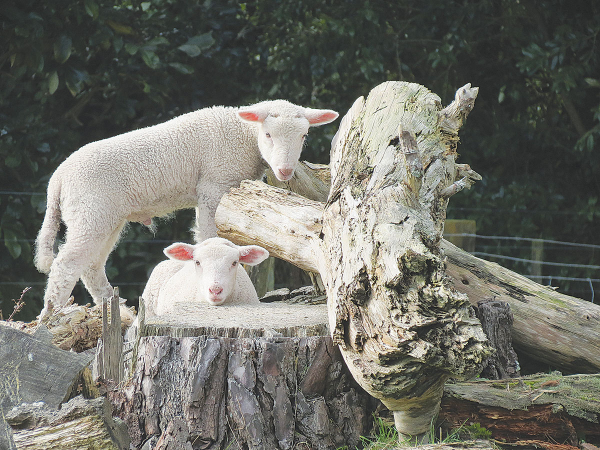 Lamb rearers are urged, when choosing a suitable milk replacer, to look beyond the product label.
A recent study by AgResearch suggested that farmers should avoid feeding milk replacers with vegetable proteins and fats to lambs in early life. However, supplier of milk replacers AgriVantage argues that there is plenty of other research around to dispute the conclusion of this study.
Given the relatively new practice of rearing orphan lambs compared to the artificial rearing of calves, we are still developing our understanding how the composition of a milk replacer can affect digestibility, energy availability and growth rates.
Extensive research carried out in the field of calf nutrition for over 100 years (Kertz et al., 2017) has provided valuable insights for animal nutritionists seeking to develop high quality milk replacers for lambs. This knowledge, when combined with a thorough understanding of the composition of ewe's milk and the results of research around lamb nutrition, has led to increases in both the number and quality of milk replacers available for lambs.
Ever evolving analytical methodologies have also provided an opportunity for nutritionists to obtain a better understanding of the nutrient composition, digestibility and ultimately the suitability of different raw materials. This includes milk and vegetable fats, for inclusion in the diets of these rapidly growing, valuable, young animals.
It is clear from extensive research data that, in addition to providing an important energy source for the young animal, fat also provides a source for the young animal, fat also provides a source of essential fatty acids, key components in the formation of cell membranes and bioactive lipids.
Fatty acids are either saturated or unsaturated, with saturated fats (e.g. butter and tallow) typically solid at room temperature, while unsaturated fats (e.g. soya oil) are typically liquid at room temperature.
Nutritionists working with monogastic animals like pigs and chickens have long understood that it is the degree of saturation of a fat (or the proportion of saturated to unsaturated fatty acids) which determines the digestibility of a fat rather than the fat source itself (Wiseman and Salvador, 1991). In other words, it's the balance of fatty acids that is important, not the source.
In ruminants, work carried out by French researchers (Toullec et al., 1969) showed that short chain fatty acids (with 8 or fewer carbons) are 100% digestible while medium chain fatty acids and long chain unsaturated fatty acids are 95% digestible. Saturated long chain fatty acids are between 80 and 90% digestible.
The balance of these fatty acids in a fat source subsequently determines the digestibility of that fat source, so that digestibility of tallow is 90%, peanut oil 93%, palm oil 95%, coconut oil 96% and milk fat 98%.
These estimates of supply of fatty acids and fat digestibility, which in turn is an important factor in the energy supply to the young animal.
An equally important factor influencing the digestibility of fat is the particle size and stability in the milk replacer solution (Tanan, 2005). Technologies which homogenise and encapsulate fat in a protein matrix improve fat digestibility and are only available to a few specialist milk replacer manufacturers.
So-called medium and long chain fatty acids make up over 97% of fatty acids found in both plant and animal fats. The short chain fatty acid butyrate, an important energy source for rumen epithelial cells as well as cells in the large intestine, only makes up less than 3% of the fatty acids found in cow and ewe's milk (Markiewicz-Kęszyck et al., 2013).
While we know that production of butyrate from starch fermentation in the developing rumen is the most important energy source for rumen epithelia cells and key to supporting rumen development (O’Hara et al., 2018), it is also true that salts of this fatty acid are commercially available and added into quality milk replacers containing vegetable fat.
Importantly for New Zealand farmers, these research findings are supported by practical experience. Many lamb (and calf) rearers around the world and in New Zealand successfully use milk replacers in which vegetable fat is the only fat source. In fact, milk replacers with butter fat (while common here) are not commercially available in the USA or Europe.
So, in much the same way as the book cover only presents a glimpse of the story, the list of ingredients making up the milk replacer is far less important than the digestible nutrient profile of the product and the performance of the product in your feeding system.
When choosing a suitable milk replacer (curding or non-curding, containing vegetable ingredients or 100% milk ingredients), look beyond the product label. Choose a product which is formulated by a qualified nutritionist, based on a thorough understanding of up-to-date scientific research, is manufactured to high quality standards, and which is backed by comprehensive local support.
Last night saw the winners of the 2026 Beef + Lamb New Zealand (B+LNZ) Awards named at a gala dinner at Te Pae Christchurch Convention Centre.
A significant breakthrough in understanding facial eczema (FE) in livestock brings New Zealand closer to reducing the disease’s devastating impact on farmers, animals, and rural communities.
A breakthrough in the understanding of Facial Eczema (FE) in livestock could bring New Zealand closer to reducing the disease’s impact.
An innovative idea for transforming mechanically deboned meat (MDM) into a meat flake for seasoning has taken top honours in the Meat Industry Association’s (MIA) first-ever Dragon’s Den competition.
The Government's plan to merge the seven crown institutes presents exciting possibilities for plant technology company Grasslanz Technology, says chief executive Megan Skiffington.


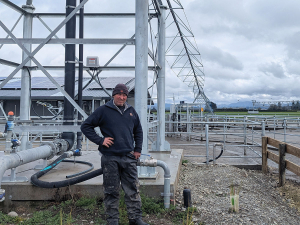
Converting a longstanding cropping farm to dairy was the only way to ensure the land stayed in the family long term, says new dairy farmer Rod May.

As the election heats up, Organics Aotearoa New Zealand (OANZ) has launched its election scorecard designed to help voters wanting to support policies that grow organic and New Zealand's organic sector.
A 'tsunami' of milk from key exporting countries is winding down and this may be good news for New Zealand dairy farmers.
Will the good times last? That's one of the key issues to come out of the latest Federated Farmers confidence survey.
Outgoing Fonterra Co-operative Council chair John Stevenson says that it has been a privilege to represent the co-op's farmer shareholders.
Have a plan in place for your cows and staff.




OPINION: The same mainstream media muppets that brought you Jacindamania in 2017 have been flat out pimping for the Opportunities…
OPINION: Your old mate reckons the atrocious way farmers in the UK are treated by their lords and masters in…