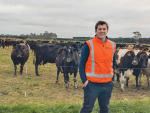
New Dairy Holdings CEO Backs Self-Contained Model
Running a tight and self-contained ship is the key to the success of the country's largest dairy farmer, says Blair Robinson, the new man at the helm of Dairy Holdings.




 increase font size
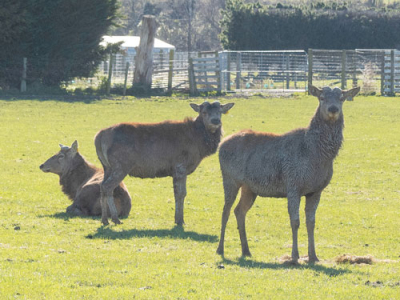 TB is still a problem in pockets of the country with deer and cattle affected.
Farmers, especially in the South Island, are being reminded that while Mycoplasma bovis has captured headlines, TB is a continuing problem in small pockets of the country.
Kevin Crews, head of disease management for OSPRI (manager of the TB-free programme) says outbreaks have spiked in the Strath-Taieri (Otago) area, with “niggles” in the last two to three years.
TB has been found in ferrets, pigs and possums in the area and work is underway to see whether it is related to the incidence in cattle herds.
“It’s not a major problem, but it is causing a spike,” Crews says. This is a reminder that farmers must be vigilant about TB and follow best-practice in routine testing, grazing and purchasing animals, pest control and ensuring all ASD and NAIT requirements are fulfilled and up-to-date.
“This is a minor glitch in an otherwise highly successful TB-free control programme,” Crews says. “It has cut TB infected herds down from a peak of over 1700 in the late 1980s and early 90s, to just 32 in June of this year.”
He says only two of these infected herds are in the North Island; most are on the West Coast and in small clusters in the Marlborough mountains and in the Strath Taieri area.
Crews says in late 1970s, control programmes had also reduced the incidence of TB to very low numbers.
“However, a lapse in control measures saw numbers soar within five years, hence the need to remain vigilant even when numbers are low.”
OSPRI’s TB Plan is aimed at eradicating TB in livestock within nine years, in possums by 2040 and in all NZ by 2015.
Beef + Lamb NZ is a partner organisation of OSPRI.
Running a tight and self-contained ship is the key to the success of the country's largest dairy farmer, says Blair Robinson, the new man at the helm of Dairy Holdings.
OPINION: It's no surprise that "world-class biosecurity" continues to dominate as the top priority for agribusiness leaders, holding the number one spot for the 16th consecutive year in KPMG's latest agribusiness report.
New Zealand is closer to eradicating bovine TB than ever before, but possums remain a threat, says Beef + Lamb New Zealand.
As an independent review of the National Pest Management Plan for TB finds the goal of complete eradication by 2055 is still valide, feedback is being sought on how to finish the job.
The move to bring bovine TB testing in-house at Ospri officially started this month, as a team of 37 skilled and experienced technicians begin work with the disease eradication agency.


Federated Farmers has welcomed new rural policies released by ACT, saying they align closely with its own election priorities.

Rural Contractors NZ says proposed changes to land transport rules for agricultural vehicles are a welcome response by the Government to out of date regulations which have seen members hit with huge fines.
Alliance is calling for final applications for its 2027 Graduate Programme, with applications closing on Sunday 25 October.
Decades piloting planes has ensured vet and farmer David Hayes is focused on safety. So, after a serious accident while welding on farm, he is sharing his experience so others can learn from it.
Canterbury milk processor, Synlait Milk has confirmed Leon Fung as its chief executive officer.
OPINION: Making it easier to collect rainwater and use it to grow crops and livestock is a no brainer.



OPINION: The same mainstream media muppets that brought you Jacindamania in 2017 have been flat out pimping for the Opportunities…
OPINION: Your old mate reckons the atrocious way farmers in the UK are treated by their lords and masters in…




