
Beef + Lamb New Zealand Awards 2026 Winners Announced in Christchurch
Last night saw the winners of the 2026 Beef + Lamb New Zealand (B+LNZ) Awards named at a gala dinner at Te Pae Christchurch Convention Centre.




 increase font size
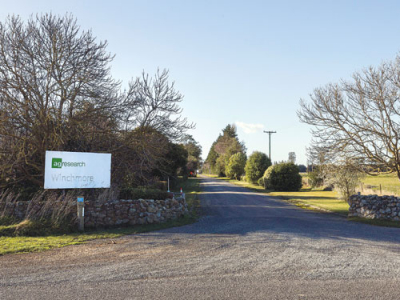 AgResearch’s Winchmore Research Station is up for sale.
A slice of New Zealand’s agricultural history is for sale in the form of AgResearch’s Winchmore Research Station, northwest of Ashburton.
However, AgResearch says its science programmes will not be affected by the sale because onsite research has dwindled in recent years. It is now run as a commercial operation, leased to a private farmer until the end of the 2019 harvest.
“Until recently we were farming it ourselves, but effectively as a commercial farm because the research had already largely moved off to other places,” says AgResearch national manager of farms, Ron Pellow.
“There’ll be no change to our research outcomes after the sale.”
The grazing and arable property, one of a dozen run by AgResearch, has contributed to at least 500 agricultural science publications over 72 years. It was acquired in 1946, primarily for research into the use of border dyke irrigation. It was converted to pivot irrigation in 2017.
Infrastructure includes four houses and buildings such as offices, meeting rooms, workshop and implement sheds, a woolshed and covered yards, and a new set of cattle yards with a concrete base.
Crops onfarm this season include potatoes, wheat, barley, maize, peas and specialist seed crops, and a small area in lucerne and permanent pasture.
“It’s a fantastic piece of land in the heart of Canterbury with great opportunity for a variety of land uses. It’s a good-sized property in the middle of the Ashburton growing area,” Pellow says.
A long-running fertiliser trial there will continue, run by the Fertiliser Association of NZ since the 1950s. That will continue on a 4.1ha portion of the property under the terms of their lease agreement with AgResearch.
Fertiliser Association chief executive Vera Power says the site has been providing extremely useful information for almost 70 years.
“This has allowed us to track changes to pastoral land as agriculture evolves and supports our evidence base for sustainable management.”
Winchmore’s fertiliser trials are NZ’s longest-running fertiliser trials under pasture. They complement another long-term fertiliser trial on North Island hill country near the Manawatu Gorge.
AgResearch director of infrastructure John O’Dea said the combination of Lismore soils and spray irrigation at Winchmore would enable a wide range of future cropping and grazing options.
“Modern de-stoning technology now means the stony Lismore soils are regarded as some of the most sought-after and productive soils for intensive vegetable and arable production.”
The 308ha farm is being subdivided into two parcels, either side of the Dromore Methven Road, with the larger parcel of 247ha on the north side subject to the current open-market sale offer.
It is to be sold by deadline private treaty, with offers to be received by the end of February (if not sold prior).
AgResearch is not yet revealing its plans for the smaller parcel on the southern side.
Last night saw the winners of the 2026 Beef + Lamb New Zealand (B+LNZ) Awards named at a gala dinner at Te Pae Christchurch Convention Centre.
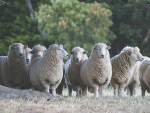
A significant breakthrough in understanding facial eczema (FE) in livestock brings New Zealand closer to reducing the disease’s devastating impact on farmers, animals, and rural communities.
A breakthrough in the understanding of Facial Eczema (FE) in livestock could bring New Zealand closer to reducing the disease’s impact.
An innovative idea for transforming mechanically deboned meat (MDM) into a meat flake for seasoning has taken top honours in the Meat Industry Association’s (MIA) first-ever Dragon’s Den competition.
The Government's plan to merge the seven crown institutes presents exciting possibilities for plant technology company Grasslanz Technology, says chief executive Megan Skiffington.


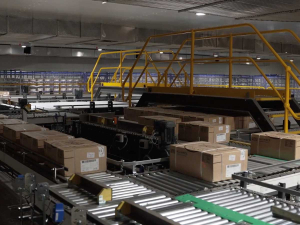
Alliance is calling for final applications for its 2027 Graduate Programme, with applications closing on Sunday 25 October.
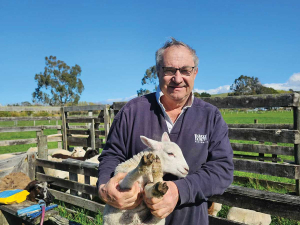
Decades piloting planes has ensured vet and farmer David Hayes is focused on safety. So, after a serious accident while welding on farm, he is sharing his experience so others can learn from it.
Canterbury milk processor, Synlait Milk has confirmed Leon Fung as its chief executive officer.
OPINION: Making it easier to collect rainwater and use it to grow crops and livestock is a no brainer.
As part of its Election 2026 coverage, Rural News asked political parties how they would help pull the arable sector out of the doldrums. Here's what they said:
Farmers are being encouraged to rethink how they manage waste on farm with the launch of ruralwastesorted.co.nz, a new website bringing together practical tips, real farmer experiences and resources.


OPINION: The same mainstream media muppets that brought you Jacindamania in 2017 have been flat out pimping for the Opportunities…
OPINION: Your old mate reckons the atrocious way farmers in the UK are treated by their lords and masters in…




