Wool Impact Signs Partnership With ASB To Back Strong Wool Growth
Wool Impact and ASB have signed a new partnership with the bank set to provide financial backing to support the revitalisation of New Zealand's strong wool industry.




 increase font size
 Trevelyan managing director James Trevelyan.
Family-owned, single-site kiwifruit and avocado post-harvest service provider, Trevelyan’s has signed a sustainability linked loan (SLL) with ASB.
SLLs require the borrower to commit to set key environmental, social, and/or governance (ESG) targets, with borrowing costs adjusted based on their performance against these targets.
The company has committed to three key focus areas: reductions in both waste and carbon emissions, and improved wellness metrics for its workforce.
Trevelyan’s managing director, James Trevelyan, says the focus on waste, carbon emissions and wellness feeds back to the company’s sustainability framework of three key pillars that define its principles of working smart, treading lightly, and treating their people with respect.
“We are fully aware that sustainable practices are a long-term investment and will drive ethical and financial value for our business, our people, and the planet. We are delighted to partner with ASB with this shared vision,” says Trevelyan.
He says that one of the company’s goals is to reduce waste sent to the landfill by 10% each year, based on a 2021 baseline, with an additional goal of sending zero waste to landfill by 2030.
ASB head of sustainable finance, James Paterson says it is encouraging to see businesses increasingly focused on sustainability and doing business more thoughtfully.
“The work from Trevelyan’s with this new SLL is a credit to them and their desire to grow a better future and tread lightly as they do so. We are proud to help bring this to life.”
He says ASB is progressing well on its mission to support industry transition with a cumulative sustainable lending target of $6.5 billion by FY30 for green, social, and sustainability-linked lending across the rural, property, corporate and business sectors with around $810 million committed to date.
The verification of the SLL, defining the key performance indicators and the development of the documentation was supported by Deloitte and Russell McVeagh.
“Aligning funding arrangements with its sustainability goals demonstrates genuine commitment to bringing about positive change, and our team is proud to have supported in this significant step towards realising Trevelyan’s ESG targets and ambitions,” says Russell McVeagh partner John Powell.
ASB is Toitu Carbon Zero certified and recently became a signatory to the UN Principles for Responsible Banking - the world’s foremost sustainable banking framework developed through a partnership between banks worldwide and the United Nations Environment Programme Finance Initiative (UNEP FI).
Wool Impact and ASB have signed a new partnership with the bank set to provide financial backing to support the revitalisation of New Zealand's strong wool industry.

As electricity prices soar, farmers appear to be looking for alternative energy sources.
A new report from ASB and Lincoln University shows how smarter, more diverse land use could unlock billions in value for farmers and the wider economy.
A recent trip to Singapore has highlighted the importance of marketing better, says ASB’s new head of food and fibre, Kristen Ashby.
Ag First chief executive James Allen says dairy farmer optimism is on the rise.


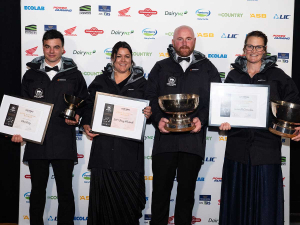
Entries opened on Monday, 5 October 2026 for the 2027 New Zealand Dairy Industry Awards (NZDIA), which organisers describe as the nation's biggest celebration of excellence in the dairy sector.
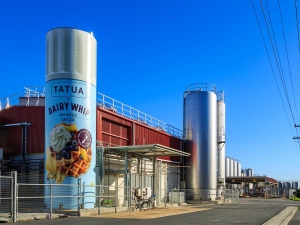
Waikato milk processor Tatua has again declared a record milk payout to farmer shareholders, leaving other processors in the dust.
A Labour-led Government won’t be bringing back the controversial freshwater rules of 2020.
National’s much-touted free trade deal with India featured in the Rural Issues Debate at Mystery Creek, Hamilton on Wednesday night.
New Zealand's 2026-27 freshwater fishing season has opened, with anglers encouraged to head to rivers and lakes over the coming days as conditions look favourable across much of the country.
Central Otago District Council (CODC) has voted against a plan to spread treated sewage sludge from Cromwell and Alexandra on farmland near Lauder, a decision Federated Farmers says reflects strong opposition from rural residents.





OPINION: The same mainstream media muppets that brought you Jacindamania in 2017 have been flat out pimping for the Opportunities…
OPINION: Your old mate reckons the atrocious way farmers in the UK are treated by their lords and masters in…