OPINION: New Zealand agriculture has always been built on partnerships.
In a country a long way from global markets, with challenging terrain and changeable weather, farmers have always recognised that collaboration is how we compete, innovate and survive.
A great example of this is Zespri.
Faced with instability and fragmented market development during the 80s and 90s, Kiwi growers united as a co-operative behind a single export model to become one of the world's most successful horticultural marketing businesses, and a major export earner for New Zealand. Imagine where our kiwifruit sector would be if Zespri had never been formed.
I believe that spirit of partnership and collaboration matters more now than ever.
Agriculture's Importance
Agriculture is indisputably the backbone of the New Zealand economy.
Our food and fibre sector generates more than 80% of the country's export earnings, often acting as a shock absorber during periods of global uncertainty or weak domestic spending.
Relatively strong commodity prices and export demand have repeatedly helped support our national income during hard times, something that many Kiwis outside the sector don't always fully appreciate.
Agriculture remains one of the few sectors where New Zealand can genuinely compete at scale.
Partnerships Are Key
Continuing to grow New Zealand's economy largely depends on how well we collectively work together, whether you're a farmer or grower, science provider, iwi, government agency, exporter, or co-operative.
In my view, New Zealand's future belongs to those who come together to invest for the long term.
Coming Together For Greater Impact
Fonterra was created more than 25 years ago because farmers knew by pooling resources, expertise and market access, farmers could create a business that could reach far beyond what an individual farmer could achieve.
The co-operative enabled a 'grass to glass' value chain with scale milk collection and manufacturing in New Zealand aligning and building upon the global market position established by the New Zealand Dairy Board.
More recently, investment in renewable energy and lower-emissions technology such as the Kapuni green hydrogen project in Taranaki, is a great example of where industry, iwi, energy providers and government are helping develop new pathways for domestic manufacturing resilience and cleaner production systems.
These types of collaborations require work, along with big picture thinking and long-term investment, but they're crucial if New Zealand wants to remain globally competitive.
Partnerships Build Resilience
One of the strengths of New Zealand agriculture is that we have historically found ways to pool resources and share risk.
Ballance emerged as a co-operative because farmers understood they could do more together, whether that was securing access to fertiliser, exporting products to international markets, or investing in infrastructure and innovation.
Collectively, New Zealand's top 30 co-operatives generate revenues equivalent to roughly 12.5% of national GDP, directly employing nearly 50,000 people.
Several rank among the world's top 300 co-operatives.
The co-operative model continues to have longevity, I believe, because it builds resilience into operations and helps drive farming forward.
Investing Through Cycles
Anyone involved in agriculture knows the sector moves in cycles. When industries collaborate and invest in partnership, even through a downward cycle, with farmers, growers, scientists and businesses sharing knowledge openly, the sector becomes stronger and more adaptable.
That partnership approach has helped New Zealand agriculture build a global reputation for quality, innovation and efficiency.
It's why co-operatives like Fonterra and Zespri compete successfully in international markets despite our distance to customers. And why our rural sector continues to perform well around the world.
Partnerships, collaboration and co-operatives, whether they be for better productivity, new technology or pooled resources, will ultimately improve productivity and sustainability and drive us forward. And when agriculture succeeds, New Zealand does too.
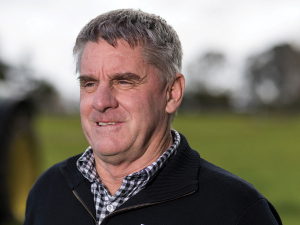
Kelvin Wickham is Ballance Agri-Nutrients chief executive.