Why Now Is the Time to Plan Farm Succession, Findex Says
OPINION: Succession and long-term planning are perennial topics because it is perpetually sidelined on busy farms.




 increase font size
OPINION: A new study, published recently in Proceedings of the National Academy of Sciences, adds to some existing evidence about a simple way to cut emissions dramatically - seaweed.
Researchers from the University of California, Davis, tested a seaweed-based supplement for grazing beef cows on a ranch in Montana. They gave 12 cows the supplement but left another 12 without it; the cows wandered around for 10 weeks, burping as usual, but the ones that ate the supplement produced 37.7% less methane than their buddies — and showed no differences afterward in terms of health or weight.
That’s an enormous improvement, especially of a greenhouse gas that is substantially more powerful a warming agent than carbon dioxide, though on a shorter time scale.
OPINION: Succession and long-term planning are perennial topics because it is perpetually sidelined on busy farms.
OPINION: Being a stock manager of a Government MP's farm can come in handy.
OPINION: Groundswell's opinion of the incumbent farm industry representatives isn't high.
Farms across the upper North Island are trialling different pasture mixes as part of a research programme that aims to build greater resilience into farming systems.



Fonterra Co-operative Group chief financial officer Andrew Murray has resigned to take up a role outside the dairy giant.
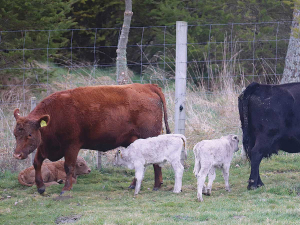
A major move is about to get underway to improve the quality and viability of dairy beef and cattle in NZ.
Veterinarians say changes to the code of welfare for dairy cattle provides a positive foundation for improved cattle welfare across the country.
Today, 15 October, is the International Day of Rural Women, which recognises rural women’s contribution to farming, communities and the environment.
Global dairy giant Lactalis has integrated its Australian operations with the Mainland Dairy consumer business it acquired from Fonterra earlier this year.
High country stations, mixed sheep and beef farms, Māori-owned farms, corporates and family operations are among the nine commercial farms taking part in the Livestock Innovation Farming Transformation programme, known as LIFT.
OPINION: It seems Canterbury processor Synlait is still in the doldrums.
OPINION: Get offside with New Zealand First leader Winston Peters at your own peril.