Sunday, 30 June 2019 18:54

Hoof blocks keep away lameness

Written by 

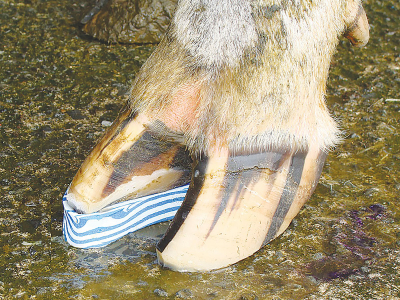
Moving promptly against lameness in cows deals to their pain and can reduce long term hoof damage, says Shoof International, which markets Walkease hoof blocks.

Early intervention reduces the duration and severity of lameness although its not always possible to eliminate it, Shoof says.

The blocks are for use when lameness is detected early. They are a new style claw prosthetic made from ethylene-vinyl acetate (EVA), a product more commonly used in the supports of running shoe soles. 

Used with a fast drying cyanoacrylate adhesive, Walkease offers a fast and effective way to address lameness early.

It works by elevating the affected claw, allowing the animal to transfer weight to the healthy claw. This speeds recovery via increased mobility and function (a reduction in locomotion score).

Blocks compress down naturally over 10-14 days of wear so the healthy claw suffers no ill effects. 

The blocks are claimed inexpensive, easy to fit and make for quicker recovery.

www.walkease.co.nz 

More like this

Lameness in Dairy Cows: Prevention, detection & recovery

Lameness takes toll on cows and farm performance. A lame cow produces less milk, loses condition and takes longer to cycle. The good news? Catching it early and treating it promptly gives her the best shot at a quick, full recovery — and helps keep your herd’s productivity on track.

An intelligent eye on cows

According to the DairyNZ’s lameness cost calculator, lameness costs over $500 per lame cow – due to lost production, having to withhold milk from treated animals or reproductive problems.

Kicking lameness into touch

DairyNZ has calculated that the cost of lameness in a 550-cow herd with 20% lame cows per year amounts to direct and indirect costs of $750 per cow.

Featured

Southland Farmers Face Wet Weather Toll, Support Available

Farmers across parts of Southland and South Otago are continuing to deal with difficult conditions after a prolonged run of wet weather, with pressure building around feed supply, stock management, pasture damage, farm infrastructure and everyday workloads.

How Wearable Tech Powers This 1,850-Cow Dairy Farm

For Canterbury dairy farmers Sian Meijer and Rick Wobben, wearable technology has become one of their most valuable on-farm tools - helping manage 1850 cows across an expansive, high-performing dairy operation while improving efficiency, mating outcomes and day-to-day decision making.

National

Machinery & Products

» Latest Print Issues Online

Milking It

» Connect with Dairy News

» eNewsletter

Subscribe to our weekly newsletter