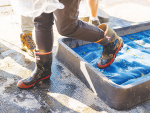
Biosecurity Ranked Top Priority In KPMG Agribusiness Agenda 2026
According to new research, industry leaders have ranked world-class biodiversity as the number one priority for the 16th year in a row.




 increase font size
 Head of global agri for KPMG, Ian Proudfoot.
The head of global agri for KPMG, Ian Proudfoot says he has concerns that the apparent fast recovery in dairy prices is leading to complacency which is a problem.
He has found in recent year a strong correlation between better prices and complacency and he says farmers need to keep watch on their cost of production or be caught out financially.
Proudfoot says because of the fast recovery, some farmers who had been planning changes suddenly put these on hold.
And he says the dairy industry faces new challenges caused by the breakdown of the relationship between the US and Mexico and further uncertainty caused by Donald Trump’s election.
“Mexico was the largest buyer of American skim milk but they now appear to have reduced their buying which will mean the US will have to find different markets for some of that product and SE Asia is one of the potential markets.
“This means they would compete with New Zealand products destined for that market so we could see changes here in NZ quickly over the next couple of GDT auctions,” he says.
Proudfoot says NZ doesn’t have a special trading relationship with Mexico, but was relying on the TPP to deliver that which he doesn’t believe will happen. He says NZ now needs to urgently work on building special trading relationships with Mexico and Japan.
Meanwhile Proudfoot says overall American milk production is up and there are no signs of a reduction in Europe.
Meanwhile he’s not sure NZ milk production will be down as much as predicted a year ago. Though some farmers are suffering from drought and wet, many had a better November and December and this may reduce the drop in production.
According to new research, industry leaders have ranked world-class biodiversity as the number one priority for the 16th year in a row.

Biosecurity remains the top priority for agribusiness leaders, according to KPMG’s 2025 Agribusiness Agenda released last week.
Biosecurity remains the top priority for agribusiness leaders, according to KPMG's 2025 Agribusiness Agenda released last week.
OPINION: In the same way that even a stopped clock is right twice a day, economists sometimes get it right.
OPINION: Noted economist and self-promoter Cameron Bagrie took one look at KPMG's recently released Financial Institutions Performance Survey on banks and zeroes in one key number that suggests banks are so risk averse in this country that they are probably stifling growth and innovation.


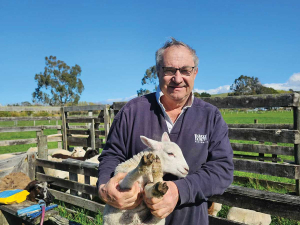
Decades piloting planes has ensured vet and farmer David Hayes is focused on safety. So, after a serious accident while welding on farm, he is sharing his experience so others can learn from it.
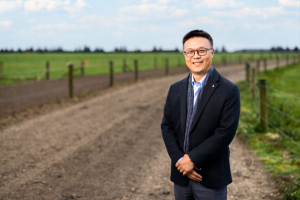
Canterbury milk processor, Synlait Milk has confirmed Leon Fung as its chief executive officer.
OPINION: Making it easier to collect rainwater and use it to grow crops and livestock is a no brainer.
As part of its Election 2026 coverage, Rural News asked political parties how they would help pull the arable sector out of the doldrums. Here's what they said:
Farmers are being encouraged to rethink how they manage waste on farm with the launch of ruralwastesorted.co.nz, a new website bringing together practical tips, real farmer experiences and resources.
New Zealand Winegrowers (NZW) is celebrating the India-New Zealand Free Trade Agreement (FTA) coming into force today, bringing New Zealand wine improved access to one of the world’s fastest-growing economies.

OPINION: It seems Canterbury processor Synlait is still in the doldrums.
OPINION: Get offside with New Zealand First leader Winston Peters at your own peril.




