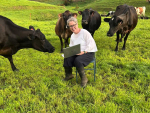
International Day of Rural Women: Two DairyNZ Farmers’ Stories
Today, 15 October, is the International Day of Rural Women, which recognises rural women’s contribution to farming, communities and the environment.




 increase font size
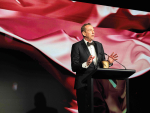
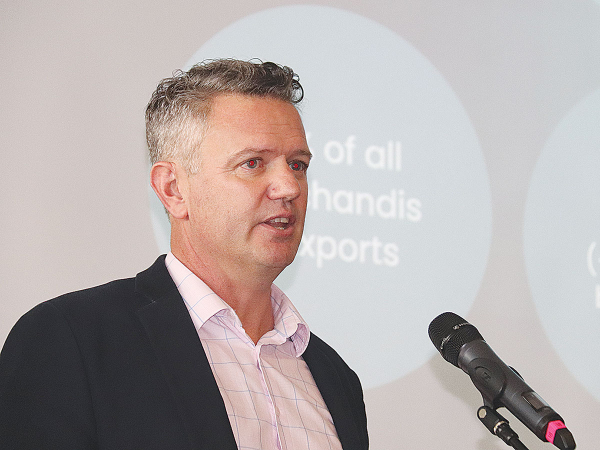 NZAB founding director Andrew Laming.
A leading financial and banking advisor says he doubts if most dairy farmers fully understand the dynamics of banking.
Speaking at a day-long seminar in the Taranaki town of Hawera, organised by DairyNZ and the Dairy Trust of Taranaki, Andrew Laming told the gathering of more than 200 people that the way banks assess credit is a mixture of science and art.
Laming is a founding director of NZAB which claims to know every bank and every rate better than anyone in the market. Laming says their business is about helping farmers understand what a genuinely better banking deal looks like - not just on price, but on structure, terms, and flexibility.
He says when assessing the credit of a farmer client, banks consider some of the objective numbers but also some subjective stuff, so there's a lot of interpretation that goes on.
"And sometimes it's not even about a farmer's own property. Sometimes it could be about their region or it just might be the subjective view of a particular bank. For example, if that bank had a book full of dairy loans, they may be negative to an individual proposal regardless of its merits," he says.
Laming says the risk in such a situation is that a farmer, turned down for a purely subjective reason, may feel that their proposal is no good, which may be far from the truth. He says when it comes to dealing with banks, farmers should look at taking advice from people who know the intricacies of the banking system and what goes on behind the scenes.
"Someone who speaks bank lingo," he says.
Laming emphasises that he's not criticising banks as such, but is pointing out that it's more than just getting a good interest rate for a loan.
He says in the case of NZAB, loans are the tip of the iceberg in terms of their work.
Dealing with Data
While there is a trend to family corporates in the dairy sector, Andrew Laming says large doesn't necessarily mean best performance.
He notes that some of the best performing dairy farms are run by a husband-and-wife team because they have the ability to drive costs down. But when it comes to issues such as environmental management, Laming says banks tend to like the larger groups because the chances are they will have dedicated staff to handle some of the complexities in this area.
"Banks do like them because, if it's large, the chances are it will be a well-governed business, often with independent advice around it, and they (the banks) can make some very good risk assessments on the business," he says.
He says one of the prime issues facing the dairy industry is the huge amount of data and other information that keeps coming at farmers - about a raft of new rules, regulation and potential solutions to deal with these.
"The challenge is - how can we simplify this?" he says.
To better manage issues relating to the environment and remain profitabile, Laming believes one of the roadblocks is the lack of capital.
He says some changes are occurring, for example, banks are offering interest free loans for installing solar and lower interest rates for other 'green' projects. But he says the reason rural loans are higher than a normal mortgage is that rural is deemed riskier and because banks must hold more capital in reserve to protect themselves.
He says changes to the banking system in NZ may help, but he believes that access to overseas capital and more hybrid loan arrangements will be needed in the future. He says this will particularly apply as older farmers exit the industry and the next generation takes over the business.
Laming says the issue of succession is complex and ensuring that all parties get a 'fair deal' will require new and innovative financial instruments.
Today, 15 October, is the International Day of Rural Women, which recognises rural women’s contribution to farming, communities and the environment.
The first major update to the Dairy Cattle Code of Welfare in more than a decade has been released, marking what DairyNZ describes as an important step in ensuring animal welfare standards continue to evolve alongside scientific evidence and on-farm realities.
Have a plan in place for your cows and staff.
DairyNZ deputy chair Cameron Henderson has been re-appointed unopposed for another term.
OPINION: The stats speak for themselves.



Alliance is calling for final applications for its 2027 Graduate Programme, with applications closing on Sunday 25 October.
Decades piloting planes has ensured vet and farmer David Hayes is focused on safety. So, after a serious accident while welding on farm, he is sharing his experience so others can learn from it.
Canterbury milk processor, Synlait Milk has confirmed Leon Fung as its chief executive officer.
OPINION: Making it easier to collect rainwater and use it to grow crops and livestock is a no brainer.
As part of its Election 2026 coverage, Rural News asked political parties how they would help pull the arable sector out of the doldrums. Here's what they said:
Farmers are being encouraged to rethink how they manage waste on farm with the launch of ruralwastesorted.co.nz, a new website bringing together practical tips, real farmer experiences and resources.



OPINION: It seems Canterbury processor Synlait is still in the doldrums.
OPINION: Get offside with New Zealand First leader Winston Peters at your own peril.




