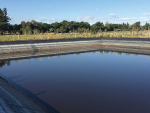
Dairy Effluent Management: Right Amount at the Right Time
Good effluent management on a dairy farm combines a well-designed system with proper processes to ensure the right amount of effluent gets applied to pasture at the right time.




 increase font size

A judge has ordered a Northland farmer to pay $24,000 for illegal discharges of dairy effluent from a storage tank and pond at the man's Donnelly's Crossing property in 2010.
Graham Owen Fox – who had earlier admitted both charges laid by the Northland Regional Council – was sentenced yesterday (July 9) when a reserved decision by Judge Greg Davis was delivered in the Whangarei District Court.
Fox had been charged with intermittently discharging effluent from an effluent storage tank to land "in circumstances that may have resulted in the contaminant entering an unnamed contributory of the Waima River" between 11 and 14 September 2010.
He had also been charged with discharging effluent from a storage pond to land on the same property which may have resulted in it entering an unnamed Waima River tributary on an unknown date between 20 August and 14 September 2010.
In his sentencing notes, Judge Davis noted that Fox "was on holiday at the time these events occurred or had returned that day".
"...That then poses the question as to whether the onus falls upon the farm owner to ensure that there are adequate management systems in place and adequate farm coverage or labour coverage to ensure these events simply did not occur."
The judge said in his view the draining of the effluent pond was not an event that had occurred quickly or over a short period.
"It is an event that occurred over a number of days and could, with the appropriate checks being put into place, have been discovered and avoided at an early stage in the discharge event."
Similarly, evidence was given that Fox's farm manager was working long hours and did not have time to check a pot spreader, however, the issue of ensuring adequate labour was available was one for the farm's owner.
"In my view, liability for these events must be sheeted home to the farm owner."
The judge said Fox claimed any environmental damage from his offending must be considered minimal "because river quality in Northland is generally poor".
"That is in part because of the runoff from dairy farms that have had an effect on the water quality in the area," the judge said. "The fact that the water quality of Northland rivers may be poor or not an appropriate standard does not, in my view, create a situation where water quality therefore must remain at that level."
'The onus must be on all users of the environment to ensure that the environment is appropriately protected and that the standards in an industry that relies upon the environment for its very existence are raised gently but progressively over time."
The judge said Fox had sought a discharge without conviction, believing the consequences of a conviction would be out of all proportion to the gravity of his offending.
However, in the judge's view the offending was serious and agreeing to such a discharge "would send the wrong message to others in the industry".
"It would in effect allow farm owners to abdicate their responsibilities by delegating their duties as the farm owner to a farm manager."
The judge accepted the industry was one requiring long hours and that holidays "are no doubt rare and to be cherished".
"But that, in itself, cannot in my view allow a farm owner to abdicate responsibility for ensuring that all the appropriate systems are in place and working to ensure these events simply do not occur."
He believed an appropriate starting point for a fine was $40,000 as the systems failures (both management and plant) were not a one off.
In setting that $40,000 starting point, the judge said he had kept in mind that Fox was not responsible for the discharges "in the sense that you personally failed to connect the irrigator, but rather as...one where you failed to live up to your responsibilities as farm owner".
However, he discounted that figure by $8000 to acknowledge Fox's cooperation with authorities (including over the separate prosecution of his farm manager) and his remorse, as well as another $8000 reduction in recognition of his early guilty pleas.
That left a fine of $24,000 which – coupled with the conviction – was what he imposed. Ninety percent of the fine will be paid to the regional council.
Good effluent management on a dairy farm combines a well-designed system with proper processes to ensure the right amount of effluent gets applied to pasture at the right time.
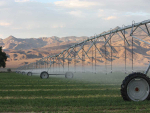
For years, IrrigationNZ has called for a coordinated national approach to water security, backed by enabling regulation, strategic infrastructure investment and sound technical practice. As the 2026 general election approaches, many of these priorities are now reflected in political commitments and legislative reforms. That represents significant progress, but the real measure of success will be turning policy into practical outcomes, says IrrigationNZ principal technical officer Stephen McNally.
Tararua district farmer Jamie Harris milks around 400 cows using a split calving system on his farm, Crossdale Dairies.
Water management is an integral component of sustainable farming practices, according to Watermetrics.
Two farmers and two farming companies were recently convicted and fined a total of $108,000 for environmental offending.



During the nesting season, from September to December, industrious starlings can quickly build nests in the darker areas behind tractor and vehicle, usually close to hot engines, typically resulting in localised damage or in some cases complete write-offs.
The meat processing industry is much more collegial than it was in the past and is now more focused on common goals.
With the last couple of months having seen some potential tractor purchases put on hold with the impending election and continued input cost rises, year-to-date figures, ending September, has seen deliveries up around 5% over the same period in 2025, with a total of 2026 units.
Beef+Lamb New Zealand is calling for nominations for director roles in the Northern South Island and Northern North Island electoral districts.
Fonterra chief executive, Richard Allen says being resilient has helped the dairy industry overcome extreme volatility in recent years.
The head of the Ministry for Primary Industries (MPI) trade and international relations group says New Zealand is well-positioned to secure trade access and compete internationally as the world becomes more complicated, demanding and uncertain.




OPINION: It seems Canterbury processor Synlait is still in the doldrums.
OPINION: Get offside with New Zealand First leader Winston Peters at your own peril.