Farmers Warned Over Track Dangers After Wairarapa Floods
The terrible floods that hit the Wairarapa may have subsided, but the danger to farmers still exists, according to local Federated Farmers president Rob Hickson.




 increase font size
 Leo Hendricks, DairyNZ
A 'localised drought' has been declared in Wairarapa as the southern and eastern parts of the region start to feel the impact of the dry conditions.
Greater Wellington Regional Council general manager, catchment management group, Wayne O'Donnell, says a local drought committee met recently, comprising local authorities, banks, accountants, farmers and rural consultants; MPI was also represented.
"The main concern was the length of time the conditions have been in this state in Wairarapa, back to October when the spring was cold and dry; then quite quickly in November it developed as very hot and windy," O'Donnell says.
"Rainfall has been patchy so we have a situation in South Wairarapa and the north eastern coastal areas where the moisture deficits are sitting at 120mm to 130mm. That's getting into really severe conditions considering 150 is permanent wilting."
O'Donnell says data from two NIWA sites in the region has been given to MPI. The drought committee will meet again this week, update the data and pass it to MPI.
"Farmers are feeding out their winter feed and they don't have any pasture cover. The concern is that unless we get significant rain – say 50mm plus as a minimum – in March we're going to head into winter without any pasture cover and depleted winter feed supplies. It's serious."
He says if conditions deteriorate much more the committee will consider asking the Minister for Primary Industries to declare a medium scale drought. But while this will bring help from Rural Support Trust, banks, IRD, etc it won't solve the real problem – lack of feed.
"Wairarapa evenings and mornings are now getting a lot cooler, with heavy dews. So it won't take long for the temperature to drop and potentially disaster will be heading our way for winter."
Meanwhile DairyNZ Wairarapa consulting officer Leo Hendricks says dairy production has fallen 10% in the past few weeks and farmers have sent their cull cows to the works. And there may be a shortage of run-offs for young stock in winter.
"Most run-offs are not irrigated so they look brown. Once-a-day milking is being used a fair bit and generally there is not a lot of room to move; farmers are starting to dry off lighter and early-calving cows to take pressure off the [herds] and off the feed supply. There is some feed around; you can still buy PKE and there's a bit of baleage around but it's getting more expensive. It's a matter of trying to bridge the gap until it rains, but the rain keeps on being delayed."
The terrible floods that hit the Wairarapa may have subsided, but the danger to farmers still exists, according to local Federated Farmers president Rob Hickson.

Testing confirms H5 bird flu in a single northern giant petrel, found dead on a remote Cape Palliser beach in the Wairarapa, says Dr Mary van Andel, the Ministry for Primary Industries' (MPI) Chief Veterinary Officer.
Signing up to a benchmarking tool is not about competition, but about improving collectively, says Ximena Puig and Alvaro Luzardo who are 50-50 sharemilkers at a 164-hectare (effective) dairy farm in Eketāhuna in the Lower North Island.
I am writing this story with the 2025 harvest in full swing.
Fire and Emergency New Zealand has revoked the restrictions on lighting outdoor fires in Wairarapa’s southern coastal area.


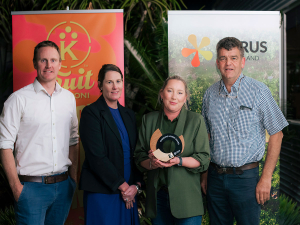
New Zealand's citrus growers were challenged to build their future on the value embedded in their fruit rather than the volume they produce, at Citrus New Zealand's annual gathering in Gisborne on 17 September.
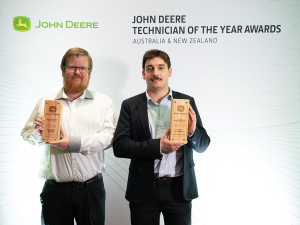
Leading John Deere technicians and apprentices from New Zealand and Australians were recognised at the recent sixth annual JD Technician of the Year Awards, held in Brisbane.
In Dacre, near Invercargill in New Zealand’s South Island, Bruce Dinnington is running a dairy operation unlike any other.
A free online platform aggregating governance vacancies across rural and regional New Zealand has been launched.
Environment Minister Nicola Grigg has announced details of a new rural plastics recycling scheme.
Agricultural drone operators say that a government decision to allow lower-risk drone work without certification won’t lower standards but drive innovation and efficiency.


OPINION: It seems Canterbury processor Synlait is still in the doldrums.
OPINION: Get offside with New Zealand First leader Winston Peters at your own peril.