Beef + Lamb New Zealand Awards 2026 Winners Announced in Christchurch
Last night saw the winners of the 2026 Beef + Lamb New Zealand (B+LNZ) Awards named at a gala dinner at Te Pae Christchurch Convention Centre.




 increase font size
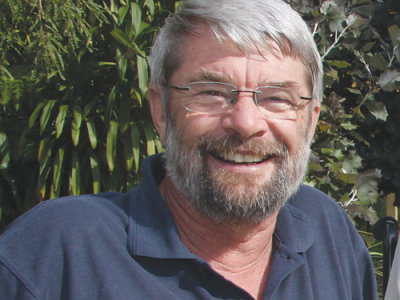 AgResearch senior scientist Trevor James.
Farm biosecurity in New Zealand needs to take a quantum leap forward whether for velvetleaf or any other threat, says AgResearch senior scientist Trevor James.
Farmers need to be aware of weeds, pathogens and diseases and how they move from farm to farm, says James who heads the Velvetleaf Action Group.
The group has just been granted $579,000 from the Sustainable Farming Fund (SFF) for three years research into Management Options for Velvetleaf.
“Farmers need to be aware of what problems they might be introducing to their property if they bring dirty equipment, contaminated harvesters etc, onto their property.
“Farmers also need to be aware that not all the weeds in the world are already in New Zealand. There are a lot out there which are very bad weeds in other parts of the world which are yet to be introduced into New Zealand.
“If they see something which looks unusual and they don’t know, have it identified. Having a weed identified with smartphones and that sort of thing is extremely easy. All you need to do is take a photo of it and send it to somebody, whether it is a chemical rep, or the regional council or directly to me.
“That is such an easy step these days. Nearly every farmer has a smartphone, nearly every farmer could take a photo on a smartphone and send it off.”
Who they send it to in the first place is secondary to making sure they get an answer, he says.
“I get weekly photographs on my phone or computer asking what’s this? It is increasing but it needs to happen a lot more. We are only too happy to provide a reply and it takes five minutes. The technology is such a boon.”
James says there is support out there. “If there are any questions get hold of somebody…. from the Foundation for Arable Research (FAR) or regional councils etc to channel that help as required.”
Although the Velvetleaf Action Group is investigating management options, the Ministry for Primary Industries’ biosecurity response is still long-term eradication. But more management tools are needed short term.
James is based at Ruakura and says in the initial response regional councils and FAR provided funding for pilot studies and basic research at a site near Matamata. To expand the operation the group applied to the SFF and have been successful in funding for three years’ research.
They will replicate some work done in the South Island and if suitable sites can be found in the South Island FAR is keen on helping the Waikato based group to extend its work there.
James explains there have been two incursions in the last 15 years. “One of them was into Waikato which got established well before they discovered it and has been spread around a number of other properties with silage and maize harvesting. We are working very closely with a Waikato Regional Council in managing that one.
“Most of the large number of sites in the second incursions, where it was introduced as a contaminant in fodder beet seed, are located in the South Island. We don’t know how many of them might have become established. Some councils are relying very much on farmers to report it.
“Unfortunately we think that probably this isn’t the best way to go. We need to have an independent person inspect these farms. Farmers are very busy, they have a lot of workload and they need assistance in this area.”
MPI have just advertised for three contracted positions for three years. These will be dedicated people who will aid farmers and councils, get the message out and coordinate the resources.
The Velvetleaf Action Group wants to develop more management tools to back up this work. They want to determine the effectiveness of a sniffer dog that has been trained by South Island handler John Taylor.
“We need some measure of confidence. We know he finds it and he finds it quite readily and seems to be doing a really good job. But we need to work out is he doing 90%, 95% or 100%? So we can have some surety.”
Currently it is very difficult to say to a farmer “yes we are confident that you are free of this weed”.
“One of the hardest crops to find the velvetleaf in is maize,” James says. “We are looking at better ways of managing the pest in maize but also whether another crop or crops would suit farming systems and provide similar rewards to maize but which enable velvetleaf to be easier to spot.
“The tall growing maize makes it very difficult and it is also difficult for the dog which has to push his way through maize. We want a crop where it is easier to spot the velvetleaf.”
He says they want to get out information about the SFF project and their work as much as possible. “If anyone wants to become involved, that’s fine, give us a yell,” he says.
Not easily terminated
Velvetlead is a highly competitive weed and not easily controlled by herbicide, says Trevor James.
“It is prolific seeder, it grows to 2-3m tall in a maize crop but left to its own in less competitive areas it will grow from 1-1.5m high,” he says.
“It has a large seed, it will grow rapidly, it has large leaves and it will shade out other crops. Maize is the crop it will have least impact on, any other crop will be quite damaged by it.”
The pest is in the malvaceae family of plants which are notoriously difficult to control with herbicides.
“The other members in New Zealand which we have trouble with are the mallows. You talk to any horticulturalist or arable farmer and they have trouble controlling mallows. Velvetleaf really started causing problems in America when Roundup-ready crops were developed because even Roundup does not control it except when it is a very small seedling.”
While it doesn’t appear to do much to pasture, they are still on a learning curve.
“As we have observed it in pasture it has only been the occasional plant – maybe 100 plants per hectare or similar which sounds like a lot but it will not really impact pasture production. We don’t have huge seed banks under pasture which develop under cropping.
“If we were several years into a crop then went into pasture, we don’t know. We are wary but all can do is base it on overseas information. But not many other countries in the world use developed pastures the way we do. We are trying to predict the future.”
• Contact Trevor James on This email address is being protected from spambots. You need JavaScript enabled to view it.
Last night saw the winners of the 2026 Beef + Lamb New Zealand (B+LNZ) Awards named at a gala dinner at Te Pae Christchurch Convention Centre.
A significant breakthrough in understanding facial eczema (FE) in livestock brings New Zealand closer to reducing the disease’s devastating impact on farmers, animals, and rural communities.
A breakthrough in the understanding of Facial Eczema (FE) in livestock could bring New Zealand closer to reducing the disease’s impact.
An innovative idea for transforming mechanically deboned meat (MDM) into a meat flake for seasoning has taken top honours in the Meat Industry Association’s (MIA) first-ever Dragon’s Den competition.
The Government's plan to merge the seven crown institutes presents exciting possibilities for plant technology company Grasslanz Technology, says chief executive Megan Skiffington.

Carrfields has announced the appointment of Stu Hall to the newly created role of chief operating officer, Carrfields Ltd, reflecting the continued growth of their agribusinesses and the need to ensure the company has the leadership capacity and support in place as it pursues the emerging opportunities ahead.

New Zealand's role is not to compete with Indian growers, according to NZ Apples and Pears.
The potato industry is celebrating the success of two rising stars - James Blair, the 2026 Young Grower of the Year and runner-up and innovation award winner, Amber Davy.
Twenty-eight emerging leaders from across the horticulture sector spent two days last month learning valuable skills and connecting with industry experts.
There are five entrants in this year’s Young Horticulturist of the Year, competing in a series of technical, practical, business and leadership challenges.
A seasoned horticulturist has been appointed to deliver the Apple Action Plan, a key initiative of the India-New Zealand Free Trade Agreement.
OPINION: It seems Canterbury processor Synlait is still in the doldrums.
OPINION: Get offside with New Zealand First leader Winston Peters at your own peril.