Why Now Is the Time to Plan Farm Succession, Findex Says
OPINION: Succession and long-term planning are perennial topics because it is perpetually sidelined on busy farms.




 increase font size
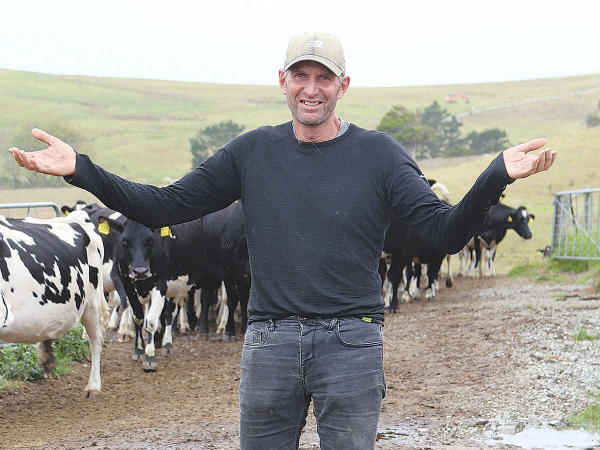 Dargaville farmer Baden Bickers thinks the drought is over where he farms.
Much-needed rain finally arrived in Northland, giving many farmers breathing space to get themselves back on track for next season.
Dargaville farmer Baden Bickers' farm received over 80mm of rain earlier this month and he believes the drought is over. The rain also means Bickers can continue milking rather than drying off the cows a month earlier.On April 1st came the warning that an ‘atmospheric river’ and potential drought breaker was about to hit the country. The next day there was drizzle and then the following day the rain arrived with a vengeance.
Bickers is a thirdgeneration dairy farmer near Dargaville, one of the worst hit parts of the Far North. He milks 650 cows once a day on a 270ha milking platform plus support blocks. For him the rain over three days was pretty much a drought breaker.
“Things are greening up already. Now that it’s rained, we have some maize paddocks and weeds will germinate, and we will give them a spray and get the grass in while the soil is moist,” he told Dairy News.
“I think we will recoup a bit at the end of the season rather than just winding up as we would have in another few weeks,” he says.
Bickers says droughts are the norm in Northland but some are worse than others and this was a bad one. He says water levels in his dams that provide stock water were getting very low and he was having to feed out supplements to keep the herd going. He says they were close to having to dry cows off a month earlier than normal and cull some.
Bickers says the drought will affect production but adds that before the drought struck, his production was up by 10%.
“Just looking over the fence you could see everyone running around with silage wagons and trucks and trailers carting bales.
“We were quite fortunate in that we made 1600 bales of grass silage and had a reasonable crop of maize which we harvested recently. We fed out a lot of supplement and bought in some PKE to help until the rain arrived,” he says.
Bickers worries for farmers who have been using a lot of supplement that would normally be saved for winter. He says he worries about some of the young and inexperienced farmers who have never been through a drought like this. He also fears for some older farmers who have not learned how to manage their way through a drought like the present one.
Settled on OAD
During his dairy farming career, Baden Bickers has tried a range of options. At one point, he autumn milked a third of his herd way twice a day. But 10 years ago, he decided to go once a day milking (OAD) and hasn’t looked back since.
He says he took a production hit initially, but after about three years things went back to a sort of normal with production coming back as cows adjusted to the change. He notes that a lot of other farmers in the district are also milking OAD.
The other change that has been forced on him and other dairy farmers is the compliance issues which take up a lot of time. At present he employs a contract milker who in turn employs two staff. He says it’s nice not having to worry about staff and just focus on “doing stuff”.
As the only son, Bickers took over the farm from his parents, but says that if he’d had a brother, more than likely the brother would have been the farmer.
“At school I enjoyed technical drawing and probably would have ended up being an architect. As it stands, I designed and built a new dairy shed and the new house for my wife and four kids,” he says.
OPINION: Succession and long-term planning are perennial topics because it is perpetually sidelined on busy farms.
Farms across the upper North Island are trialling different pasture mixes as part of a research programme that aims to build greater resilience into farming systems.
Election years are always a concerning time for farmers, according to DairyNZ chair Tracy Brown.
Matt Collier, Probiotic Revolution, says calves will drink a lot of milk once-a-day with their probiotic Calf Xtreme.


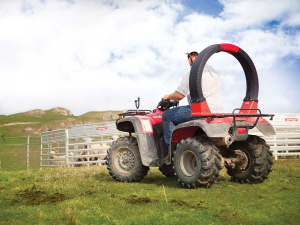
When Northland leather worker Vernon Suckling started making horse saddles 50 years ago, quad bikes and side-by-side vehicles were unheard of.
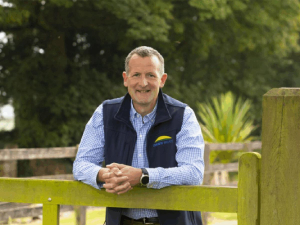
Alliance Group has confirmed that eligible farmer-shareholders who supply and continue to back the business will receive up to $20 million later this year, following the strategic investment partnership with Dawn Meats.
With a general election under five weeks away, Rural News is asking major political parties about their policies and positions on key issues facing the primary sector. We will run their responses to each question over the next four weeks. The ACT Party and the Greens didn't respond in time.
The red meat sector is in great heart.
Dr Scott Champion, Foundation for Arable Research chief executive, says that everyone in the supply chain had a role to play in driving the sector's long-term success.
Entries opened on Monday, 5 October 2026 for the 2027 New Zealand Dairy Industry Awards (NZDIA), which organisers describe as the nation's biggest celebration of excellence in the dairy sector.
OPINION: It seems Canterbury processor Synlait is still in the doldrums.
OPINION: Get offside with New Zealand First leader Winston Peters at your own peril.