
Farmers Warned Over Track Dangers After Wairarapa Floods
The terrible floods that hit the Wairarapa may have subsided, but the danger to farmers still exists, according to local Federated Farmers president Rob Hickson.




 increase font size
UP TO 60,000ha in Wairarapa could be irrigated within a decade if plans by Greater Wellington Regional Council and other parties come to fruition.
Wairarapa traditionally goes dry in summer, hence plans to build dams that could be good news for dairying and high value crops, leading to economic growth in the region.
A group called Wairarapa Water Users is spearheading the project, announcing results of a study by consulting engineer Tonkin Taylor into the viability of an irrigation scheme. The engineer has looked at possible dam sites and recommended nine options for further investigation: two south of Martinborough and seven north of Masterton and near Mauriceville.
The study is funded by Greater Wellington and the Government’s Irrigation Acceleration Fund run by MPI.
Greater Wellington chairwoman Fran Wilde told Dairy News that during winter millions of litres of water pour off the Tararua Ranges into the sea, yet in summer Wairarapa gets dry. An irrigation scheme would transform Wairarapa and the greater Wellington region, she says.
Irrigation would not solve all Wairarapa’s drought problems because much of the region is steep hill country. The group has looked at what’s happened elsewhere in the country, finding many similarities.
“I’ve been looking at Canterbury and of course there is significant dairying there. Other major users of irrigation are growing crops, doing general arable farming and [growing] export seeds…. Exporting flowers would also be an option for us, but we’d have to fix Wellington airport for flights to key markets.”
Wilde says dairying would benefit from irrigation, so would the environment. Environmental groups are involved in the project and are part of the governance group, she says. “They understand we are putting a lot of science into our water investigations on this project and we were doing that for the regional plan anyway. There will be strict rules for the users of this water. We won’t tolerate any environmental misbehavior. We will expect people to do the right thing. Many farmers here are doing the right thing; they know it can be done, they just have to make that commitment.”
Wilde says quite by chance Greater Wellington is reviewing its regional plan at the same time as central government is developing its own water management and RMA reforms. By the time any irrigation scheme is in place, the new rules will also be in place, making it easier for everyone.
The scheme could take five to eight more years to complete – all going well.
The terrible floods that hit the Wairarapa may have subsided, but the danger to farmers still exists, according to local Federated Farmers president Rob Hickson.

Testing confirms H5 bird flu in a single northern giant petrel, found dead on a remote Cape Palliser beach in the Wairarapa, says Dr Mary van Andel, the Ministry for Primary Industries' (MPI) Chief Veterinary Officer.
Signing up to a benchmarking tool is not about competition, but about improving collectively, says Ximena Puig and Alvaro Luzardo who are 50-50 sharemilkers at a 164-hectare (effective) dairy farm in Eketāhuna in the Lower North Island.
I am writing this story with the 2025 harvest in full swing.
Fire and Emergency New Zealand has revoked the restrictions on lighting outdoor fires in Wairarapa’s southern coastal area.


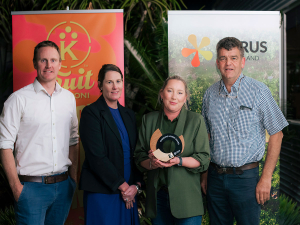
New Zealand's citrus growers were challenged to build their future on the value embedded in their fruit rather than the volume they produce, at Citrus New Zealand's annual gathering in Gisborne on 17 September.
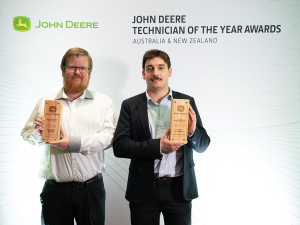
Leading John Deere technicians and apprentices from New Zealand and Australians were recognised at the recent sixth annual JD Technician of the Year Awards, held in Brisbane.
In Dacre, near Invercargill in New Zealand’s South Island, Bruce Dinnington is running a dairy operation unlike any other.
A free online platform aggregating governance vacancies across rural and regional New Zealand has been launched.
Environment Minister Nicola Grigg has announced details of a new rural plastics recycling scheme.
Agricultural drone operators say that a government decision to allow lower-risk drone work without certification won’t lower standards but drive innovation and efficiency.



OPINION: It seems Canterbury processor Synlait is still in the doldrums.
OPINION: Get offside with New Zealand First leader Winston Peters at your own peril.