
Massey VC Says University Best Placed to Support Dairy
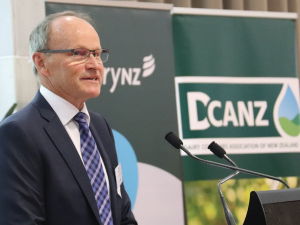
Massey University is best placed to solve the “problems” facing the dairy industry, says vice chancellor, Pierre Venter.




 increase font size

The Dairy Women's Network Autumn Dairy Days begin on May 4 with participants given the tools to get orientation of new staff or contractors and refocusing of existing staff correct from day one.
The series of workshops will be at 10 locations nationwide and is timed to help farm owners and managers prepare for the start of the new dairy season.
The workshops feature expert trainers on leadership, people and performance and business strategy. The lead North Island presenter is Justine Dalton, while Sarah Watson, Gillian Searle and Lee Astridge will lead Dairy Days in the South Island.
A finalist in this year's Dairy Woman of the Year award, North Island presenter Justine Dalton is no stranger to the complexity involved in staffing a dairy farm. She has been involved in many aspects of the dairy industry since graduating with a Bachelor of Agricultural Science (hons) in 1993.
Last year brought national recognition to Dalton and her colleagues at the BEL Group Dairy where she is the business manager. The group won the coveted HRINZ 2011 HR Initiative of the Year – an award recognising human resource initiatives making a positive impact on total business performance.
Dalton says she is looking forward to being a part of Dairy Women's Network Dairy Days because it is on a topic she is passionate about.
"We really only have one chance to get our new and existing staff oriented correctly for the new season," Dalton says. "June first is a busy time; we need to plan for staff changes before they happen and get things right the first time, right away."
She says the most common mistake farm managers make is leaving a new employee to figure things out on their own. "It is a common assumption that people learn best by just picking things up as they go along. This couldn't be further from the truth. The first two days an employee is at a new job is when their perception of the work environment is set. That's the time to focus on the environment you want to have on your farm."
According to Dalton, the Dairy Days workshops will include many small group exercises to allow participants to share their experiences – good and bad – with everyone in the group. At the end of the workshop, she says she hopes everyone will have a plan for the first couple of days a new employee is on the job as well as a plan for the first week and the first month. "We will offer real strategies to help you set up your farm culture and environment correctly from day one."
"Whenever we don't manage," Dalton added, "management happens by default."
Sarah Speight, chief executive of the Dairy Women's Network says of the workshops: "Putting the effort into getting orientation right in June will pay off in the long-term with reduced staff turnover and a team of new and existing employees who are ready to tackle the season ahead."
Topics covered during the Dairy Days workshops are: the critical people success factors to a successful season; why a good orientation process is important; the steps in putting together orientation plans that work; setting up an orientation plan for the first month; Identifying what industry tools are available to use as a resource and where to go for further help and assistance.
For more information or to register call 07 838 5238 or visit www.dwn.co.nz.
Massey University is best placed to solve the “problems” facing the dairy industry, says vice chancellor, Pierre Venter.

OPINION: Succession and long-term planning are perennial topics because it is perpetually sidelined on busy farms.
OPINION: The stats speak for themselves.
Farms across the upper North Island are trialling different pasture mixes as part of a research programme that aims to build greater resilience into farming systems.
Election years are always a concerning time for farmers, according to DairyNZ chair Tracy Brown.


Dairy processors are ready to further boost New Zealand’s export earnings but want the incoming government to match their ambition with good policy.
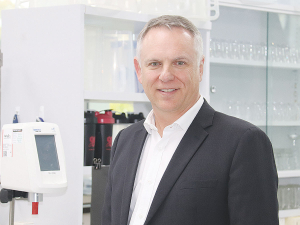
Massey University is best placed to solve the “problems” facing the dairy industry, says vice chancellor, Pierre Venter.
Synlait's longest serving employee – a man who joined the Canterbury-based milk processor even before it began processing milk – is now its newest executive.
A dairy industry leader believes eradicating the common and costly disease, Bovine Viral Diarrhoea (BVD) is within reach.
A farmgate milk price of $10/kgMS this season is firming up as milk powder prices soar and the New Zealand dollar weakens.
Federated Farmers has welcomed new rural policies released by ACT, saying they align closely with its own election priorities.



OPINION: It seems Canterbury processor Synlait is still in the doldrums.
OPINION: Get offside with New Zealand First leader Winston Peters at your own peril.




