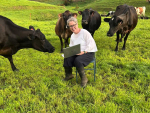
International Day of Rural Women: Two DairyNZ Farmers’ Stories
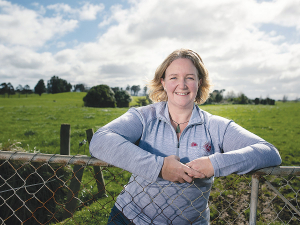
Today, 15 October, is the International Day of Rural Women, which recognises rural women’s contribution to farming, communities and the environment.




 increase font size
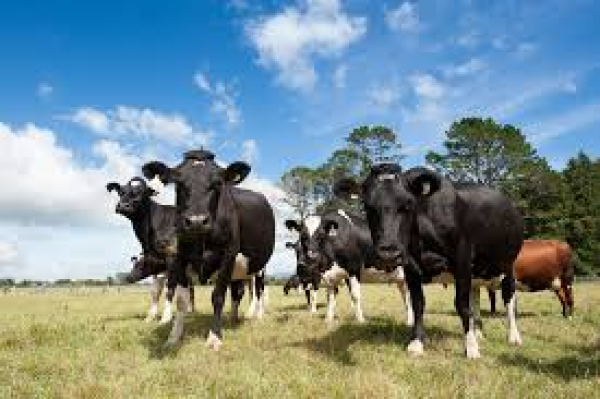
DairyNZ’s latest Econ Tracker update shows most farms will still finish the season in a positive position, although the gap has narrowed compared with early season expectations.
Despite the Fonterra forecast farmgate milk price easing to a midpoint of $9.50/kgMS, the overall outlook remains positive with a forecast breakeven milk price of $8.50/kgMS.
DairyNZ head of economics, Mark Storey, says the sector remains optimistic, but farms should continue to monitor costs heading into the new year, as increased global milk supply has put downward pressure on dairy commodity prices.
“It’s not a case of being the Grinch who stole Christmas, but we do need to be sensible in terms of on-farm spending to maintain profitability over the remainder of the season,” he says.
“Demand is steady but not strong enough to absorb the additional milk at previous price levels. At the same time, we’re seeing a seasonal increase in farm working expenses – up 16c to $5.83/kgMS, which consequently influences breakeven costs and cash surplus.
“Even with a softer outlook, the sector remains in a strong position by historical standards: demand is stable, export volumes are firm, and New Zealand maintains a competitive edge in global markets.”
National milk production to date is up 3.4% on last season. The South Island is leading the charge, posting a 5.7% lift in October, predominantly driven by extra feed. It remains to be seen whether damage to irrigators and pasture from the storms in October will influence South Island production for the remainder of the season.
DairyNZ chair Tracy Brown says that farmers are keeping a close eye on interest rates, and any further reductions will be welcomed by the sector.
“As many of my fellow farmers would agree, anything that helps ease the cost pressures is always appreciated. This update indicates that interest payments are expected to reduce to $1.11/kgMS for 2025-26, which is 35c lower than last season. Farms that reduce debt during high-payout years are better placed as margins tighten,” she says.
“With the end of the calendar year upon us, it’s a good chance to review budgets and the drivers of increasing farm working expenses, particularly feed and fertiliser, and see where improvements can be made. Small gains in strengthening farm systems can help drive productivity over the season and overall farm resilience.”
Today, 15 October, is the International Day of Rural Women, which recognises rural women’s contribution to farming, communities and the environment.
The first major update to the Dairy Cattle Code of Welfare in more than a decade has been released, marking what DairyNZ describes as an important step in ensuring animal welfare standards continue to evolve alongside scientific evidence and on-farm realities.
Have a plan in place for your cows and staff.
DairyNZ deputy chair Cameron Henderson has been re-appointed unopposed for another term.
OPINION: Succession and long-term planning are perennial topics because it is perpetually sidelined on busy farms.


As part of its Election 2026 coverage, Rural News asked political parties how they would help pull the arable sector out of the doldrums. Here's what they said:
Farmers are being encouraged to rethink how they manage waste on farm with the launch of ruralwastesorted.co.nz, a new website bringing together practical tips, real farmer experiences and resources.
New Zealand Winegrowers (NZW) is celebrating the India-New Zealand Free Trade Agreement (FTA) coming into force today, bringing New Zealand wine improved access to one of the world’s fastest-growing economies.
New Zealand’s red meat sector has welcomed the India-New Zealand Free Trade Agreement taking effect, which removes India’s 33% tariff on New Zealand sheepmeat.
More than 95 per cent of New Zealand’s forestry and wood exports to India can now enter tariff free as the New Zealand-India Free Trade Agreement comes into force today.
Federated Farmers is backing Feilding High School’s call to keep Agriculture and Horticultural Science as a standalone subject in Year 11.




OPINION: It seems Canterbury processor Synlait is still in the doldrums.
OPINION: Get offside with New Zealand First leader Winston Peters at your own peril.




