Rural Mobile Coverage Worse After 3G Shutdown, Survey Finds
Mobile phone coverage and reliability are deteriorating in rural areas, and farming families are bearing the cost, according to a Federated Farmers survey.




 increase font size
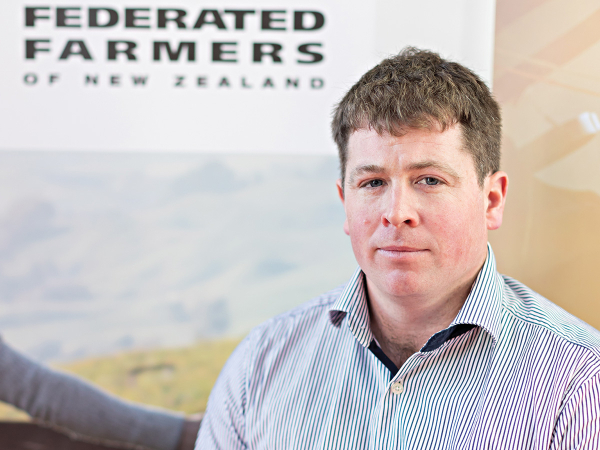 Karl Dean
New figures show dairy farmers are not only holding on to their international workforce, but are also supporting those staff to step into higher-skilled roles on farm.
Federated Farmers immigration spokesperson Karl Dean says Immigration NZ's latest data highlights a healthy shift underway in the sector.
"For years, the bulk of visa approvals were for dairy farm worker positions - mainly farm assistant roles," Dean says.
"Over the past 12 months, that pattern has really changed. We're now seeing a growing number of visas approved for more skilled dairy roles, such as herd managers, which come with greater responsibility and experience.
"That points to farmers recruiting people at an entry level, investing in their training, and progressing them through the ranks.
"It's incredibly positive to see that happening in our sector."
Federated Farmers asked Immigration New Zealand late last year for detailed information on recent trends in dairy employment.
The largest influx of dairy workers came in 2023 after the border reopened, when employers were urgently rebuilding their workforces, with just over 2000 applications approved.
Numbers eased slightly in 2024, before climbing again to about 1400 approved applications in 2025 (as at 22 October).
This year, a much larger proportion of higher-skilled applications - around 40% - came from people already in New Zealand.
The remainder included about 200 people here for the first time, applying to work in a skilled role such as herd manager, suggesting some are gaining experience overseas before seeking a New Zealand role.
Dean says the numbers demonstrate two things: there's still a genuine need for international workers to plug labour gaps, and when employers do recruit from overseas, they treat it as a long-term investment.
"Given the market labour requirements that have to be met for entry into these roles, it's clear the demand is real," he says.
"But the most encouraging part is that once these workers arrive, they're being supported to progress.
"That's exactly what we want to see in a sustainable, resilient workforce."
He says immigration settings have finally reached a point where employers feel they can operate with more certainty, after several years of upheaval.
"Since Covid, there's been a lot of to and fro with work visa settings," Dean says.
"Changes in April 2024 threw a spanner in the works, but Federated Farmers worked hard with the Minister, who listened to our concerns.
"We feel cautiously confident that the immigration settings are now in a workable place."
Fewer Concerns
One strong indicator of this progress is the drop in member queries to Federated Farmers about immigration concerns.
"We are hearing far fewer issues from farmers now," Dean says.
"I'm taking that as a huge signal things are more workable than they've been at any time in the past five years."
Dean says Federated Farmers has worked closely with DairyNZ in advocating for better immigration settings.
"We came to the Government on the same page, asking for the same thing, and that's definitely made us more successful."
He also credits Immigration NZ for its willingness to listen and adjust.
"Immigration NZ has played a positive role in facilitating farm success stories," he says.
"Their collaboration with the sector has meant smoother processing, clearer expectations, and greater stability for both employers and workers."
The figures show most migrant dairy workers still come from the Philippines, and they continue to gravitate to the country's dairy strongholds.
 |
|---|
|
This year, a much larger proportion of higher-skilled applications - around 40% - came from people already in New Zealand. |
Canterbury takes the greatest share, followed by Waikato and then Southland.
While some people arrive in New Zealand initially on visitor visas before shifting to a work visa, the data shows almost a third of incoming farm assistants have not held any New Zealand visa in the previous six months.
That means these people are recruited directly from overseas, rather than already being in the country.
Another striking trend is how few dairy workers leave the sector once they arrive. Across three years of data, only about 75 people renewing their dairy visas moved into another industry.
Deans says this should give both farmers and the public confidence.
"These workers are coming here because they want to build a future in dairying," he says.
"Farmers, in turn, are giving them the training, support and opportunity to move up.
"It's a real win-win for rural communities and for the long-term capability of the sector."
Mobile phone coverage and reliability are deteriorating in rural areas, and farming families are bearing the cost, according to a Federated Farmers survey.
Central Otago District Council (CODC) has voted against a plan to spread treated sewage sludge from Cromwell and Alexandra on farmland near Lauder, a decision Federated Farmers says reflects strong opposition from rural residents.
Federated Farmers has called on Central Otago District Council (CODC) to drop or vote down a plan to truck sludge from Alexandra and Cromwell to farmland near Lauder, warning it would compound an "outrageous" situation created by a separate council's decision weeks earlier.
Federated Farmers says new legislation replacing the Resource Management Act will cut red tape, unlock investment and help grow New Zealand's export-led economy, after the Planning Bill and Natural Environment Bill passed their third reading in Parliament yesterday.
Leading figures from the major political parties will be questioned on their primary sector policies at the Rural Issues Debate at Mystery Creek Events Centre, Hamilton, on 30 September.



Fonterra Co-operative Group chief financial officer Andrew Murray has resigned to take up a role outside the dairy giant.
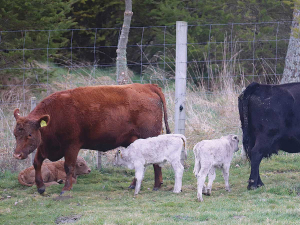
A major move is about to get underway to improve the quality and viability of dairy beef and cattle in NZ.
Veterinarians say changes to the code of welfare for dairy cattle provides a positive foundation for improved cattle welfare across the country.
Today, 15 October, is the International Day of Rural Women, which recognises rural women’s contribution to farming, communities and the environment.
Global dairy giant Lactalis has integrated its Australian operations with the Mainland Dairy consumer business it acquired from Fonterra earlier this year.
High country stations, mixed sheep and beef farms, Māori-owned farms, corporates and family operations are among the nine commercial farms taking part in the Livestock Innovation Farming Transformation programme, known as LIFT.




OPINION: It seems Canterbury processor Synlait is still in the doldrums.
OPINION: Get offside with New Zealand First leader Winston Peters at your own peril.




