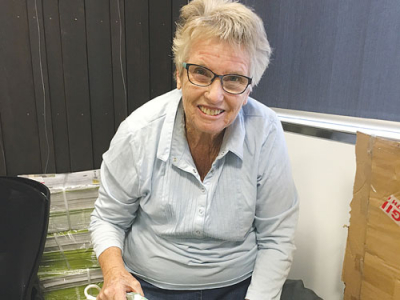
The numbers are mind-boggling: 1000 eggs, thousands of pies, tens of thousands in cash to count at home. These are Diane Sharpe’s memories of 40 years volunteering at National Fieldays.
She now lives in a retirement village in Leamington, Cambridge, and still she volunteers.
It began for her in 1970 when Fieldays moved to Mystery Creek and the women’s division of Federated Farmers offered to do the catering.
Living on a Rukuhia dairy farm with four young children, she joined a crowd making sandwiches in the local hall. There were 1000 eggs to boil and mountains of cheese to grate.
“It’s funny how times have changed. We used to just make the sandwiches – no gloves, no wrapping – and take them to Mystery Creek. You couldn’t do that these days.”
As Fieldays grew, a big barn became the catering hub. In 1980 they sold 28,500 meat pies and 5360 fruit pies and still the numbers grew.
“Eventually we couldn’t feed everyone from that barn so they made four different kiosks, manned by various branches of Rural Women NZ. It had changed from Federated Farmers women’s division to RWNZ, but it was the same people.”
As the event grew they started sub-contracting then moved from hands-on to organising the catering -- still all volunteers.
“We gave $60,000 - $70,000 to the community every year.”
RWNZ quit the catering 10 years ago but Sharpe carried on for several years selling food before and after the event from a kiosk. She still does volunteer tasks.
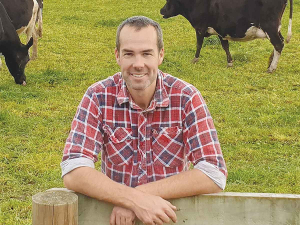
National Fieldays Society president Peter Carr also lives in Diane’s village and residents still volunteer for various jobs when the call goes out.
Sharpe was also a Waipa District Councillor for 27 years so helped out from that perspective.
“I remember when Fieldays wanted to put a tar-seal road in. So they asked us and we managed to squeeze it in, taking a bit of left over tar-seal from another road and giving it to Fieldays.
“Everything’s far more accountable these days.”
She thinks Fieldays has attracted more people by branching out from tractors and machinery. “It took a while to break that mould.”
Diane was a townie who married a dairy farmer and moved to the farm in 1962. Her election to Waipa District Council “got me out of milking cows,” she jokes.