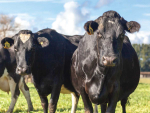
BCS Targets: Why Body Condition Score Matters at Calving
Body Condition Score (BCS) is a critical element in managing the health and reproduction of the dairy herd.




 increase font size
 Australia boasts the first feed efficiency breeding value in the world.
The latest Australian Breeding Values (ABVs) will be under the spotlight when Australia hosts an international genetics conference in Lorne, Victoria, next month.
Australian scientist Jennie Pryce, who was a leader in developing the Feed Saved ABV through the Dairy Futures CRC, says it has already attracted international acclaim; Pryce will be one of the speakers at the Association for the Advancement of Animal Breeding and Genetics (AAABG) conference in Lorne from September 27-30.
AAABG is an association for scientists, animal breeders and those working in the livestock genetics business.
Australia’s team of internationally recognised geneticists will host colleagues from Ireland, Denmark, USA, Germany, Kenya and New Zealand.
Researchers will tackle some of the most significant opportunities available through genetic improvement, such as improved fertility, animal health, feed conversion efficiency, methane production and the use of new tools from genomics.
The Feed Saved Australian Breeding Value (ABV) was published for the first time in April - the culmination of eight years of research and development by Dairy Futures CRC and local and overseas partners.
Using the ABV, dairy farmers can identify bulls that can save at least 100kg of dry feed matter per cow each year while maintaining milk production.
It is the first feed efficiency breeding value in the world to incorporate real feed intake data, as well as a prediction of feed required for maintenance purposes, making the trait more relevant for farmers.
Pryce says farmer engagement during the development of the ABV was critical to its success and its uptake.
“It’s all very well having a perfect economic index but if it’s not addressing farmers’ wants and needs it loses relevance,” she says.
Many of the hassles farmers have on farm are not very easy to calculate an economic value for.
To ensure the relevance of the Feed Saved index, the research team spent a lot of time identifying all the components that make up a genetic index.
“We looked squarely at economic drivers for Australian production and tried to context these in a genetic improvement perspective,’ she says.
“We needed very robust indicators of economic values for traits, for example, what have the trends been for the cost of feed over the last 10 years, we looked at the price of milk, looked at what has happened in changes for the cost of diseases.”
Pryce says Australia had become the envy of the world for the development of its Feed Saved ABV.
“People are looking at us enviously as we are one of the only countries using real feed intake data to calculate new breeding values.
“Ours is called Feed Saved because that’s exactly what it is. Other countries may develop breeding values which are more like feed efficiency.
“We deliberately chose feed saved because that’s the goal farmers want.”
Pryce says the work has been presented twice in the USA, where they received favourable comments.
“A lot of people are looking to Australia in terms of guiding where they may go with their research.
“Canada is leading on health traits they have breeding values for, but we were competitive or even ahead of the US because of this Feed Saved breeding value.
“Our Workability traits are also looked at with envy by a lot of countries around the world.”
Speakers at the conference will include:
Body Condition Score (BCS) is a critical element in managing the health and reproduction of the dairy herd.

For Taupiri dairy farmers Logan and Sian Dawson, their involvement in the NZ Dairy Industry Awards has been a key catalyst in the growth of their business - the experience helping shape how they approach the farm ownership pathway they are pursuing today.
An LIC bull, Tronnoco AR Sadio-ET S3F, bred by Tony and Keri O'Connor of Tronnoco Farming Co Ltd near Timaru, has won the 2026 Mahoe Trophy.
In the past, a bull could sit comfortably in a breeding team for several years with little change, but today, that’s no longer the case.
Genetics plays a central role in helping farmers lift per-cow productivity over time.


Farmgate lamb prices are down by 8%, beef cattle by 4.5% and farm expenditure up by 4.2%.
Kiwifruit growers are watchful but remain optimistic as concerns around the potential effects of the El Niño weather pattern this season.
Almond hulls sourced from Australian orchards may have the potential to help New Zealand cows reduce emissions, boost milk yield and lower input costs.
Striking a balance between meeting the needs of industry to speed up approval time for products but on the other hand ensuring that risks are properly assessed.
Surprised, humbled and quite thrilled. That’s the reaction of James Allen, one of the founding partners and now chief executive of AgFirst, on being made a life member of the Institute of Rural Professionals.



OPINION: It seems Canterbury processor Synlait is still in the doldrums.
OPINION: Get offside with New Zealand First leader Winston Peters at your own peril.