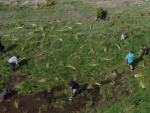
NZ Catchment Groups Thrive with ‘Source to Sea’ Approach
The most successful catchment groups in NZ are those that have 'a source to sea' approach.




 increase font size
Establishing a collective voice and providing an opportunity for the North Canterbury community to have a say on freshwater are some of the reasons behind the formation of the Sefton Saltwater Creek Catchment Group which celebrates its first anniversary this month.
The group’s vision is “Healthy Waterways, Healthy Land, Healthy People, Healthy Future”.
Coordinator Carolyne Latham, a local farmer, says the catchment area which is bordered by Te Aka Aka/Ashley Estuary and the coast on the eastern side and extends into Ashley Downs on the western side, contains a mix of farms, lifestyle blocks, industry and the small towns of Ashley, Sefton and Balcairn.
The group provides people from different backgrounds with an opportunity to get involved in learning about and improving the local environment.
“We had 31 people at our initial meeting a year ago who gave us a mandate to form the group and interest is ongoing from new members.”
Carolyne describes the first year as “a bit of a fact-finding mission” with several meetings and a series of field trips across the catchment.
“We’ve had presentations on the current state of waterways including Te Aka Aka/Ashley Estuary and we’ve learned how to take stream water samples and assess stream health.
“We’ve also visited retention areas on hill-fed Stony and Fox’s creeks and learned how they function to capture sediment in run-off before it reaches spring-fed streams on the flats.
“It’s very much a locally-led initiative with members setting the direction and deciding what they need to know in terms of meeting the group’s vision for a healthy catchment.”
One of the members hosted the group on their lifestyle block to demonstrate how minor earthworks such as swales and bunding could be used to slow water, soak it into the ground, stop erosion and settle sediment out.
In May, the group visited Ashley Forest with Rayonier Matariki Forests. Carolyne says this site visit covered the entire headwaters of the catchment and provided an in-depth understanding of the environmental regulations that plantation forests are required to operate under, along with weed and pest control, and general forestry management.
The group has discussed expanding water monitoring networks within the catchment as there is currently minimal monitoring undertaken and limited knowledge about the state of Stony and Fox’s creeks which are both hill-fed.
“We’re keen to establish a baseline to enable benchmarking and identify trends over time which will increase our knowledge of local waterways.”
The catchment group is currently reviewing progress made during its first year and deciding what to focus on for the next 12 months.
The most successful catchment groups in NZ are those that have 'a source to sea' approach.
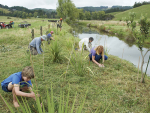
The quest to find innovative practical, scientific solutions to deal with water-related issues at a catchment level has been the theme of an important conference at Massey University last week.
Rangitikei Rivers Catchment Collective (RRCC) chairperson Roger Dalrymple says farmers in his region are taking a national lead in water quality awareness and monitoring.
Environment Southland's catchment improvement funding is once again available for innovative landowners in need of a boost to get their project going.
From nitrogen limits to ecosystem restoration –farmers and catchment groups are leading a new wave of environmental care, says DairyNZ.


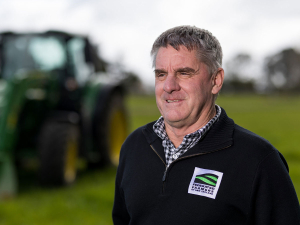
National’s pledge to introduce 19 new national standards shows the party is serious about getting Wellington out of farming, Federated Farmers says.
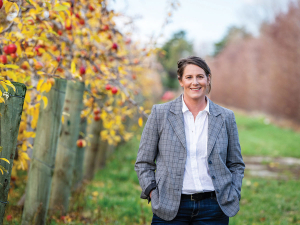
The National Party’s policies to make it easier to grow fresh vegetables, secure reliable water and energy and simplify farm planning are practical changes that will give growers the confidence to invest, according to Horticulture New Zealand (HortNZ).
Fonterra Co-operative Group chief financial officer Andrew Murray has resigned to take up a role outside the dairy giant.
A major move is about to get underway to improve the quality and viability of dairy beef and cattle in NZ.
Veterinarians say changes to the code of welfare for dairy cattle provides a positive foundation for improved cattle welfare across the country.
Today, 15 October, is the International Day of Rural Women, which recognises rural women’s contribution to farming, communities and the environment.




OPINION: It seems Canterbury processor Synlait is still in the doldrums.
OPINION: Get offside with New Zealand First leader Winston Peters at your own peril.




