
No Further H5 Bird Flu Detections in NZ, MPI Confirms
The Ministry for Primary Industries (MPI) says no new cases of H5 bird flu have been detected following a case found earlier this week.




 increase font size
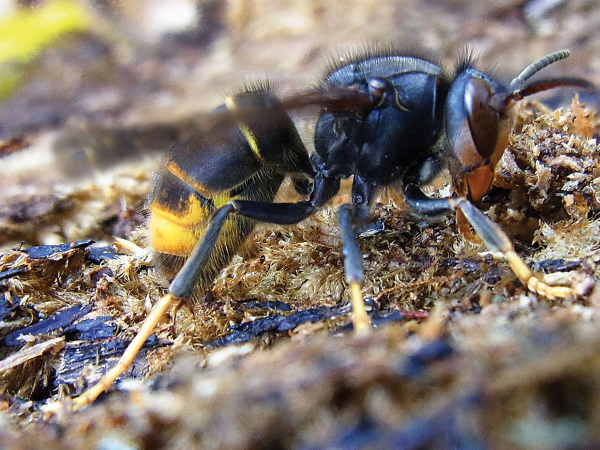 Yellow legged hornet. Photo Credit: Wikipedia Commons
Biosecurity incursion – yellow legged hornets In Auckland
In recent months, a new biosecurity threat has arrived on New Zealand’s doorstep: the yellow legged hornet. Its arrival in Auckland has raised concerns across the agricultural sector, including among grape growers and winemakers. This article outlines the details of the incursion, the ongoing response, and what the wine industry can do to help protect New Zealand’s unique environment and world-class vineyards.
The first confirmed sighting of the yellow legged hornet (Vespa velutina) in New Zealand was reported in Glenfield on Auckland’s North Shore in late 2025. At the time of writing, more than 40 queen hornets have been found in the same area, the majority of these with nests in various stages of development. Biosecurity New Zealand, in collaboration with industry groups including New Zealand Winegrowers, has launched a multi-faceted response. Ground teams are conducting intensive surveillance using traps, visual inspections, and radio-tracking technology to locate hornets and nests. Once detected, nests are destroyed in a controlled manner to prevent dispersal. Community engagement is a key part of the strategy, with public awareness campaigns urging residents and businesses to report unusual wasp activity. All industry members, particularly those in the Auckland area in or around the response zone, are encouraged to remain alert and participate in monitoring efforts.
Biosecurity Impacts: Why Yellow Legged Hornets Are A Problem
New Zealand does not have any established hornet species. Hornets have a powerful, more potent sting than most wasps, which can cause pain, swelling and allergic reaction. A single hornet can sting repeatedly. In China, Korea and Spain, several deaths have been attributed to the yellow legged hornet.
The yellow legged hornet is also a voracious predator of honeybees and other beneficial insects. A single hornet can kill up to 50 bees daily. In countries where the hornet has established, its presence has led to significant declines in local bees populations. For New Zealand, which relies on bees not just for honey but for pollination of many horticultural crops, the hornet represents an ecological and economic threat. Its spread could disrupt natural ecosystems and undermine agricultural productivity. While grapevines are primarily self-pollinating, many vineyards also cultivate cover crops, fruit trees or native plants that do require pollination. Reduced bee numbers could affect these plants and the broader vineyard environment.
Yellow legged hornets have also been known to feed on grapes as a source of carbohydrates and have caused extensive feeding damage to some vineyards in Spain, where population levels have become extremely high.
How To Identify Them
Yellow legged hornets are larger than common wasps, typically measuring 2-3cm in length. They have a black body with a yellow face, a distinctive yellow band towards the end of the abdomen and, as the name suggests, yellow legs. Their nests are often found high in trees but can also appear in sheds, under eaves, or in other sheltered locations. The nests are large, rounded, and constructed from a papery material with a single entrance hole. The Ministry for Primary Industries website has detailed information, guides and videos to assist with hornet identification.
Reporting Suspected Sightings
Early detection is critical. If you suggest you've seen a yellow legged hornet or nest, do not attempt to disturb or remove it. Take a clear photo if it is safe to do so, note the exact location, and report it immediately to Biosecurity New Zealand via the Exotic Pest and Disease Hotline at 0800 80 99 66, or through their online reporting form. Quick reporting helps authorities to respond rapidly and increases the chance of successful eradication.
A Call To Vigilance
The yellow legged hornet incursion is a reminder that biosecurity is everyone's business. For New Zealand's winegrowing community, early vigilance and cooperation are vital to prevent invasive pests from establishing in New Zealand. By staying informed, monitoring you properties, and reporting any suspicious insects or nests, you are helping to safeguard not just your own vineyards, but the future of New Zealand's wine industry. For more information or assistance with anything biosecurity-related, NZW members can contact the NZW biosecurity team at This email address is being protected from spambots. You need JavaScript enabled to view it..
The Ministry for Primary Industries (MPI) says no new cases of H5 bird flu have been detected following a case found earlier this week.
The New Zealand wine industry continues to feel and see the effects of the changing economic landscape, oversupply, and ongoing market uncertainty.
In the lead up to the introduction of biosecurity requirements into the Sustainable Winegrowing New Zealand programme for vineyard members, there has been a lot of focuws on biosecurity measures for vineyards.
Vaughn Bell on pest management, biosecurity, and some insights into the future of viticulture
Labelled by the European Union as one of the most dangerous plant pathogens in the world, xylella fastidiosa has been slowly spreading around the world since the 1880’s, when it was first noticed causing serious disease in Californian grape crops (Pierce’s disease).



OPINION: As I approach three months in my role as New Zealand Winegrowers Chief Executive, one message has come through…

OPINION: The United States wine market has changed forever, and companies cannot use same old playbook, said Erin Kirschenmann at…
One of Australia's most decorated winemakers will speak at the Aotearoa New Zealand Chardonnay Symposium in Hawke's Bay this September.
The third Aotearoa New Zealand Chardonnay Symposium will be underway in Hastings, Hawke's Bay, on 17-18 September.
Vintage 2026 yielded excellent fruit for most New Zealand wine regions.



