
Reform in haste, repent at leisure
OPINION: I have been writing about the demise of NZ agriculture research and extension for many years.




 increase font size
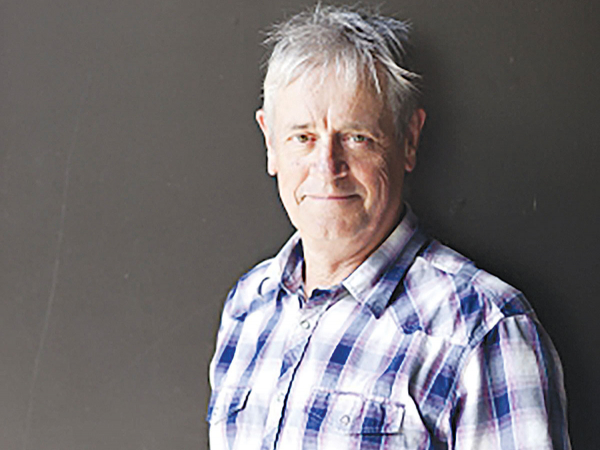 Doug Edmeades
OPINION: There was a time when to be a public servant, or to be in the public service, was something honourable and noble.
In those halcyon days, government departments were apolitical. From the farmers’ perspective, government agencies like the Department of Agriculture, and its research and extension service, were held in high regard as the arbiters of the truth.
But the reforms over the last 30-40 years have changed all that. Who does the farmer turn to today to get sound, independent, objective advice, untainted by commercial or political considerations? And the problem is broad: the technical advice that farmers need – whether fertilisers, seeds or animal health products – is tied up with marketing and advertising. This is confounded further these days by changes in the values and purpose of some important institutions that traditionally farmers were entitled to rely upon.
There was a time when the media provided the balance of opinion on matters of public importance. Integrity was their treasured value. This is no longer the case, at least on some issues. Many in the press have decided, for example, that on the issue of climate change they will be the sole arbiter of what is right or wrong.
For example, New Zealand has set sail towards Zero Carbon by 2050. The costs of doing so are enormous ($28b to $85b annually) and will cripple the NZ economy. Surely every citizen, irrespective of where they sit on the climate change continuum, should be made aware of these huge costs and their likely crippling effects they will have on our economy and society.
But it is not just the media who is letting the farmer down. There was a time when we could rely on the government research scientists to provide independent, objective advice. This is no longer the case. DSIR – formerly a government department well respected for its scientific output over many years – was commercialised into the CRI “Landcare” in the early 1990s. The recently released “White Paper” on Regenerative Agriculture (RA) from Landcare is an example of the distortion that this causes. It is an appalling document. It is so bad that a group of us from the NZIAHS put out a newsletter exposing it for what is “mumbo-jumbo, pseudoscience”.
The moniker ‘Ministry for Primary Industries’ implies, does it not, that it will speak up for the farmers on matters of public importance. This may well be the case on some issues but when it comes to the current ‘topic of the day’, RA, it’s not speaking up for science or the farmer!
MPI has just spent $1.8m funding the Quorum Trust to promote RA and a further $0.4m to Beef + Lamb to investigate the possible role of RA in promoting export activities. This is simply a waste of money and will not – cannot – improve agricultural productivity.
This is happening at a time when bona fide agricultural research is slowly dying through lack of funding. But there is an irony here. It is my understanding that some agricultural scientists from both the CRIs and universities, rather than dismissing this nonsense, are lining up expecting a RA bonanza. As the saying goes, “no one speaks the truth when there is something they must have”.
And where are the levy bodies – DairyNZ, Beef + Lamb and Federated Farmers – when it comes to the meaty matters? Acquiescing to government policies appears to be the price they must pay to be ‘at the table’ of political discourse.
Regretfully, the belief in the importance of evidence, rational thinking and science has been, and is, being eroded. The open-mindedness of the enlightenment, so essential for science and progress, is being replaced with environmental dogmatism.
Doug Edmeades has more than 40 years’ experience as a soil scientist. After working in government-based science organisations for 20 years, he established his own science consulting business in 1997, which has evolved into agKnowledge.
OPINION: I have been writing about the demise of NZ agriculture research and extension for many years.

OPINION: Irrespective of where you fall on the human-induced-global-warming spectrum - alarmist or sceptic - there is one thing we should all be 100% sure about.
OPINION: According to Google, “A paradigm shift is a fundamental change in the basic concept and experimental practice of a scientific discipline”.
OPINION: The Ministry for the Environment (MfE) recently released a report on the state of New Zealand freshwater (“Our Fresh Water 2023”).
OPINION: Cyclone Gabrielle has been one of the biggest challenges farmers and growers in affected regions have faced in my lifetime and for one of the districts I am working in, Tararua, this is no exception.


A major move is about to get underway to improve the quality and viability of dairy beef and cattle in NZ.
Veterinarians say changes to the code of welfare for dairy cattle provides a positive foundation for improved cattle welfare across the country.
Today, 15 October, is the International Day of Rural Women, which recognises rural women’s contribution to farming, communities and the environment.
Global dairy giant Lactalis has integrated its Australian operations with the Mainland Dairy consumer business it acquired from Fonterra earlier this year.
After almost two decades of sharemilking, saving and building equity, Aaron and Marcia Flay this year realised their long-held dream of settling on their first dairy farm.
Good medium to long term prospects for NZ beef, especially in the US, has heighted the focus on various initiatives to capitalise on this situation.


OPINION: The same mainstream media muppets that brought you Jacindamania in 2017 have been flat out pimping for the Opportunities…
OPINION: Your old mate reckons the atrocious way farmers in the UK are treated by their lords and masters in…




