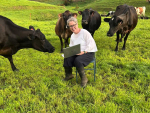
International Day of Rural Women: Two DairyNZ Farmers’ Stories
Today, 15 October, is the International Day of Rural Women, which recognises rural women’s contribution to farming, communities and the environment.




 increase font size
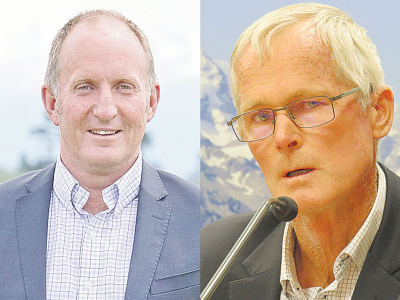 Andrew Morrison, chair of Beef + Lamb NZ (left) and Jim van der Poel, chair of DairyNZ.
OPINION: The suggestion that groups such as DairyNZ and Beef + Lamb NZ are selling the sector out over agricultural emissions is way off the mark and fails to grasp the complexity of the issue.
This article is a response to ‘Sellouts?’ – Rural News, 16 August. Click here to read it.
We accept these are difficult and challenging times for farmers and the sector, but it’s vital the industry works together to achieve the best possible outcome. Farmers have very clearly and repeatedly asked us to work together, and we agree we’re more powerful as a united voice.
Our bottom line is to ensure that sheep, beef and dairy farmers can continue to have sustainable and profitable farming businesses and that is what we are working towards. If we collectively get this right, then farmers will continue to have sustainable businesses into the future and our industries will continue to be global leaders.
Of course these are difficult issues, opinions will differ and there will be disagreements within the sector, but these differences are at the margins.
There is in fact broad agreement within the sector on most of the Zero Carbon Bill. We all support the split gas approach -- the net zero target for nitrous oxide and carbon dioxide being reduced to net zero by 2050. We all agree that the proposed 24-47% reduction range for methane is unacceptable.
The science on methane is evolving and so there are some nuances in our positions, but we are all fundamentally in the same ballpark and all far away from what the Government is proposing.
It is unhelpful to suggest that we are collaborators with the enemy. We stand up to the Government when we don’t agree and advocate what we believe is in farmers best interests. On many occasions each of our organisations has publicly questioned the Government’s approach.
We have also spent a lot of time supporting farmers to make practical changes and highlighting to the Government and to New Zealanders the great strides farmers are making in reducing their emissions, improving water quality, soil health and biodiversity. These things matter to New Zealanders and to our customers globally. If we ignore these we risk losing our social licence to operate.
Throwing stones, slamming our fists and stamping our feet may gain some temporary satisfaction. But in our experience, it’s ineffective in advocacy, risks destroying any chance of policy gains and alienates New Zealanders – the very people we need to convince.
In fact, what we hear from many farmers is that they want us to engage and find solutions and not just dig in.
The rest of the country is closely following many of these issues. How we engage publicly is vital.
That’s why from the outset we have been working constructively with the Government to help create the best possible policy outcomes for farmers.
BLNZ and DairyNZ have long term strategies that drive what both our organisations do in this space. We’re not just thinking about tomorrow, we’re thinking 20 to 30 years ahead to the next generation of farmers.
We work for farmers’ collective interests to ensure their voice is heard in a range of areas including the environment, trade policy, resource management, biosecurity, animal welfare and food safety.
We also recognise we must be responsible and prudent with farmers’ money. We’re always looking for efficiencies and driving the dollar further. Importantly, every six years farmers have an opportunity to have their say on BLNZ and DairyNZ and to signal their support for continued investment.
We’re committed to playing our role in tackling climate change and advocating for all New Zealanders to do their share. We don’t want to be on the wrong side of history.
• Andrew Morrison is chair of Beef + Lamb NZ and Jim van der Poel is chair of DairyNZ.
Today, 15 October, is the International Day of Rural Women, which recognises rural women’s contribution to farming, communities and the environment.
The first major update to the Dairy Cattle Code of Welfare in more than a decade has been released, marking what DairyNZ describes as an important step in ensuring animal welfare standards continue to evolve alongside scientific evidence and on-farm realities.
Have a plan in place for your cows and staff.
Environment Minister Nicola Grigg has announced details of a new rural plastics recycling scheme.
For the first time in a quarter of a century, Federated Farmers has something positive to say about the Labour Party’s climate change policy leading into a general election.


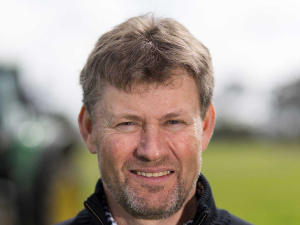
Mark Hooper has been appointed the new chair of NZPork, the industry organisation representing New Zealand pig farmers.
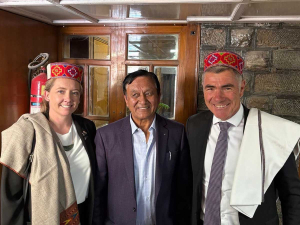
As the India-New Zealand free trade agreement enters into force, New Zealand’s apple industry has reaffirmed its commitment to the long-term development of India’s apple sector.
Fonterra shareholders can begin voting on Tuesday 20 October in the 2026 Board of Directors’ election, a Co-operative Council election in one Ward, and seven Annual Meeting resolutions.
National’s pledge to introduce 19 new national standards shows the party is serious about getting Wellington out of farming, Federated Farmers says.
The National Party’s policies to make it easier to grow fresh vegetables, secure reliable water and energy and simplify farm planning are practical changes that will give growers the confidence to invest, according to Horticulture New Zealand (HortNZ).
Fonterra Co-operative Group chief financial officer Andrew Murray has resigned to take up a role outside the dairy giant.


OPINION: The same mainstream media muppets that brought you Jacindamania in 2017 have been flat out pimping for the Opportunities…
OPINION: Your old mate reckons the atrocious way farmers in the UK are treated by their lords and masters in…




