Federated Farmers Welcomes ACT’s New Farming Policies
Federated Farmers has welcomed new rural policies released by ACT, saying they align closely with its own election priorities.




 increase font size
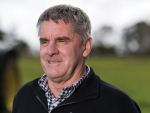
 Feds meat and wool chair Miles Anderson.
Federated Farmers' meat and wool council is calling for compulsory regulation of stock agents.
No-one likes more rules and regulation, but to protect all parties in the sale of livestock we believe it is the best way forward.
Discussions about this topic have run hot and cold for years, but we believe it is time for some finality.
The NZ Stock and Station Agents Association has created a code of conduct and set up an independent body that can adjudicate on complaints about the actions of stock agents.
However, with all respect to the association, membership and thus adherence to the code is voluntary and we understand it currently only covers about 65% of all stock transactions.
Less reputable agents – a minority in the industry – are unlikely to become voluntary members and even if they do, when trouble arises they can simply resign and continue to trade.
A fully enforceable and regulated industry would be able to stop agents trading, and could impose redress.
As well as potential losses from fraudulent transactions, Federated Farmers members have also raised concerns about biosecurity risks where there is misrepresentation – either accidental or deliberate – and limited ability to seek redress in a voluntary system.
Another potential regulation that deserves debate is one that would require any stock agent who trades livestock on their own behalf to do so through an auction system or another agent, and not conduct the transaction on their own behalf.
A lot of ill-feeling is caused when a stock agent buys from a farmer when it’s not clear he is acting on his own behalf, keeps the animals on his property for a day or two, then on-sells at a substantial profit.
Feds’ meat and wool council does not envisage an increased cost to the farmer from regulation because, for most companies and agents, there would not be a huge change from how they are now operating with their own internal processes.
We are hoping for a positive response from the Government to support this.
Some will try to tie our advocacy for regulation to complaints made in relation to a former employee of a stock trading company in the South Island. However, irrespective of the current SFO investigation into that, it is well past time some sensible regulations were brought in to cover stock agencies.
The vast bulk of stock and station agents operate in an exemplary manner.
We need regulation to be fair, to give them protection also – not just the farmers.
• Miles Anderson is Federated Farmers’ meat and wool chair
Federated Farmers has welcomed new rural policies released by ACT, saying they align closely with its own election priorities.
Federated Farmers is backing Feilding High School’s call to keep Agriculture and Horticultural Science as a standalone subject in Year 11.
National’s pledge to introduce 19 new national standards shows the party is serious about getting Wellington out of farming, Federated Farmers says.
Mobile phone coverage and reliability are deteriorating in rural areas, and farming families are bearing the cost, according to a Federated Farmers survey.
Central Otago District Council (CODC) has voted against a plan to spread treated sewage sludge from Cromwell and Alexandra on farmland near Lauder, a decision Federated Farmers says reflects strong opposition from rural residents.



Federated Farmers has welcomed new rural policies released by ACT, saying they align closely with its own election priorities.

Rural Contractors NZ says proposed changes to land transport rules for agricultural vehicles are a welcome response by the Government to out of date regulations which have seen members hit with huge fines.
Alliance is calling for final applications for its 2027 Graduate Programme, with applications closing on Sunday 25 October.
Decades piloting planes has ensured vet and farmer David Hayes is focused on safety. So, after a serious accident while welding on farm, he is sharing his experience so others can learn from it.
Canterbury milk processor, Synlait Milk has confirmed Leon Fung as its chief executive officer.
OPINION: Making it easier to collect rainwater and use it to grow crops and livestock is a no brainer.




OPINION: The same mainstream media muppets that brought you Jacindamania in 2017 have been flat out pimping for the Opportunities…
OPINION: Your old mate reckons the atrocious way farmers in the UK are treated by their lords and masters in…




