OPINION: "The worst thing that agriculture does is take land from nature."
Dr Steve Wakelin (Scion section of the new BioEconomy Science Institute) is not the first person to say this, but he made the importance clear by setting his Norman Taylor Lecture (the premier acknowledgement of research contribution awarded by the New Zealand Soil Science Society) in the context of New Zealand soil, pasture, feeding people – and the role of science in minimising food’s footprint.
Dr Wakelin is a soil biology expert with a PhD from Lincoln University. His research over the years has covered ecological genomics, molecular microbiology, microbial ecology, biogeochemistry, soil-plant-microbe interactions and ecosystem function and stability.
In his lecture he was able to include different aspects from his work to make the case that we are still finding out about interactions between living organisms in the soil – and we should be doing more. He didn’t dwell on the difficulty of attracting funding for research, nor the reorganisations that are occurring in science with institutions merging last year, he simply made the case for improved understanding of where progress could be made.
White clover and nitrogen fixation by rhizobia was one of the examples used.
Rhizobia number somewhere between 1000 and 1,000,000 per gram of soil (a teaspoon being approximately 5g). These rhizobia have been calculated to save farmers $3.9 billion dollars a year in nitrogen (though fixation does have a cost in terms of the plant’s energy and dry matter production). Despite the value of the micro-organisms, most of the research on breeding in pasture has concentrated on breeding better plants.
Dr Wakelin suggested rhizobial research should also be funded, particularly as the current rhizobia came from Australia. His point was not that Australia as a source was a problem in itself, but that the introduced rhizobia are only partially effective with white clover. Attempts to introduce new rhizobia last century resulted in the conclusion that displacing the current, environmentally well-adapted, rhizobia was challenging. Improved understanding over the last 30 years could change the outcome for high performance pastures.
For the future, Dr Wakelin highlighted the role of science. “Science is literally the instruction manual for our world – and we need improved education in many areas to ensure that the population is at the forefront of understanding.”
Understanding builds trust and with trust progress is enabled.
New Zealand ranks among the top countries for trust in scientists, with strong public belief in their expertise and need for involvement in policy. This was reported at the beginning of last year from global research. Trust was reported to be strongest and highly rated in competence (qualifications) and benevolence (honesty), but public trust in the openness of scientists to opposing views was lower – 79% of New Zealanders believe scientists should communicate more.
The question then might be how this should occur? Could society cope with more newsletters, press articles, radio interviews, TV programmes, and blog posts on social media? Of importance, how would information be distinguished from the misinformation and disinformation that is rife?
Asking ‘what does the person stand to gain if I believe him (or her)?’ can help.
Dr Wakelin’s interest in soil science was stimulated through the field of plant pathology and soil-borne diseases.
“Soils,” said Dr Wakelin, “with the exception of carbon from the air and energy from sunlight, give plants all the essential minerals for growth. Understanding the processes regulating the occurrence and availability of these nutrients, and how plant roots acquire them, is not only fascinating, but crucial – the understanding literally underpins our bioeconomy. Soil is the most complex ecosystem and the most complex biomaterial known. It’s a fascinating ecosystem to work in.”
Dr Wakelin won’t be the last person to make the point about creating the smallest footprint possible for feeding the global population. Nor is he likely to be the last person urging an improved education system.
But he has linked the two: “Education is the foundation – as is the soil.”
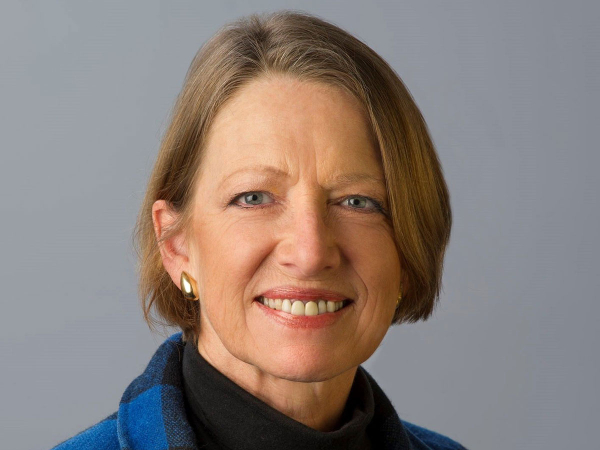
Dr Jacqueline Rowarth, Adjunct Professor Lincoln University, is a farmer-elected director of DairyNZ and Ravensdown. She is also a member of the Scientific Council of the World Farmers’ Organisation. This email address is being protected from spambots. You need JavaScript enabled to view it.