
Time for Reality, Not Fantasy Scenarios
OPINION: Back in April, the Intergovernmental Panel on Climate Change delivered an update that should have triggered an 8.5 magnitude earthquake in the world of climate change policy.




 increase font size
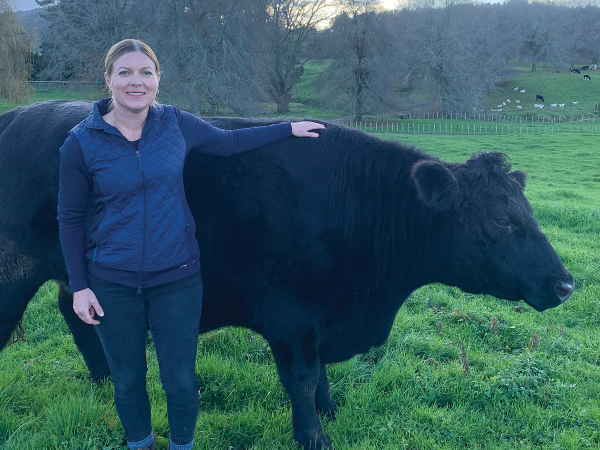 Helen Mandeno is a dry stock farmer from South Waikato and a member of the Methane Science Accord.
OPINION: We are only weeks from the election, and my vote is looking for a home.
I’m sure most farmers would agree that a right-leaning government is more favourable than a left-leaning one for our agricultural sector. But I think it is important to look beyond the sound bites, slogans and social-media memes and examine what this coalition Government has actually done over the past three years. If you don’t dig into the detail, it is very easy to come away with the impression that everything is going just fine. Due to editorial constraints, I will focus on one area:
National remains committed to New Zealand’s Paris Agreement commitments and the country’s 2050 net-zero target. The question isn’t simply whether these goals sound worthwhile. The question is: what are they costing New Zealand, and what are we getting in return?
New Zealanders have all felt the impact of rising costs, and the transition towards decarbonisation is not cost-free. Electricity prices have risen significantly, placing pressure on households and businesses, with some energy-intensive manufacturers scaling back or closing operations. The Government’s drive towards Net Zero is one factor contributing to the changing energy landscape and increased costs businesses face. At a time when households and businesses are already under financial pressure, these costs also raise questions about whether valuable resources are being diverted from essential services and priorities.
Treasury’s June 2026 analysis estimates that meeting New Zealand’s Paris Agreement emissions commitments could involve up to $5.0 billion in offshore mitigation costs for 2021–2030, plus a further $1.6 billion for 2031–2035. These are in addition to wider domestic economic costs.
The Prime Minister has expressed confidence that New Zealand can meet its emissions targets without spending billions on offshore mitigation, with much of that confidence resting on new agricultural technologies. But will farmers actually want to use them? Many farmers aren’t prepared to sacrifice the productivity, profitability or viability of their businesses to meet what they see as the demands of an ideological global climate agenda. Why should farmers adopt methane inhibitors, vaccines, boluses or other technologies when there is no tangible benefit? As one farmer put it, “I will not flagellate myself on the climate altar”.
The National Party has continued to provide millions of dollars in research funding for biotechnology tools to reduce methane. The problem is that market demand appears to have received less attention. Feedback from farmers suggests many remain unwilling to incorporate methane biotech tools such as vaccines, boluses or low-methane genetics into their farm systems. After all, what tangible benefit will they see?
The Government has now committed a further $51 million to accelerate the development and adoption of these technologies. When substantial sums have already been invested, the temptation to keep spending in the hope of achieving the desired outcome can be difficult to resist. Are we seeing the sunk-cost fallacy in action?
We are consistently told that we need to stay in the Paris Agreement because of trade. However, an OIA to Treasury in 2025 asked what cost-benefit analysis had been undertaken comparing New Zealand remaining in the Paris Agreement with withdrawing. Treasury replied that it held no such analysis and did not believe any other government agency held one.
Therefore, when the Prime Minister states that New Zealand cannot afford to leave the Paris Agreement, the Government cannot point to a Treasury cost-to-benefit analysis comparing the economic consequences of staying with withdrawing. We don’t know the full economic consequences of withdrawing. But we do know that meeting the commitments associated with staying is already exposing New Zealand to billions of dollars in potential costs.
Article 9 of the Paris Agreement says developed countries “shall provide financial resources” to assist developing countries with mitigation and adaptation. However, the agreement does not give New Zealand a specific dollar figure. New Zealand chose to make a NZ$1.3 billion grant-based climate-finance commitment for 2022–2025, with at least 50% directed to adaptation. MFAT describes this as part of New Zealand’s Paris Agreement commitments.
New Zealand’s net Crown debt is now around $186 billion, with Treasury forecasting it to rise above $230 billion over the next few years. For a country already heavily in debt and under financial pressure, does this make good financial sense? Our hospitals and essential services are under significant pressure, yet substantial public funds continue to be funnelled to climate policy, including international climate finance.
If a household found itself deeply in debt, a financial adviser would likely recommend cutting back to essentials, prioritising the bills that matter most and scrutinising discretionary spending. Perhaps the Government should apply the same discipline to climate spending while prioritising essential services (health, education, roads).
This government has delivered some policies that will be welcomed by farmers. But that doesn’t mean that the details should escape scrutiny.
The Paris Agreement and Net Zero commitments carry significant economic consequences. Hundreds of millions of dollars are being invested in agricultural emissions research and technology, while many farmers remain unwilling to adopt those technologies without a clear productivity, profitability or business benefit.
This issue cannot be properly judged from a political slogan or a Facebook meme. The devil is always in the detail. The question is whether the costs, commitments and consequences of these policies are receiving the scrutiny they deserve and which party/s are brave enough to challenge them.
Helen Mandeno is a dry stock farmer from South Waikato and a member of the Methane Science Accord.
OPINION: Back in April, the Intergovernmental Panel on Climate Change delivered an update that should have triggered an 8.5 magnitude earthquake in the world of climate change policy.

Politicians calling for New Zealand to withdraw from the Paris Agreement on climate risk damaging two of our gold-plated free trade deals.
Centre right parties are backing policy positions pushed by three farmer lobby groups ahead of the general election.
Three farmer lobby groups are applying the blowtorch to political parties on key issues facing the primary sector ahead of the general elections.
Prime Minister Christopher Luxon says withdrawing from the Paris Agreement on climate change would be “a really dumb move”.



Federated Farmers has welcomed new rural policies released by ACT, saying they align closely with its own election priorities.

Rural Contractors NZ says proposed changes to land transport rules for agricultural vehicles are a welcome response by the Government to out of date regulations which have seen members hit with huge fines.
Alliance is calling for final applications for its 2027 Graduate Programme, with applications closing on Sunday 25 October.
Decades piloting planes has ensured vet and farmer David Hayes is focused on safety. So, after a serious accident while welding on farm, he is sharing his experience so others can learn from it.
Canterbury milk processor, Synlait Milk has confirmed Leon Fung as its chief executive officer.
OPINION: Making it easier to collect rainwater and use it to grow crops and livestock is a no brainer.





OPINION: The same mainstream media muppets that brought you Jacindamania in 2017 have been flat out pimping for the Opportunities…
OPINION: Your old mate reckons the atrocious way farmers in the UK are treated by their lords and masters in…




