
Federated Farmers Welcomes ACT’s New Farming Policies
Federated Farmers has welcomed new rural policies released by ACT, saying they align closely with its own election priorities.




 increase font size
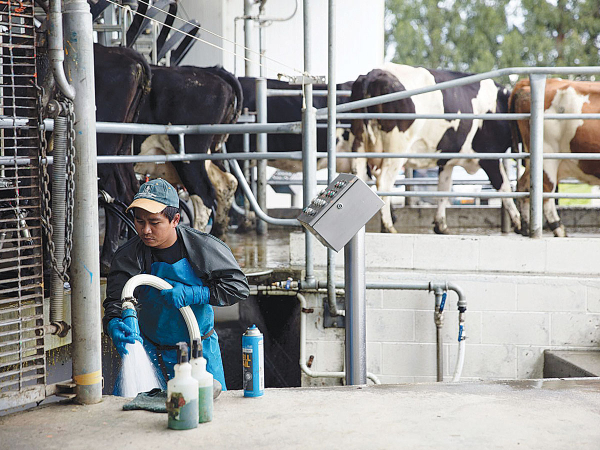 The ‘band-aid’ solution of extending priority processing of visas is simply bringing no joy to farmers in desperate need of staff for calving.
OPINION: It's time for the Government to step in and resolve the migrant worker visa issue for the dairy sector, once and for all.
The ‘band-aid’ solution of extending priority processing of visas is simply bringing no joy to farmers in desperate need of staff for calving, nor to experienced and eager workers ready to help with calving on NZ dairy farms.
According to Federated Farmers, the dairy sector needs up to 1000 workers for calving season now underway. However, it’s taking up to six months for Immigration NZ to process visas.
Federated Farmers has been working closely with the Minister of Immigration and INZ to try and find solutions to alleviate some of the pressure short-staffed farmers are under and prevent any animal welfare issues during calving.
Last week, farmers got some relief. Immigration Minister Erica Stanford agreed to some limited exceptions for existing visa applications, where the applicant is already onshore, to facilitate them being on farm as soon as possible.
The Minister has also agreed to extend priority processing for dairy farm worker and dairy farmer visa applications until 1 September, which should at least see farmers through the bulk of South Island calving. But it only relieves some of the short-term pressure this season, and it’s only a band-aid solution.
The time has come for the Government to address some of the bigger, longer-term challenges with the immigration system.
For starters, the accredited employer scheme is a shambles.
Farmers pay to become accredited employers; it’s a time-tested process and farmers must have a long history of being good employers and keep good records. But it’s still taking farmers four to five months to get a visa for overseas workers.
If the Government doesn’t fix these challenges over the next 12 months, farmers will find themselves back in the exact same situation next season.
Federated Farmers has welcomed new rural policies released by ACT, saying they align closely with its own election priorities.

Federated Farmers is backing Feilding High School’s call to keep Agriculture and Horticultural Science as a standalone subject in Year 11.
OPINION: Making it easier to collect rainwater and use it to grow crops and livestock is a no brainer.
National’s pledge to introduce 19 new national standards shows the party is serious about getting Wellington out of farming, Federated Farmers says.
OPINION: New health and safety guidance unveiled by the Government recently provides farmers greater certainty about what is expected of them when managing risks on farm.


Federated Farmers has welcomed new rural policies released by ACT, saying they align closely with its own election priorities.

Rural Contractors NZ says proposed changes to land transport rules for agricultural vehicles are a welcome response by the Government to out of date regulations which have seen members hit with huge fines.
Alliance is calling for final applications for its 2027 Graduate Programme, with applications closing on Sunday 25 October.
Decades piloting planes has ensured vet and farmer David Hayes is focused on safety. So, after a serious accident while welding on farm, he is sharing his experience so others can learn from it.
Canterbury milk processor, Synlait Milk has confirmed Leon Fung as its chief executive officer.
OPINION: Making it easier to collect rainwater and use it to grow crops and livestock is a no brainer.





OPINION: The same mainstream media muppets that brought you Jacindamania in 2017 have been flat out pimping for the Opportunities…
OPINION: Your old mate reckons the atrocious way farmers in the UK are treated by their lords and masters in…




