Too late for maize?
When is it too late to plant maize? Ian Williams, Pioneer forage specialist explains.




 increase font size
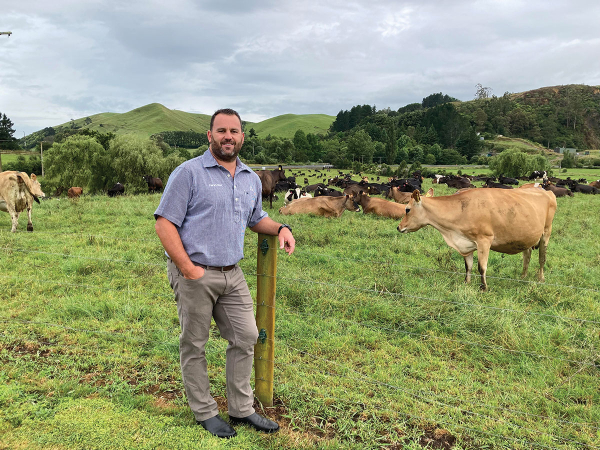 Waikato dairy farmer Mike McGehan looks closely at the National Forage Variety Trials (NFVT) data for his re-grassing programme.
Modern proprietary cultivars backed by independent data are the strong preferenced for Waikato dairy farmer Mike McGehan when he needs reliable and targeted pasture performance.
McGehan farms 135ha in the Scotsman Valley and runs a crossbred herd of 400 cows, fitted with collars, on a System 3-4 operation.
The herd is on track to achieve record production of around 185,000 kgMS for the season after he dropped beef genetics in favour of short-gestation semen at mating. The move significantly tightened the herd's calving spread to 92% of the cows calving in the first six weeks.
For his re-grassing programme, he looks closely at the National Forage Variety Trials (NFVT) data and also considers feedback from his network before choosing specific cultivars that will deliver the high-quality feed he needs at critical times in the season, to maintain cow condition and production.
A large area of the farm previously had whey spread on it which boosted soil fertility to very high levels.
"Our strategy is to pull some of the levels down because they can be a challenge, particularly potassium levels on the effluent blocks," he says.
The original effluent block is being continually cropped, followed by an annual grass to lower its fertility to more sensible levels.
"We're trying to get 30 tonnes/ha average of forage off those paddocks but this can be a challenge because we are direct drilling maize to preserve the soil structure, because it's also the main area for our springer cows," he says.
"In total, we're doing around 20-22ha of summer crop each year and I'm probably under-sowing another 20-30ha on the dairy platform."
By selecting proprietary cultivars off the NFVT list for his region, he can consider which ryegrass options best suit individual paddocks, depending on a range of criteria, including soil type, contour, damage, and aspect.
"Because we're now calving over a much shorter period of time, we're startign to use more of the early-headng ryegrass varieties, and there are some good ones out there at the moment," he says.
Another example of dialling in cultivars is a leased block of rolling clay country at the reat of the farm which is exposed to the westerly wind and prone to drying out.
"Down there, we've been using a fescue hybrid that seems hardier and drought tolerant."
One area of the farm can flood after heavy rain, so Mike adopts a specific strategy for any regrassing where he is prepared to use lower-value seed options.
"I've experimented with different options on the area that can get wet in a big rain event, but I definitely wouldn't use low-cost seed in other areas where I expect it to be in grass for a long time."
He admits that having his own drill means he is more inclined to try different options in the same paddock to see what works best.
"I'm still targeting a kind of grass that I want for that particular paddock so we are able to utilise it best at the time of year it's required."
Once a cultivar decision is made, timing of sowing is critical to maximising pasture growth and future milk production. He always aims to get at least one grazing in before winter.
Gaps in pasture supply are filled with bought-in feed and a combination of maize grown on the property.
"Apart from pasture, we're also typically feeding between 500-800 kg/cow of meal blend, which is mostly palm kernel, and we grow around 250-300 tonnes of maize silage each year on the farm," he says.
He uses farm maps to keep track of his drilling plan through the seasons, so he knows what is sown in each paddock in his re-grassing or cropping programme.
"The hard part is, when the companies are bringing new grasses out every few years, I have to try them all out!"
To access the latest National Forage Variety Trial results for any region, visit the PBRA website.
When is it too late to plant maize? Ian Williams, Pioneer forage specialist explains.
The impacts of a wet winter are clearly evident as I drive around the countryside. In fact, I have never seen the level of damage on farm after winter as I am seeing now.
Giant self-propelled forage harvesters are a common sight in paddocks, but wind the clock 55 years to 1962, when the Gehl 188 Chop King hit the country, and there must have been eyes standing out on stalks.
As a result of the last two seasons’ historically low payouts many farmers have become very cost focussed.
In the early days of self-propelled forage harvesters, power seemed to be 350-400hp and they chopped a lot of grass or maize.


Dairy processors are ready to further boost New Zealand’s export earnings but want the incoming government to match their ambition with good policy.

Massey University is best placed to solve the “problems” facing the dairy industry, says vice chancellor, Pierre Venter.
Synlait's longest serving employee – a man who joined the Canterbury-based milk processor even before it began processing milk – is now its newest executive.
A dairy industry leader believes eradicating the common and costly disease, Bovine Viral Diarrhoea (BVD) is within reach.
A farmgate milk price of $10/kgMS this season is firming up as milk powder prices soar and the New Zealand dollar weakens.
Federated Farmers has welcomed new rural policies released by ACT, saying they align closely with its own election priorities.


OPINION: The same mainstream media muppets that brought you Jacindamania in 2017 have been flat out pimping for the Opportunities…
OPINION: Your old mate reckons the atrocious way farmers in the UK are treated by their lords and masters in…




