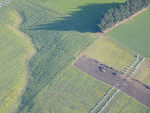
Otago Regional Council to launch winter flyovers
Otago Regional Council is set to begin its annual winter farm flyovers in the next three weeks.




 increase font size
 Otago Regional Council says it has issued 207 Intensive Winter Grazing consents to date.
More than 200 Intensive Winter Grazing (IWG) consents have been issued by Otago Regional Council (ORC) to farmers in recent months for winter 2023 and beyond.
Acting manager consents Alexandra King says the focus in recent months has been on educating farmers on how they can meet the permitted activity rules or how to apply for IWG consents – which can cover as many as five years.
She says that to-date 250 applications have been lodged, with 207 consents issued.
“We’re hoping to see a high level of good practice this winter, building on the work from previous years,” says King.
While the deadline for applications was 1 May, ORC is running three more “one-on-one” IWG workshops later this month, in Dunedin, Balclutha and Oamaru where Consent Planners will walk farmers through their applications, to completion.
King says there has been “great engagement” from the rural community and stakeholders with people thinking about their activity and how they reduce any risks, and all those farmers now with consents also have grazing management plans in place for winter 2023.
“People have been thinking about how they will manage their winter grazing and reduce any on-farm risks,” she says.
Meanwhile, ORC’s principal compliance specialist, Mike Cummings, says the first round of flyovers, performed pre-1 May, were over areas historically used for IWG practices and looked at slope, compared with where there was an absence of consents.
He says the flyovers focused on education and the data is still being processed. Planning is now underway for an additional round of flyovers.
Cummings says the flyover focus will shift to supporting Compliance with the regulations and consents, including through further flyovers planned for the winter.
“It’s great that people have applied for consents or adapted their practices to meet the permitted activity. But the focus now is on how people manage their activity over winter to continue to meet the permitted activity requirements and the conditions of their consents,” he says.
Flyovers will be looking at any instream disturbances, forestry and IWG areas.
The goal of the flyovers is to provide targeted information about rules and timeframes and to link farmers with further support around this farming practice.
Otago Regional Council is set to begin its annual winter farm flyovers in the next three weeks.

OPINION: A reader recently called out the Hound for not giving Federated Farmers enough credit for taking Otago Regional Council to task on its dodgy rule changes.
OPINION: The Otago Regional Council needs to be honest about what the new proposed freshwater rules might mean for our community and how much it could cost local ratepayers.
Federated Farmers is calling for transparency from Otago Regional Council amid a debate over proposed freshwater rules.
OPINION: Farmers from all over the country have made an impressive effort to put good wintering practices in place, ensuring their animals are cared for no matter what the weather conditions are.


Decades piloting planes has ensured vet and farmer David Hayes is focused on safety. So, after a serious accident while welding on farm, he is sharing his experience so others can learn from it.

Canterbury milk processor, Synlait Milk has confirmed Leon Fung as its chief executive officer.
OPINION: Making it easier to collect rainwater and use it to grow crops and livestock is a no brainer.
As part of its Election 2026 coverage, Rural News asked political parties how they would help pull the arable sector out of the doldrums. Here's what they said:
Farmers are being encouraged to rethink how they manage waste on farm with the launch of ruralwastesorted.co.nz, a new website bringing together practical tips, real farmer experiences and resources.
New Zealand Winegrowers (NZW) is celebrating the India-New Zealand Free Trade Agreement (FTA) coming into force today, bringing New Zealand wine improved access to one of the world’s fastest-growing economies.



OPINION: The same mainstream media muppets that brought you Jacindamania in 2017 have been flat out pimping for the Opportunities…
OPINION: Your old mate reckons the atrocious way farmers in the UK are treated by their lords and masters in…




