Integrated farm plan helps businesses
Swannanoa farmer Andrew Gilchrist has delved deep into the business and people side of his family-operated farm through completing an Integrated Farm Plan (IFP).




 increase font size
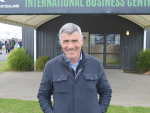
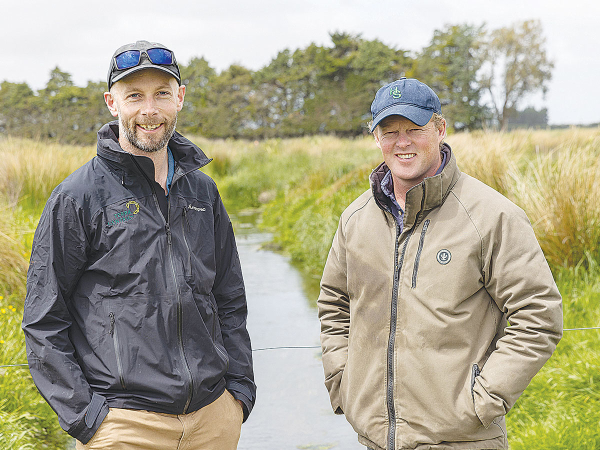 Waimakariri Irrigation Limited (WIL) biodiversity project lead Dan Cameron and Swannanoa farmer Andrew Gilchrist at the Burgess Stream site.
Over the last three years, 4500 native plants have been planted along a 2.5 kilometre stretch of the Burgess Stream.
The waterway winds through Andrew and Peter Gilchrist’s 430-hectare farming operation in Swannanoa.
It is the first freshwater site selected for improvement as part of a wider Waimakariri Irrigation Limited (WIL) biodiversity project.
This has identified sites of ecological interest with the potential for restoration or protection across the scheme’s 44,000-hectare command area.
WIL biodiversity project lead Dan Cameron says 297 sites of interest were discovered during the initial biodiversity survey in 2018.
“We are focusing on protecting existing areas of ecological significance which are connected to neighbouring shareholder land to create a cohesive approach to restoring biodiversity.”
The 2.5km section of the Burgess Stream on the Gilchrist’s’ property includes several springheads which play a significant role in improving the entire stream system.
“When you improve freshwater from its source you have the biggest impact on the entire stream system,” Cameron explains. “This also enables the benefits of the work you are doing to kick in much sooner for other parts of the stream.”
The Burgess Stream crosses 13km of WIL shareholder land before it enters lifestyle block properties at its southern end. In the long term, Cameron would like to see as much of the stream enhanced and protected as possible, with the potential for the lifestyle block owners to get involved in the environmental restoration project.
“Once we have the shareholder owned land restored along the riparian margin of the stream it would be fantastic to share knowledge and resources with lifestyle block owners at the southern end of Burgess Stream. Working together to restore the ecosystem of the entire stream would be amazing.”
Andrew Gilchrist says that working with his staff and local school children on the planting project has been incredibly rewarding. It has also enabled more funding to be used for purchasing plants.
“Peter and I run a contracting and manufacturing business along with the farm, so part of it is seasonal work which means that our staff were able to get involved with planting days and site preparation work.
“It has also meant that the $10,000 of Immediate Steps (IMS) funding from Environment Canterbury could be used entirely for plants as our staff have doing the site preparation and maintenance work,” he adds.
“They have loved working on this project and seeing the changes as the plants have grown up around the edges of the stream.”
Gilchrist says they have also had a group of children, teachers and parents from Swannanoa School help with the planting.
Native plants were selected based on what would have once existed in the area before it was modified by land use, along with species that provide ecosystem service, while also considering the types of plants that fit in with the farming operation.
“Carex secta is known to colonise denitrifying bacteria in its roots which helps to naturally denitrify water and helps prevent sediment build up,” Cameron says.
“We’ve also got flax as it is an excellent food source when it flowers.”
He says the long-term aim is to create a series of resource rich stepping stones to help attract native birds to the area. The plants will also provide shade for the stream and increase the number of invertebrates and insect species. Gilchrist says he would encourage other farmers to get involved in environmental projects.
“From when we began this planting journey three years ago, we have seen so many positive benefits,” he adds. “It’s been awesome and our aim is to continue planting along the whole stream.”
Swannanoa farmer Andrew Gilchrist has delved deep into the business and people side of his family-operated farm through completing an Integrated Farm Plan (IFP).


Federated Farmers has welcomed new rural policies released by ACT, saying they align closely with its own election priorities.

Rural Contractors NZ says proposed changes to land transport rules for agricultural vehicles are a welcome response by the Government to out of date regulations which have seen members hit with huge fines.
Alliance is calling for final applications for its 2027 Graduate Programme, with applications closing on Sunday 25 October.
Decades piloting planes has ensured vet and farmer David Hayes is focused on safety. So, after a serious accident while welding on farm, he is sharing his experience so others can learn from it.
Canterbury milk processor, Synlait Milk has confirmed Leon Fung as its chief executive officer.
OPINION: Making it easier to collect rainwater and use it to grow crops and livestock is a no brainer.



OPINION: The same mainstream media muppets that brought you Jacindamania in 2017 have been flat out pimping for the Opportunities…
OPINION: Your old mate reckons the atrocious way farmers in the UK are treated by their lords and masters in…




