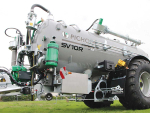
Pichon Adds SV10R and SV14 to SV Slurry Tanker Range
French manufacturer Pichon has expanded its SV slurry tanker range with the launch of two new models.




 increase font size
 Case IH's Trident 5550 applicator is understood to be the agricultural industry's first autonomous spreader.
Case IH has partnered with Raven Industries to launch the Trident 5550 applicator, understood to be the agricultural industry’s first autonomous spreader.
Aimed at a market looking to solve the challenges of labour shortages and the need to improve efficiency, the Trident 5550 applicator combines proven Raven Autonomy driverless technology with an agronomically-designed spreading platform for a flexible autonomous solution. Raven uses its proprietary software to control guidance and steering, speed control and path planning.
In operation, likely using a mobile device, operators can plan and complete the spreading function based on mapped field boundaries. Using a series of advanced cameras and a radar system, the Raven Autonomy system constantly senses a 360-degree environment around the machine looking for obstacles and motion initiation while operating. A perception controller processes the continuous stream of images, which interprets and detects obstacles, with a link back to the remote operator to view the cameras at any time.
If an obstacle is detected, the machine will safely come to a stop and an alert will be sent to the operator’s mobile device. At this point, the operator can evaluate the situation and determine the next course of action.
Additionally, a range of machine tasks and functions can be viewed remotely. These include fuel and DEF levels, vehicle speed, hopper levels, Universal Terminal information and diagnostic fault codes.
This latest innovation follows on from the Case IH autonomous concept vehicle launched in 2016. It comes after research found autonomous spreading was an operation that customers would likely adopt.
The Case IH Trident 5550 allows for one or more driverless machines in the paddock without an operator present. However, it also provides the flexibility of full control inside should it be required.
By operating at a constant speed and with precision, the autonomous applicator should provide spreading consistency – with human error removed – and allow for repeatable performance with centimetre accuracy.
“This is a significant milestone in our accelerated product development efforts between Case IH and Raven,” says Scott Harris, Case IH global brand president. “It highlights our intense collaboration and robust product innovation following CNH Industrial’s acquisition of Raven in late 2021.”
French manufacturer Pichon has expanded its SV slurry tanker range with the launch of two new models.
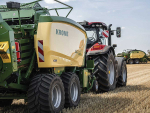
Recently revealed, Krone’s new Series Six, BiG Pack Plus and Pro balers are designed to use standardised components, interfaces, and control concepts, including pick-up, knotter systems and user interfaces.
Consuming around six years and more than 35,000 hours of physical and digital testing, the new sixth-generation Valtra T Series is being described as the most significant new release in the company’s history.
Strautmann has introduced a new Hay Edition auger for its Verti-Mix feed mixer wagons, aimed at operators using rations with larger proportions of hay or other long-fibre materials.
Twin rotor swathers have become the ‘go-to’ for forming swaths to feed hungry harvesters and balers, however, the design layout often means that crop located between the two rotors is not picked up, turned over or incorporated into the swath formed for subsequent harvesting.


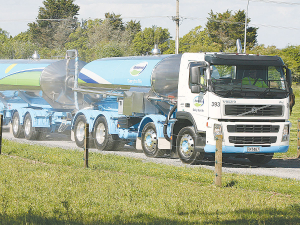
Fonterra shareholders can begin voting on Tuesday 20 October in the 2026 Board of Directors’ election, a Co-operative Council election in one Ward, and seven Annual Meeting resolutions.
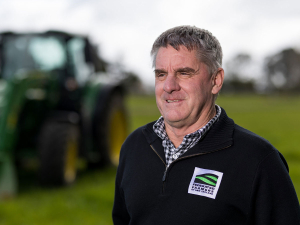
National’s pledge to introduce 19 new national standards shows the party is serious about getting Wellington out of farming, Federated Farmers says.
The National Party’s policies to make it easier to grow fresh vegetables, secure reliable water and energy and simplify farm planning are practical changes that will give growers the confidence to invest, according to Horticulture New Zealand (HortNZ).
Fonterra Co-operative Group chief financial officer Andrew Murray has resigned to take up a role outside the dairy giant.
A major move is about to get underway to improve the quality and viability of dairy beef and cattle in NZ.
Veterinarians say changes to the code of welfare for dairy cattle provides a positive foundation for improved cattle welfare across the country.


OPINION: The same mainstream media muppets that brought you Jacindamania in 2017 have been flat out pimping for the Opportunities…
OPINION: Your old mate reckons the atrocious way farmers in the UK are treated by their lords and masters in…




