
FAR Eyes NZ Grain as Dairy Supplementary Feed
Dr Scott Champion, Foundation for Arable Research chief executive, says that everyone in the supply chain had a role to play in driving the sector's long-term success.




 increase font size
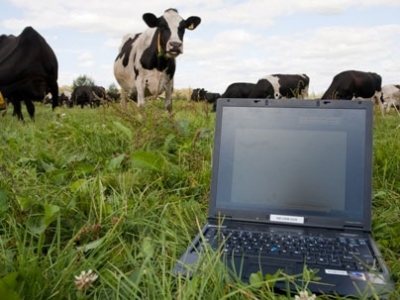
A course teaching farmers the basics of computing has attracted investment from the red meat sector.
Computers are now an essential part of running a farm business, says major investor, Beef + Lamb.
B+LNZ chief executive, Scott Champion says the course fits with RMPP's philosophy of helping farmers develop skills to make use of existing products, rather than inventing new ones.
He adds that an increasing array of services are being offered online. Having the skills to use them will help farmers make more informed decisions and better manage their businesses.
The project began two years ago when Pongaroa-based farm consultant, Rachel Joblin, ran the first basic computer skills course to meet demand from members of her local community.
It was such a success the Red Meat Profit Partnership (RMPP) is now funding a nationwide rollout.
Champion says "Computers are fast becoming an essential farm management tool and through its investment in RMPP, Beef + Lamb New Zealand is pleased to help make these computer courses available to farmers throughout the country."
Joblin's involvement in setting up the computer course happened almost by accident.
She explains that local farmers approached her wanting to develop basic computer skills. After investigating options and finding no local trainers, she decided to do it herself.
The course is aimed at developing the basic skills farmers need to run their businesses. Beginning with the basics, like starting the computer, to sending emails and using search engines. "There are so many ah-ha moments when you see whole new worlds opening up to them." says Joblin.
Many farmers have been relying on family members to use a computer for them, but that is not sustainable in a world where online communication is now the norm. "It's how other people want to communicate with us,"
Having a low level of computer skills hinders a farmer's ability to pick up other farm management tools such as Farmax, says Joblin.
The courses to date have run in Pongaroa and at Taratahi. Nigel Fleming, who manages an 890ha sheep and beef farm near Masterton, completed the Taratahi course. Previously he had relied on his wife, Brigid, to do all the computer work.
Nigel says he has learnt how to create files, so now has all of his killing data in one place, and adds that he is often sent contracts by email, which he is now able to manage online.
He says he was surprised at just how much he enjoyed the experience. It has given him the confidence to continue developing his computer skills. In the future, he hopes to use farm and cash management software.
Dr Scott Champion, Foundation for Arable Research chief executive, says that everyone in the supply chain had a role to play in driving the sector's long-term success.

New Zealand wool is reaching new heights as air filtration companies move away from synthetic products to biodegradable alternatives.
Generative AI in the workplace, trials in the field, and industry-relevant research took centre stage at this year’s Grape Days events in Central Otago, Hawke’s Bay and Marlborough.
Matt McRae, a farmer from Mokoreta in Southland who runs a sheep, beef and dairy support business alongside a sheep stud, has been elected to the Beef +Lamb NZ Board as a farmer director.
Virtual fencing company Halter is going global but for founder Craig Piggott, New Zealand farmers will always remain their main partners.


Federated Farmers has welcomed new rural policies released by ACT, saying they align closely with its own election priorities.

Rural Contractors NZ says proposed changes to land transport rules for agricultural vehicles are a welcome response by the Government to out of date regulations which have seen members hit with huge fines.
Alliance is calling for final applications for its 2027 Graduate Programme, with applications closing on Sunday 25 October.
Decades piloting planes has ensured vet and farmer David Hayes is focused on safety. So, after a serious accident while welding on farm, he is sharing his experience so others can learn from it.
Canterbury milk processor, Synlait Milk has confirmed Leon Fung as its chief executive officer.
OPINION: Making it easier to collect rainwater and use it to grow crops and livestock is a no brainer.



OPINION: The same mainstream media muppets that brought you Jacindamania in 2017 have been flat out pimping for the Opportunities…
OPINION: Your old mate reckons the atrocious way farmers in the UK are treated by their lords and masters in…




