New Reviva Forage Rape Wins Over Dryland Farmers in First Year
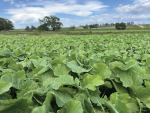
It's only just hit the market, but a new forage rape bred for dryland farms has already won the approval of lambs and young cattle both north and south.




 increase font size
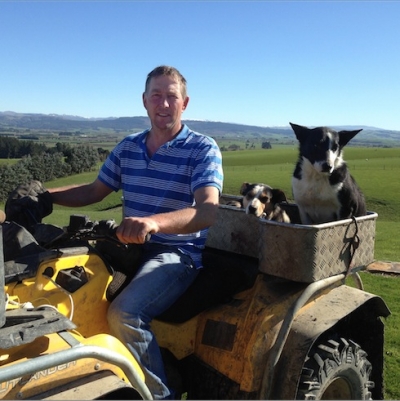 Nelson Hancox set to go to Global Farmers Master Class.
WEST OTAGO livestock farmer Nelson Hancox is one of five New Zealanders selected to join the Rabobank Global Farmers Master Class in Australia next week. The week-long program will see 40 farmers from across the globe gather to share ideas and information on the future of farming and participate in the educational program.
Hancox says he is particularly keen to explore the challenge of increasing returns going back to farmers, which he believes is one of the biggest issues facing the sheep and beef sector in New Zealand.
"I'm very interested in learning how the sheep and beef sectors in other parts of the world are managing the margins that are being received by processors, marketers and retailers, and how we can try to see gains in the value that is going back to farmers in our sector," he says.
"It will be inspiring to be networking with the other international participants and finding out what we can learn from how other industries are doing things around the world."
Hancox says, that along with reduced farmer margins, constraint on production was another big challenge facing sheep and beef farmers in New Zealand.
"Because of changing land use in agriculture and the move to dairying, we've seen sheep and beef pushed into the higher, colder country where pasture growth is limited and this means it is harder to supply the northern hemisphere for 52 weeks of the year," he says.
New Zealand is the world's largest exporter of lamb and farmed venison, and the fifth largest exporter of beef. With only three to four per cent of New Zealand agricultural production going to the domestic market, Hancox says the country's producers have to be firmly focused on how best to supply their export markets.
"New Zealand really needs to develop ways to produce so that we can hopefully align with the northern hemisphere requirements and be a stable and reliable supplier," he says.
The week-long program is to be held in Victoria and will cover key topics in the context of global agriculture, including social enabling, sustainability, succession, supply chain, science, social media and silicon farming (big data).
It's only just hit the market, but a new forage rape bred for dryland farms has already won the approval of lambs and young cattle both north and south.

Kaikōura families affected by July's severe storm have found a practical solution to a problem that's kept some children away from regular schooling for weeks: a washed-out section of Inland Kaikōura Road, which has stopped the local school bus from running its usual route.
When Simon Hales discovered triple drench resistance on his Weber farm, it was a catalyst to fast-track farm system change.
Special courses for secondary school teachers to help excite kids about agriculture and horticulture are now being run at Massey University.
Ravensdown has reported a net profit before tax and rebate of $50.1 million for the year ended 31 May 2026.
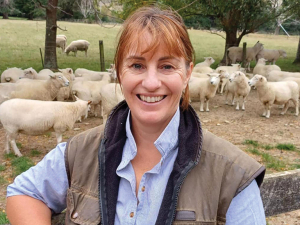
B+LNZ's Wormwise veterinarian Mary Bowron has won the Best Sheep and Beef Vet of the Year Award in recognition of her outstanding contribution to New Zealand’s sheep and beef sector.
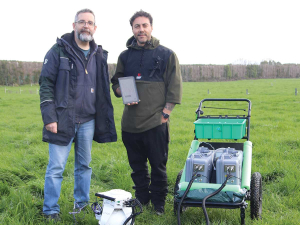
Researchers at Massey University are using a special piece of scientific equipment to improve the measurement of greenhouse gas emissions from pasture soils.
More signs of a booming kiwifruit sector.
OPINION: David Seymour and James Meager's plan to make it easier for farmers and orchardists to operate drones can best be described a 'courageous' move.
New Zealand wool is reaching new heights as air filtration companies move away from synthetic products to biodegradable alternatives.
Opuha Dam's ability to protect South Canterbury communities from major flooding has taken a significant step forward, with Opuha Water Limited (OWL) successfully commissioning a new outlet valve capable of releasing record volumes of water from the dam ahead of a weather event.

OPINION: The same mainstream media muppets that brought you Jacindamania in 2017 have been flat out pimping for the Opportunities…
OPINION: Your old mate reckons the atrocious way farmers in the UK are treated by their lords and masters in…