
Farmers Warned Over Track Dangers After Wairarapa Floods
The terrible floods that hit the Wairarapa may have subsided, but the danger to farmers still exists, according to local Federated Farmers president Rob Hickson.




 increase font size
 Wairarapa farmers have been working to preserve the wetlands in their local area.
A partnership of Wairarapa farmers is part of a growing wetland restoration movement to build community resilience against flooding, drought, landslides and water pollution.
Since 2016, the partnership has been proactively fencing off stock, planting native plants and trapping pest animals to restore wetlands and surrounding areas on Hapua farms. However, restoration work began over a decade ago.
The Hapua partnership is supported by Greater Wellington’s Healthy Waterways Programme that assists landowners to restore and manage wetlands and waterways on the partnership’s property.
The Wairarapa has seen significant reduction in wetlands as a result of human interference and earthquake uplift.
Project partner Michael Birch says his main motivation for protecting these wetlands is for the benefit of future generations – to leave his farm in a better state than he found it.
He says this belief connects to a progressing mentality among farmers who are recognising the intrinsic value of wetlands and bush remnants, and their ability to generate value for the farm itself.
“It’s not so long ago that wetlands were being drained, and in the Wairarapa we’ve lost about 95% of wetlands,” says Birch.
“There has been a big change of attitude over the years and over my lifetime. My father’s generation was always talking about ‘breaking land in’ and now we’re talking about restoring habitat – while still providing productive farmland.”
He says the region needs more resilience for everyone including hill country farms, and wetlands are a key component of that.
“Wetlands are really good at filtering out contaminants, pollutants and fertilisers so excess nutrients can get soaked up.
“Wetlands serve to slow water down, which means in times of flood they are absorbing the peak of the flood – so you can flatten the curve a bit and you don’t have such a high peak of water flow. At the end of the curve, when the water recedes it does it at a slower rate,” says Birch.
He says that, with the Ruamahunga catchment connecting to a series of farms, it is vital to acknowledge that everyone downstream is affected by the work farmers do.
“If all our farmers in the region were to think of themselves as connected to the Ruamahaunga catchment and to see if they can improve their wetlands to help slow water down, then it could have quite a large difference to our water resilience.”
Greater Wellington land management advisor Emma Davison says “The Hapua partnership has made great leaps towards protecting wetlands on their farm and have really nailed how wetlands add more value to their farming system.”
“It’s great to see farmers drive this process and seek us out for how to best manage such an important land feature,” adds Davison.
The terrible floods that hit the Wairarapa may have subsided, but the danger to farmers still exists, according to local Federated Farmers president Rob Hickson.

Testing confirms H5 bird flu in a single northern giant petrel, found dead on a remote Cape Palliser beach in the Wairarapa, says Dr Mary van Andel, the Ministry for Primary Industries' (MPI) Chief Veterinary Officer.
Signing up to a benchmarking tool is not about competition, but about improving collectively, says Ximena Puig and Alvaro Luzardo who are 50-50 sharemilkers at a 164-hectare (effective) dairy farm in Eketāhuna in the Lower North Island.
I am writing this story with the 2025 harvest in full swing.
Fire and Emergency New Zealand has revoked the restrictions on lighting outdoor fires in Wairarapa’s southern coastal area.


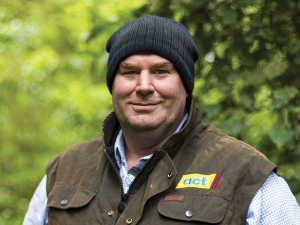
As part of its Election 2026 coverage, Rural News asked political parties how they would help pull the arable sector out of the doldrums. Here's what they said:
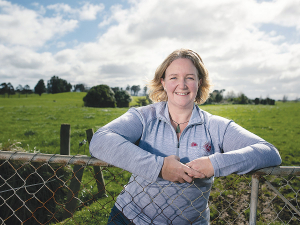
Farmers are being encouraged to rethink how they manage waste on farm with the launch of ruralwastesorted.co.nz, a new website bringing together practical tips, real farmer experiences and resources.
New Zealand Winegrowers (NZW) is celebrating the India-New Zealand Free Trade Agreement (FTA) coming into force today, bringing New Zealand wine improved access to one of the world’s fastest-growing economies.
New Zealand’s red meat sector has welcomed the India-New Zealand Free Trade Agreement taking effect, which removes India’s 33% tariff on New Zealand sheepmeat.
More than 95 per cent of New Zealand’s forestry and wood exports to India can now enter tariff free as the New Zealand-India Free Trade Agreement comes into force today.
Federated Farmers is backing Feilding High School’s call to keep Agriculture and Horticultural Science as a standalone subject in Year 11.




OPINION: The same mainstream media muppets that brought you Jacindamania in 2017 have been flat out pimping for the Opportunities…
OPINION: Your old mate reckons the atrocious way farmers in the UK are treated by their lords and masters in…




