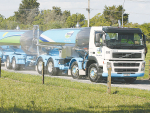
Fonterra Elections 2026: Voting Opens Tuesday 20 October
Fonterra shareholders can begin voting on Tuesday 20 October in the 2026 Board of Directors’ election, a Co-operative Council election in one Ward, and seven Annual Meeting resolutions.




 increase font size
 The resurgent Chinese economy is helping boost returns for NZ dairy farmers.
A resurging Chinese economy is helping boost returns for New Zealand dairy farmers.
Two banks – BNZ and Westpac – are following Fonterra and lifting their forecast milk price for the season.
The positive sentiment among economists is reflecting on the Global Dairy Trade (GDT) auction. Last week’s event recorded a slight increase in dairy prices, GDT’s third consecutive price rise.
Westpac has lifted its forecast price by 50c to $7/kgMS, sitting above Fonterra’s new mid-point of $6.80/kgMS ($6.30 to $7.30 range).
Senior agri economist Nathan Penny says the forecast change is due to better than expected global dairy demand, especially from China.
Penny says the Chinese economy has rebounded strongly post Covid.
“The Chinese economy is on track to post modest growth over 2020, the only major global economy likely to do so.”
BNZ has lifted its forecast payout by 30c to $6.80/kgMS.
Senior economist Doug Steel attributes the recent GDT gains to improving demand from China.
“This has coincided with macroeconomic indicators suggesting that the Chinese consumer is starting to follow the country’s industrial recovery that has been evident for months,” he says.
“This is a good macro backdrop for the demand pickup to be sustained. At the same time, Chinese purchasing power has been improving with an appreciating Chinese yen.”
Apart from China, most countries are still dealing with Covid-19.
Earlier this year there were fears of a price slump as the global recession, triggered by Covid, weighed on global dairy demand.
But Penny says China and some other Asian dairy markets are faring better than expected.
“More broadly, New Zealand agricultural exports, including dairy, have proved more resilient than we expected earlier in the year. In this vein, we now expect global dairy prices to hold at or around current levels over the remainder of the season.
“This updated view contrasts with our previous view that prices would weaken as the global recession weighed on global dairy demand.
“The strength in demand has seen prices firm over three consecutive auctions. Importantly, this sets up the milk price well for the season as this price strength has coincided with the peak in spring production and similarly high auction volumes.”
ASB, which is sticking to its $6.75 forecast, also notes that downside risks to the forecast have receded.
Economist Nathaniel Keall says after three decent GDT auctions, there is now an upside risk.
Rabobank, which will update its milk forecast payout in December, is hinting of a rise.
RaboResearch senior dairy analyst Emma Higgins notes that Chinese buyers stepped back into the market more actively last GDT event following more quiet activity in the previous auction earlier this month, which coincided with Golden Week celebrations.
“This increased activity was reflected in the steady powder results, with Chinese demand noticeably higher for WMP compared to last month and also compared to this time last year,” she says.
“We forecast on a quarterly basis and we are set to revise our current $6.35/kgMS milk price in early December. If dairy prices remain resilient, ceteris paribus, we will be lifting our forecast.”
Fonterra shareholders can begin voting on Tuesday 20 October in the 2026 Board of Directors’ election, a Co-operative Council election in one Ward, and seven Annual Meeting resolutions.

Fonterra Co-operative Group chief financial officer Andrew Murray has resigned to take up a role outside the dairy giant.
Four candidates have been confirmed for two director positions on Fonterra’s board.
A record farmgate milk price and strong global demand is laying the foundation for continued growth of organic dairy farming in New Zealand.
Waikato milk processor Tatua has again declared a record milk payout to farmer shareholders, leaving other processors in the dust.


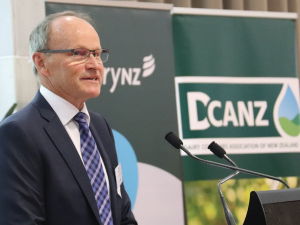
Dairy processors are ready to further boost New Zealand’s export earnings but want the incoming government to match their ambition with good policy.
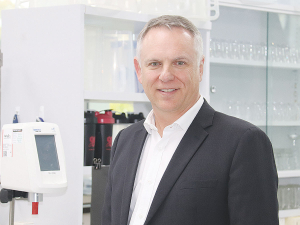
Massey University is best placed to solve the “problems” facing the dairy industry, says vice chancellor, Pierre Venter.
Synlait's longest serving employee – a man who joined the Canterbury-based milk processor even before it began processing milk – is now its newest executive.
A dairy industry leader believes eradicating the common and costly disease, Bovine Viral Diarrhoea (BVD) is within reach.
A farmgate milk price of $10/kgMS this season is firming up as milk powder prices soar and the New Zealand dollar weakens.
Federated Farmers has welcomed new rural policies released by ACT, saying they align closely with its own election priorities.





OPINION: The same mainstream media muppets that brought you Jacindamania in 2017 have been flat out pimping for the Opportunities…
OPINION: Your old mate reckons the atrocious way farmers in the UK are treated by their lords and masters in…




