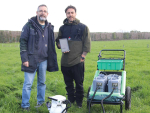
Massey Uses Portable Analyser to Measure Pasture Soil GHGs
Researchers at Massey University are using a special piece of scientific equipment to improve the measurement of greenhouse gas emissions from pasture soils.




 increase font size
 Craig Prichard.
Beyond Massey University’s cheeseboard at Fieldays was the objective of promoting sheep milking.
Associate professor Craig Prichard, a driving force in promoting the new industry, spent all his time at Fieldays handing out samples of an ever-popular smoothie made from sheep milk.
He says Massey is trying to get people used to sheep milk as a food.
“There is an historic gap in New Zealanders’ palette in respect of sheep milk,” Prichard told Rural News. “That’s why we have been doing a smoothie, which is a very popular food.”
And people were able to add their own flavours, which was popular.
Spring Sheep Dairy, which runs a big sheep milking farm in the central North Island, was also on the stand talking to farmers about setting up to milk sheep.
“Sheep dairy is no longer a novelty but we need to build supply now,” Prichard says. “While we have proven markets, NZ still has only 16 significant sheep milk farmers. This this is just a pimple on the side of the dairy industry and we need to ramp that up.”
He says chefs are excited about sheep milk and how it can be used as an ingredient for other dishes, hence the need to think of sheep milk beyond the cheese board.
NZers are good at eating cheese, but getting cheese into foods and developing it as an ingredient is also important, Prichard says.
Researchers at Massey University are using a special piece of scientific equipment to improve the measurement of greenhouse gas emissions from pasture soils.

Interest in agritech and production animal systems has prompted Massey University's School of Agriculture and the Environment to new majors to its popular animal science degree.
The industry is crying out for graduates with agricultural related degrees.
Walking around the Fieldays this year, expected most of the conversations to be about machinery purchases and farm infrastructure upgrades. Instead, one topic seemed to keep cropping up more frequently with farmers – the price of PKE.
A four year trial has reaffirmed that mixing plantain into dairy pastures can help reduce nitrogen losses to freshwater while maintaining milk production and profitability, say researchers.


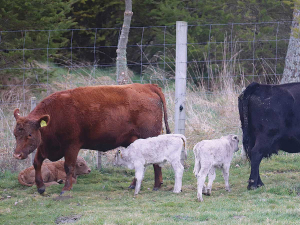
A major move is about to get underway to improve the quality and viability of dairy beef and cattle in NZ.
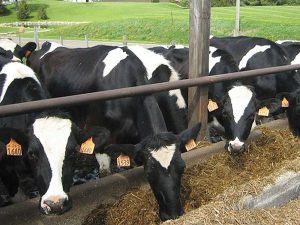
Veterinarians say changes to the code of welfare for dairy cattle provides a positive foundation for improved cattle welfare across the country.
Today, 15 October, is the International Day of Rural Women, which recognises rural women’s contribution to farming, communities and the environment.
Global dairy giant Lactalis has integrated its Australian operations with the Mainland Dairy consumer business it acquired from Fonterra earlier this year.
After almost two decades of sharemilking, saving and building equity, Aaron and Marcia Flay this year realised their long-held dream of settling on their first dairy farm.
Good medium to long term prospects for NZ beef, especially in the US, has heighted the focus on various initiatives to capitalise on this situation.




OPINION: The same mainstream media muppets that brought you Jacindamania in 2017 have been flat out pimping for the Opportunities…
OPINION: Your old mate reckons the atrocious way farmers in the UK are treated by their lords and masters in…




