Tech-Driven Farm Aims to Attract Next Generation of Farmers
Tech savvy Huntly farmer Rhys Darby believes technology could help solve one of the dairy industry's pressing problems - how to attract more young people into farming.




 increase font size
 Gaye Scott and Wendy Robertson from recruitment company Personnel Placements have seen a rise in demand for agricultural labour from farmers.
With labour shortages a grim reality for many farmers across the country - and no end in sight - recruitment agencies have seen demand increase drastically.
With offices in Timaru and Ashburton, overseeing areas ranging from Darfield to Invercargill, Wendy Robertson has run Personnel Placements (PPL) for 22 years, Gaye Scott oversees PPL's agricultural team, which is involved in jobs ranging from dairy to meat to horticulture.
As a recruitment agency, PPL puts candidates on a database who can then be sent out for clients for work. Along with part-time and full-time jobs, agencies also cover permanent and temporary employment placement, saving clients the time and cost involved in interviewing prospective employees.
Robertson told Rural News that agriculture is an important part of her business' success and that a large part of the agriculture team's work is in seasonal jobs.
"We have teams of regulars that have worked for us - some of them for 6 or 7 years - and they shift around the different seasons," she says.
"Because of the screening and work we put into the people before we send them out to our clients, they're great people that want to work and they take pride in what they do."
Like all businesses, PPL has been hit hard by the pandemic, with the closed borders reducing the number of backpackers and RSE workers that help fill many temporary and seasonal roles.
"Even though we're saying we're opening the borders, we haven't really opened them to capacity," Robertson says.
"They've [immigration] changed the visa scheme making it harder to bring in long term recruits. Now people must have their visas organised before they get in the country, whereas before they could have come in and you could have met them.
"If we can't supply staff, people can't run their businesses."
DairyNZ alone is looking at around 4,000 job vacancies this year, and a recent Kiwibank report expects that emigrants will outnumber immigrants by 20,000 this year, putting further pressure on businesses struggling to find talented workers.
"We average about 70 to 120 out each day on seasonal crews and many more in individual temp roles. Many farmers and growers depend on us to ensure they produce a top-quality yield by rogueing the crop to remove any off types or weeds, get crops out of the ground and graded for factory or export," Scott told Rural News.
She adds that one of the biggest challenges is that many roles are not recognised by job seekers to be specialist roles - thinking that tractor driving is just like a car.
"This is why we use very robust skill-and-role specific interviewing techniques that are tailored to each individual client."
Despite the challenges the last few years have posed, Robertson is optimistic for the futures.
"We have managed because we've got our reputation and because of the types of businesses that we deal with we've managed to fill in and complete those roles for our clients," she say.
"This year would be the hardest that I've ever seen in the 22 years that I've been in business, but we still managed to fill all of our potato harvester needs."
Tech savvy Huntly farmer Rhys Darby believes technology could help solve one of the dairy industry's pressing problems - how to attract more young people into farming.

New figures show dairy farmers are not only holding on to their international workforce, but are also supporting those staff to step into higher-skilled roles on farm.
The minimum wage increase set for 1 April will cut into the horticulture industry’s already tight margins and put increased financial pressure on a sector decimated by bad weather.
As chief executive of the larget kiwifruit growing operation in NZ, Seeka boss Michael Franks says labour is slightly less of an issue than it was a year ago.
From today, eligible skilled migrants with a job or a job offer in specific roles on the Straight to Residence pathway will be able to apply for residence, both from on shore and overseas.

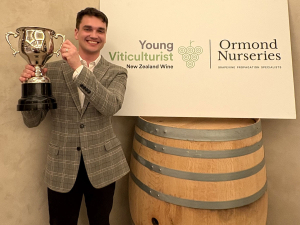
Joshua Irving has been named the 2026 Ormond Nurseries North Canterbury Young Viticulturist of the Year.

Vets say they support the responsible use of virtual fencing and virtual herding technology for cattle and wants to work with farmers, manufacturers and government to help shape standards for future use backed by ongoing research to strengthen animal welfare outcomes.
National and world records tumbled as top Kiwi axeman claimed two Stihl Timbersports world titles at the same event in Budapest, Hungary over the first weekend in June.
A safety push across New Zealand has revealed significant gaps in hazardous substances management, farm vehicles, tractors, quad bikes and side-by-sides.
New Zealand farmers have earned a global edge by consistently yet cautiously taking advantage of emerging agri-technology.
New season data from LIC shows a strong reproductive performance for the 2025-26 season, with a lift in key metrics compared to last season.




OPINION: Central Hawke's Bay farmer Mark Warren recently told the Hawke's Bay Times it's time for a conversation about allowing…
OPINION: A nation that relies as heavily as NZ does on functional global shipping lanes will have to do its…