
Canterbury Boosts Wallaby Control With $2M Funding Push
Wallaby control efforts in Canterbury have received a major boost, with Canterbury Regional Council releasing $2 million from its Pest Management Reserve.




 increase font size

ENVIRONMENT CANTERBURY has announced its approval of the third farm environment plan template under the proposed Land & Water Regional Plan.
The template was developed by Rangitata Diversion Race Management Ltd (RDRML) and the three irrigation schemes supplied by the company, Mayfield-Hinds, Valetta and Ashburton-Lyndhurst. Together these schemes supply water to 450 shareholders in Mid Canterbury. RDRML holds a consent requiring the company to prepare and have approved a farm environment plan.
The company also sought approval of the template to enable farmers who partially irrigate from these schemes to complete a single plan covering the entire property and be fully compliant with the regulatory requirements for both parts of the property - the part irrigated with scheme water and the balance that is not.
Acknowledging the quality of the template, Environment Canterbury chief executive Bill Bayfield said RDRML had met all the requirements of Schedule 7 of the proposed Land & Water Regional Plan.
"We hope the farm environment plans that come from this template are valuable both for farmers and for the company," Bayfield says.
"The Plan is a primary delivery mechanism of the Canterbury Water Management Strategy. It is therefore reassuring to see in this template a methodology that will enable development of plans identifying actual and potential environmental effects and risks to properties, addresses those effects and risks, and has a high likelihood of appropriately avoiding, remedying or mitigating them."
RDRML chief executive Ben Curry says he is delighted that the farm environment plan has been recognised as meeting the standard set by Environment Canterbury.
"It means farmer shareholders are now able to qualify their responsibilities under the proposed Land & Water Regional Plan as well as meet our standards for best practice irrigation," Curry says.
Under the proposed Land & Water Regional Plan, a farm environment plan will need to be produced in any circumstances where an application for consent to farm is required.
"There are several situations where a consent will be required at different times in future, depending on how at risk water quality is in the zone where the property is located," Bill Bayfield said.
"Irrespective of the rules, we encourage all farmers to prepare farm environment plans. They will help identify environmental and business risks and planning for their management. International markets are increasingly demanding proven sustainability, and farm environment plans are one way to demonstrate this."
Under Schedule 7 of the proposed Land & Water Regional Plan, farm environment plans can be prepared either by landowners themselves or via industry-prepared templates and guidance material.
Minimum content is specified, and all farm environment plans must include an assessment of the adverse environmental effects and risks associated with the farming activities and how those effects and risks will be managed, including irrigation, application of nutrients, effluent application, stock exclusion from waterways, offal pits and farm rubbish pits. Farm environment plans must be audited.
The first and second templates approved by Environment Canterbury were for Synlait Milk Ltd and Whakaora Te Waihora.
For more information on the proposed Land & Water Regional Plan, go to www.ecan.govt.nz/lwrp
For information on RDRML, go to http://www.rdrml.co.nz/
Wallaby control efforts in Canterbury have received a major boost, with Canterbury Regional Council releasing $2 million from its Pest Management Reserve.

Newly released data from Environment Canterbury (ECan) Farm Environment Plan (FEP) audits are showing a dramatic lift in environmental performance across the region.
Buying or building a rural or semi-rural property? Make sure you know where the wastewater goes, says Environment Canterbury.
OPINION: Canterbury grows most of the country's wheat, barley and oat crops. But persistently low wheat prices, coupled with a high milk payout, are believed to be driving farmers out of the industry in the hunt for the dairy dollar, according to media reports.
Environment Canterbury, alongside industry partners and a group of farmers, is encouraging farmers to consider composting as an environmentally friendly alternative to offal pits.


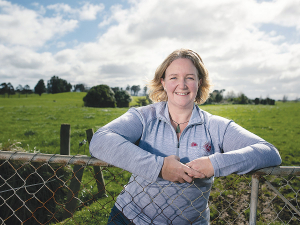
Farmers are being encouraged to rethink how they manage waste on farm with the launch of ruralwastesorted.co.nz, a new website bringing together practical tips, real farmer experiences and resources.

New Zealand Winegrowers (NZW) is celebrating the India-New Zealand Free Trade Agreement (FTA) coming into force today, bringing New Zealand wine improved access to one of the world’s fastest-growing economies.
New Zealand’s red meat sector has welcomed the India-New Zealand Free Trade Agreement taking effect, which removes India’s 33% tariff on New Zealand sheepmeat.
More than 95 per cent of New Zealand’s forestry and wood exports to India can now enter tariff free as the New Zealand-India Free Trade Agreement comes into force today.
Federated Farmers is backing Feilding High School’s call to keep Agriculture and Horticultural Science as a standalone subject in Year 11.
Food and fibre exports have returned a billion- dollar bonus to the country.



OPINION: The same mainstream media muppets that brought you Jacindamania in 2017 have been flat out pimping for the Opportunities…
OPINION: Your old mate reckons the atrocious way farmers in the UK are treated by their lords and masters in…




