Blueberries Could Be NZ's Next $150m Horticultural Export
Blueberries have the potential to become a major horticultural export, earning up to $150 million within the next three to five years.




 increase font size
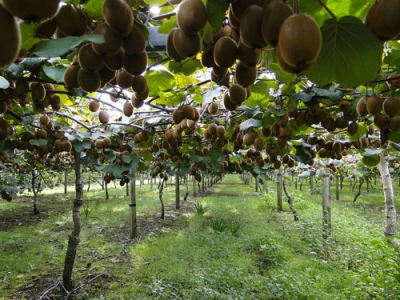
Kiwifruit Vine Health (KVH) has received a Psa-V positive test result on Hort16A and male vines on a Whangarei kiwifruit orchard - the first confirmed case in the region.
All growers in the region have been advised of the situation and advised by KVH. KVH are holding a meeting for Whangarei growers next week and will be carrying out extensive monitoring in the region over the weekend.
There are 49 orchards in the Whangarei region comprising of close to 144 canopy hectares.
KVH chief executive, Barry O'Neil says this new find is very disappointing and will be particularly hard for local growers and the regional committee.
O'Neil says that Whangarei growers and the regional committee were successful keeping Psa-V out of the region for more than four years.
"The fact Whangarei is located between two positive regions, and is only now being confirmed with Psa-V, is testament to the highly proactive approach they have taken over the last few years."
"However, it has been a cold, wet winter and spring is always a nervous wait as we start to see what effect the winter has had on orchards. This spring KVH has had reporting of more widespread infection in all positive regions – worse than the last couple of years so this result in Whangarei is not entirely unexpected."
Symptoms are only now starting to show, but based on the dieback and exudate, it is likely the disease has been present for some time.
"Every grower in every region should be proactively monitoring their vines and maintaining a robust spray programme this spring to protect their orchards as much as possible."
Growers in the Whangarei area are advised the following:
· Monitor orchards extensively and report any suspicious Psa-V symptoms to KVH on 0800 665 825.
· Maintain strict orchard hygiene procedures as per KVH Best Practice: Orchard Hygiene. Refer to www.kvh.org.nz/hygiene.
· Implement and maintain a protective spray programme. KVH recommends a copper spray application as soon as possible. Refer to the spring spray programme in the Psa-V Seasonal Management Guide available on the KVH website www.kvh.org.nz/seasonal_advice.
· No kiwifruit plant material, including budwood and nursery stock, along with any potentially contaminated orchard equipment, can be moved between orchards.
Blueberries have the potential to become a major horticultural export, earning up to $150 million within the next three to five years.

OPINION: At the end of my first year as chair of the Environmental Protection Authority (EPA), I have been reflecting on the progress made in the time I have been in the role.
Allan Freeth, chief executive of the Environmental Protection Authority (EPA) has announced he is resigning.
Tomato growers are facing a challenge like never before over the rising cost of energy and the uncertainty of supply.
Nominations are now open for the Horticulture New Zealand (HortNZ) board.



National’s pledge to introduce 19 new national standards shows the party is serious about getting Wellington out of farming, Federated Farmers says.

The National Party’s policies to make it easier to grow fresh vegetables, secure reliable water and energy and simplify farm planning are practical changes that will give growers the confidence to invest, according to Horticulture New Zealand (HortNZ).
Fonterra Co-operative Group chief financial officer Andrew Murray has resigned to take up a role outside the dairy giant.
A major move is about to get underway to improve the quality and viability of dairy beef and cattle in NZ.
Veterinarians say changes to the code of welfare for dairy cattle provides a positive foundation for improved cattle welfare across the country.
Today, 15 October, is the International Day of Rural Women, which recognises rural women’s contribution to farming, communities and the environment.





OPINION: The same mainstream media muppets that brought you Jacindamania in 2017 have been flat out pimping for the Opportunities…
OPINION: Your old mate reckons the atrocious way farmers in the UK are treated by their lords and masters in…




