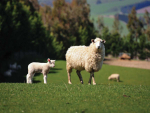
Early Weaning Lambs: What the Massey Trials Found
Farmers with high-quality feed available in late spring could consider weaning at least a proportion of their lamb crop early to benefit both lambs and ewes.




 increase font size
 NZAEL manager, Andrew Fear
DairyNZ subsidiary New Zealand Animal Evaluation (NZAEL) will update the genetic base used to calculate Breeding Worth (BW) next month.
This routine update will cause a drop of approximately $185 in BW across all cows, bulls, and herds but does not reflect any loss in genetic value or animal performance.
To assist with ranking within a population, it's helpful to have a benchmark. In animal evaluation, this reference point is called 'Base Cow'. A Base Cow change causes very minimal re-ranking among bulls, cows, herds, or breeds. It simply shifts animals up or down depending on the genetic base that is chosen. Base Cow creates the yard stick to measure how much genetic progress is being made with each passing generation.
"New Zealand's dairy herd continues to make meaningful genetic improvement. Each generation of heifers enters the herd with higher BW on average, than the previous generation, leading to higher protein, fat and greater efficiency. Updating the Base Cow ensures BW remains an important and accurate ranking tool, reflecting the performance of today's dairy animals," says Andrew Fear, NZAEL manager.
From 20 June, the BW of the average dairy animal will move from $241 to $56. This shift follows the introduction of an updated reference point, known as a Base Cow, which will now be based on 2015-born animals instead of the current 2005 cohort.
Farmers with high-quality feed available in late spring could consider weaning at least a proportion of their lamb crop early to benefit both lambs and ewes.
Today, 15 October, is the International Day of Rural Women, which recognises rural women’s contribution to farming, communities and the environment.
The first major update to the Dairy Cattle Code of Welfare in more than a decade has been released, marking what DairyNZ describes as an important step in ensuring animal welfare standards continue to evolve alongside scientific evidence and on-farm realities.
Have a plan in place for your cows and staff.
Bovine Viral Diarrhoea (BVD) is sometimes viewed as a dairy industry issue, but the reality is that the disease can have serious consequences for beef breeding herds as well.



Federated Farmers has welcomed new rural policies released by ACT, saying they align closely with its own election priorities.

Rural Contractors NZ says proposed changes to land transport rules for agricultural vehicles are a welcome response by the Government to out of date regulations which have seen members hit with huge fines.
Alliance is calling for final applications for its 2027 Graduate Programme, with applications closing on Sunday 25 October.
Decades piloting planes has ensured vet and farmer David Hayes is focused on safety. So, after a serious accident while welding on farm, he is sharing his experience so others can learn from it.
Canterbury milk processor, Synlait Milk has confirmed Leon Fung as its chief executive officer.
OPINION: Making it easier to collect rainwater and use it to grow crops and livestock is a no brainer.


OPINION: The same mainstream media muppets that brought you Jacindamania in 2017 have been flat out pimping for the Opportunities…
OPINION: Your old mate reckons the atrocious way farmers in the UK are treated by their lords and masters in…




