Mission impossible
Agriculture and Trade Minister Damien O'Connor is off to Europe soon to try and breathe some life into free trade talks between NZ and the UK, and NZ and the European Union.




 increase font size
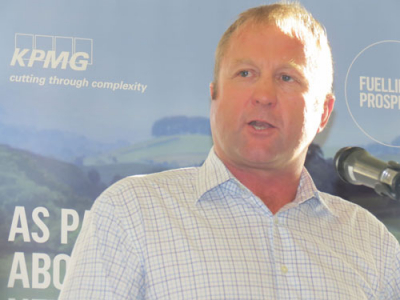 Mike Petersen.
“It's like watching your parents go mad at the Mad Hatter’s Tea party.”
That’s how commentators were last week describing the fiasco in Britain, as Prime Minister Theresa May realised she didn’t have the support to push her Brexit proposal through parliament and postponed the vote.
May now has just three weeks to come up with another plan or face the prospect of the UK leaving the EU without a deal.
This scenario, according to NZ special agricultural trade envoy Mike Petersen – just back from Europe – is knife-edge stuff. He says few people in either the EU or Britain relish the prospect of a no-deal, describing it the worst case scenario.
Petersen says those in favour of Brexit have yet to put forward any credible alternative, which is adding to the concerns.
During his recent trip to Europe, Petersen was putting out the message that Brexit is not just a problem for Britain and the 27 remaining nations in the EU.
“I don’t think they are focused about third-party countries like NZ and the risks and challenges we are also facing,” he told Rural News.
“Our future hinges on the future relationship that’s going to be agreed between the UK and EU 27 and there are numbers of scenarios around that. But regardless of which one transpires there are risks for NZ.”
Petersen says the impacts of Brexit will be felt by all components of the NZ primary sector in terms of access. There are not only problems for third countries, but also for EU countries that traditionally export to the UK.
“What happens if Spain can no longer export tomatoes to the UK and what does that mean in the UK market for other vegetables?”
Petersen says about 70% of the tomatoes consumed in the UK come from Spain, so will those tomatoes from Spain end up going to other parts of the world?
“Another example is cheese,” he adds. “About 70% of the cheddar cheese in UK supermarkets comes from Ireland. So what’s going to happen to these value chains if there is disruption on the March 29, 2019, the day that Britain is officially due to leave the EU?” he asks.
Petersen believes a major sticking point in the Brexit negotiations – the retention of an open border between Northern Ireland and the Republic of Ireland – is to a degree taken care of under Theresa May’s latest proposal.
But he says a no-deal exit could kill off such an agreement and the Irish are worried.
Petersen says despite all the woes of Brexit, he believes Europe is stronger and contends that few if any other countries in the 27 are likely to leave the customs union. But he has concerns about Britain itself.
“I am worried about the UK irrespective of the decisions,” he told Rural News. “I think the UK is going to be in for a pretty tough 10 years and I think that is going to be challenging for NZ exporters and they need to reduce their risk into the UK.”
As for the EU 27, Petersen says they will carry on largely regardless. But there will be big changes in displacement of product right across Europe, which will affect NZ companies.
Agriculture and Trade Minister Damien O'Connor is off to Europe soon to try and breathe some life into free trade talks between NZ and the UK, and NZ and the European Union.

OPINION: Former NZ agriculture and trade minister, and ex-High Commissioner to the UK, Lockwood Smith, was the only non-UK member of the UK Trade & Agriculture Commission (TAC), which was tasked by Secretary of State for International Trade, Liz Truss, to look at finding a way forward of Britain supporting trade liberalisation, while ensuring UK standards are not undermined.
The United Kingdom-European Union agreement – announced late last year –on post-Brexit trade arrangements will deliver certainty.
Contingency planning by the New Zealand meat industry appears to have paid off as Brexit took effect on January 1.
A former Irish Prime Minister says even if the UK and EU manage to work out a deal over Brexit it will be very limited and cause a lot of disruption.


Minister of Conservation Hon Tama Potaka has appointed Susan O'Regan as Chair of the Queen Elizabeth II National Trust (QEII) for a three-year term.
Red meat farmers are welcoming Labour’s plan to review the Emissions Trading Scheme and not to campaign on pricing agricultural emissions.
Where any worker in the kiwifruit industry is mistreated, we expect the authorities to take action.
Mid Canterbury Federated Farmers arable chair, Bevan Lill, said Beef + Lamb NZ data indicated that for the last six years, the average arable return on investment was about 0.8% while inflation ran about 4% - so the average arable farm was going backwards at about 3% a year.
Seed and grain companies share the concerns of arable farmers about the viability of their sector, says Seed and Grain New Zealand chief executive Dr Sarah Clark.
The New Zealand Institute of Forestry (NZIF) says unnecessary changes to New Zealand’s Emissions Trading Scheme (NZ ETS) will seriously erode investor confidence and result in significant reductions in forest planting rates.


OPINION: The same mainstream media muppets that brought you Jacindamania in 2017 have been flat out pimping for the Opportunities…
OPINION: Your old mate reckons the atrocious way farmers in the UK are treated by their lords and masters in…