Ah Tatua, You've Done It Again!
Waikato milk processor Tatua has again declared a record milk payout to farmer shareholders, leaving other processors in the dust.




 increase font size
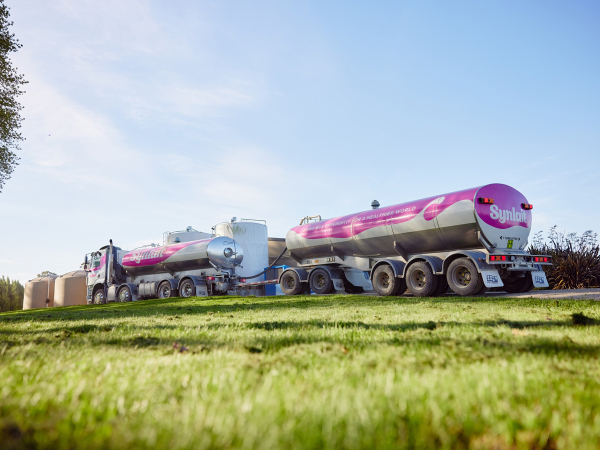 Synlait has been dealt a blow with a2 Milk Company indicating it will pull the plug on an exclusive manufacturing deal.
Troubled milk processor Synlait has been dealt another blow with cornerstone stakeholder a2 Milk Company (a2MC) giving notice to pull the plug on an exclusive manufacturing deal.
Synlait’s share price plunged 10% on the news and was last week trading around $1.16/share, an all-time low. The listed company’s shares stopped trading on the NZ Stock Exchange last week, while the company mulled a2MC’s notice to cancel the exclusivity arrangements under the Nutritional Powders Manufacturing and Supply Agreement (NPMSA) for a2 Platinum and other nutritional products.
a2MC says it issued the notice “due to Synlait’s delivery in full and on-time performance (DIFOT) during FY23 falling below the level required for Synlait to maintain such exclusive rights”.
The trading halt was lifted after Synlait told the market that it disputes a2MC’s right to cancel the exclusivity arrangements.
Under the agreement, the dispute resolution process involves a 20-business day period of good faith negotiation between Synlait and a2MC; if unresolved it goes to arbitration.
a2MC expects that any such dispute resolution process may take some time to complete.
In the meantime, a2MC has advised Synlait that it will agree to maintain Synlait’s exclusivity until any dispute is resolved. It hasn’t ruled out fully sourcing products from Synlait, even after the dispute is resolved, but has also hinted at shifting some production to its subsidiary Mataura Valley Milk.
“Subject to the outcome of any dispute resolution process, removal of Synlait’s exclusivity will provide a2MC with the option to produce a2 Platinum (being the brand of a2MC’s current English label product) at any facility in the future, including Mataura Valley Milk (MVM),” says a2MC.
“MVM is a purposebuilt dairy nutritionals facility situated in New Zealand’s South Island and of which the company owns 75% in partnership with China Animal Husbandry Group – which owns 25%.
“Having regard to the dispute resolution process, product development cycles and the New Zealand dairy season, any positive impact of the removal of Synlait’s exclusivity on MVM utilisation and profitability is not expected to have a material impact in FY24 or FY25.”
The first signs of a rift between Synlait and a2MC, which holds a 19% stake in the company, surfaced in May this year, when a month after announcing a net profit after tax (NPAT) guidance of between $15 and $25 million for the 2023 financial year, Synlait issued a new NPAT guidance of a net loss of $5m to a net profit of $5m and pointed the finger at a2MC.
Synlait claimed further demand reduction from one of its infant formula customers wiped off $16.5m from its NPAT. The remainder of the NPAT impact of $3.5m is attributed to higher financing and supply chain costs.
But a2 Milk Company said back then that it was surprised at the extent of the reduction in Synlait’s guidance range.
Bank Deal
Synlait last week also announced a new bank refinancing plan.
Synlait has a working capital facility of $240 million, maturing October 1 next year, together with a $10 million on-demand bilateral facility. This facility is a seasonal facility where the facility limit changes several times during the term of the facility.
Waikato milk processor Tatua has again declared a record milk payout to farmer shareholders, leaving other processors in the dust.
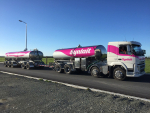
Synlait has swung to second-half profit as operations stabilise, but the dairy processor still posted a $75.4m annual loss.
OPINION: It seems Canterbury processor Synlait is still in the doldrums.
Speculation of a possible joint move by Fonterra and a2 Milk to buy Synlait raises a much bigger strategic question, says agribusiness expert Dr Nic Lees.
South Waikato farmer Bas Nelis is always interested in fine-tuning his business to improve results.


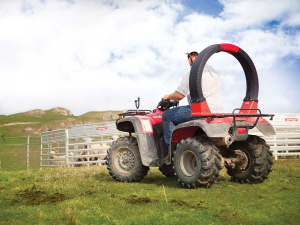
When Northland leather worker Vernon Suckling started making horse saddles 50 years ago, quad bikes and side-by-side vehicles were unheard of.
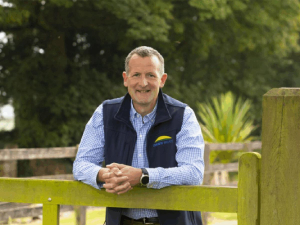
Alliance Group has confirmed that eligible farmer-shareholders who supply and continue to back the business will receive up to $20 million later this year, following the strategic investment partnership with Dawn Meats.
With a general election under five weeks away, Rural News is asking major political parties about their policies and positions on key issues facing the primary sector. We will run their responses to each question over the next four weeks. The ACT Party and the Greens didn't respond in time.
The red meat sector is in great heart.
Dr Scott Champion, Foundation for Arable Research chief executive, says that everyone in the supply chain had a role to play in driving the sector's long-term success.
Entries opened on Monday, 5 October 2026 for the 2027 New Zealand Dairy Industry Awards (NZDIA), which organisers describe as the nation's biggest celebration of excellence in the dairy sector.




OPINION: The same mainstream media muppets that brought you Jacindamania in 2017 have been flat out pimping for the Opportunities…
OPINION: Your old mate reckons the atrocious way farmers in the UK are treated by their lords and masters in…