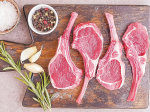
NZ Red Meat Exports Hit $867m in August, Up 23%
New Zealand's red meat and fifth-quarter exports reached $867 million in August, up 23% on the same month last year, as stronger returns lifted earnings across all major markets.




 increase font size
 Dr Eldrede Kahiya. Photo: David Hollander.
A Lincoln University expert says NZ exporters will have to be on their game to reap the benefits of a huge trade access deal that has gone under the radar.
Faculty of Agribusiness and Commerce lecturer, Dr Eldrede Kahiya, says while the Trans Pacific Partnership (TPP) has dominated media recently, an equally significant trade-related development has gone largely unnoticed.
In August, New Zealand became part of the Global Procurement Agreement (GPA). Situated within the framework of the World Trade Organisation, the GPA is designed to make it easier to compete for foreign government contracts.
He says this opens up a $2.65 trillion market for New Zealand exporters willing, and able, to exploit the opportunities it presents.
However, New Zealand exporters really need to lift their game and neutralise disadvantages they face, he says, such as the sometimes difficult process involved with accessing international markets, our smaller scale and lesser market presence, higher costs, and an innate favouritism towards domestic suppliers.
"Selling to an overseas government is not unlike playing on an unpredictable wicket which favours the home team," he says.
"Given that New Zealand is aiming to grow exports to 40 per cent of the GDP by 2025, the importance of the GPA to the Business Growth Agenda cannot be overemphasised."
The GPA presents opportunities in areas of public spending such as defence, health, education, customs and border control, aviation, transportation infrastructure, postal services, and information technology.
Kahiya says tendering and evaluation processes will be much more transparent to bidders, giving New Zealand exporters a fair chance to win foreign government business, however, success depends fundamentally on understanding and adjusting to the unique challenges of selling to foreign governments.
New Zealand's red meat and fifth-quarter exports reached $867 million in August, up 23% on the same month last year, as stronger returns lifted earnings across all major markets.

OPINION: The United States wine market has changed forever, and companies cannot use same old playbook, said Erin Kirschenmann at the New Zealand Wine 2026 Wine Business Forum in August.
Meat Industry Association data, released alongside the Red Meat Sector conference in Wellington, shows export value climbing across the US, China, UK and Canada.
OPINION: The stats speak for themselves.
Chinese beef trade quotas and a looming suspension of Brazilian beef imports into the European Union are expected to reshape global beef trade flows over the remainder of 2026, with implications for New Zealand exporters, according to Rabobank's Q3 Global Beef Quarterly report.


Farmers are being encouraged to rethink how they manage waste on farm with the launch of ruralwastesorted.co.nz, a new website bringing together practical tips, real farmer experiences and resources.

New Zealand Winegrowers (NZW) is celebrating the India-New Zealand Free Trade Agreement (FTA) coming into force today, bringing New Zealand wine improved access to one of the world’s fastest-growing economies.
New Zealand’s red meat sector has welcomed the India-New Zealand Free Trade Agreement taking effect, which removes India’s 33% tariff on New Zealand sheepmeat.
More than 95 per cent of New Zealand’s forestry and wood exports to India can now enter tariff free as the New Zealand-India Free Trade Agreement comes into force today.
Federated Farmers is backing Feilding High School’s call to keep Agriculture and Horticultural Science as a standalone subject in Year 11.
Food and fibre exports have returned a billion- dollar bonus to the country.



OPINION: The same mainstream media muppets that brought you Jacindamania in 2017 have been flat out pimping for the Opportunities…
OPINION: Your old mate reckons the atrocious way farmers in the UK are treated by their lords and masters in…




